Siemens 6DP1210-8BC System-Ready Binary Input for TELEPERM M Architecture
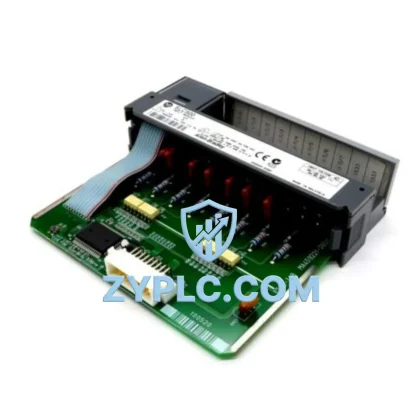
The Siemens 6DP1210-8BC is a binary input module purpose-built for the TELEPERM M Distributed Control System (DCS) platform — one of Siemens’ most enduring process automation architectures deployed across power generation, petrochemical refining, water treatment, and heavy industrial facilities worldwide. Rather than functioning as a standalone component, the 6DP1210-8BC occupies a defined role within a layered control hierarchy, serving as the field-signal acquisition interface between physical process instrumentation and the central processing units that govern plant-wide automation logic. Understanding this module requires understanding the system it serves.
In a fully configured TELEPERM M installation, the control architecture is organized across multiple functional layers: the field instrumentation layer captures raw process variables; the I/O acquisition layer — where the 6DP1210-8BC operates — digitizes and conditions those signals; the controller layer executes regulatory and sequential logic; the communication layer transmits data across plant networks; and the operator interface layer presents process status to engineers and operators. The 6DP1210-8BC bridges the field and controller layers, ensuring that binary status signals — limit switches, valve position feedback, motor run/stop confirmation, interlock states — are reliably captured, conditioned, and made available to the CPU modules that depend on them for closed-loop control decisions.
Architecture Specification Table
| Parameter |
Specification |
| Part Number / SKU |
6DP1210-8BC |
| Module Designation |
FUM210 Binary Input Module |
| Platform Compatibility |
Siemens TELEPERM M DCS |
| System Role |
Field-level binary signal acquisition (I/O Layer) |
| Signal Type |
Digital / Binary Input |
| Input Channels |
16 binary input channels (typical for FUM210 class) |
| Input Voltage Range |
24 V DC nominal (NAMUR / dry contact compatible) |
| Electrical Isolation |
Optocoupler isolation between field and backplane |
| Backplane Interface |
TELEPERM M subrack / rack bus (proprietary Siemens bus) |
| Communication Capability |
Integrated via TELEPERM M rack bus to AS230/AS235 CPUs |
| Operating Temperature |
0 °C to +60 °C (standard industrial cabinet environment) |
| Mounting |
TELEPERM M subrack slot installation |
| Country of Origin |
Germany |
| Warranty |
12-Month Warranty (ZYPLC standard) |
| Contextual Integration |
Supported — pre-verified for TELEPERM M rack compatibility |
Coordinated Control System Design
The 6DP1210-8BC does not operate in isolation. Its value is realized through its integration with the broader TELEPERM M hardware ecosystem. In a typical system configuration, the module is installed alongside the Siemens AS230 or AS235 automation station — the central processing units responsible for executing control programs and managing I/O communication across the subrack bus. The AS230/AS235 reads binary input states from the 6DP1210-8BC on each scan cycle, incorporating field signal status into interlock logic, alarm management, and sequential control routines.
Power distribution within the subrack is managed by dedicated TELEPERM M power supply modules (such as the 6DP1700 series), which provide regulated 24 V DC and 5 V DC rails to all installed I/O modules including the 6DP1210-8BC. Stable, conditioned power is essential for binary input accuracy — voltage fluctuations at the backplane level can cause spurious input transitions that propagate false signals to the controller, triggering unnecessary shutdowns or masking genuine process events.
On the output side of the control architecture, binary input data captured by the 6DP1210-8BC informs the decisions executed by binary output modules such as the Siemens 6DP1232 or 6DP1234 series, which drive solenoid valves, motor contactors, and relay-controlled actuators. The signal chain — from field device through binary input module, through CPU logic, through binary output module, to final control element — represents the fundamental control loop that the 6DP1210-8BC anchors at its acquisition end.
For analog process variables operating in parallel with binary signals, analog input modules such as the Siemens 6DP1110 series handle 4–20 mA and thermocouple inputs within the same subrack, sharing the backplane bus and CPU resources. This co-installation capability allows engineers to configure mixed I/O subracks that handle both continuous and discrete process signals within a single physical enclosure, reducing cabinet footprint and simplifying cable management.
Communication between TELEPERM M automation stations and plant-level SCADA or DCS operator stations is typically handled through Siemens SINEC H1 industrial Ethernet or TELEPERM M bus coupler modules, which aggregate data from multiple subracks and transmit it upstream to operator workstations running Siemens SIMATIC PCS 7 or legacy TELEPERM M OS software. The 6DP1210-8BC’s binary input data becomes part of this plant-wide data stream, visible to operators as discrete alarm states, equipment status indicators, and interlock condition displays.
In redundant system architectures — common in power plant and refinery applications — the 6DP1210-8BC may be paired with a redundant CPU configuration using dual AS235 processors operating in hot-standby mode. In this arrangement, both CPUs read from the same I/O modules simultaneously, with the standby CPU ready to assume control within milliseconds if the primary processor fails. The binary input module’s role in redundant architectures underscores the importance of sourcing verified, tested hardware: a marginal or counterfeit module that performs intermittently under normal conditions may fail to provide reliable signal acquisition during the critical switchover period when the redundant CPU assumes control.
Application in Layered Automation Systems
The 6DP1210-8BC has been deployed across a wide range of process industries where TELEPERM M systems were installed during the 1980s through 2000s and continue to operate today under long-term maintenance and life-extension programs.
Power Generation: In coal-fired, gas turbine, and combined-cycle power plants, TELEPERM M systems manage boiler combustion control, turbine protection, and auxiliary system sequencing. The 6DP1210-8BC captures binary status signals from turbine trip relays, valve position switches, and motor protection relays — inputs that feed directly into turbine protection logic where signal integrity is a safety-critical requirement.
Petrochemical and Refinery Operations: Continuous process plants operating under SIL-rated safety requirements rely on binary input modules to monitor emergency shutdown valve positions, high-level switches, and pressure relief valve actuations. The 6DP1210-8BC’s optocoupler isolation ensures that field-side fault conditions — ground faults, cable insulation failures — do not propagate into the control system backplane, protecting the integrity of the broader automation architecture.
Water and Wastewater Treatment: Municipal and industrial water treatment facilities using TELEPERM M for pump sequencing, chemical dosing control, and filtration management depend on binary input modules to monitor pump run/fail status, level switch states, and valve position feedback. The 6DP1210-8BC’s compatibility with dry contact and NAMUR-type sensors makes it suitable for the diverse instrumentation found in water treatment environments.
Mining and Metallurgy: Ore processing, smelting, and materials handling systems in mining operations require robust binary input acquisition for conveyor belt status monitoring, crusher protection interlocks, and furnace safety systems. TELEPERM M installations in these environments often operate in high-vibration, high-temperature conditions where module reliability and long-term availability of replacement hardware are primary engineering concerns.
Packaging and Discrete Manufacturing: While TELEPERM M is primarily a process control platform, its binary I/O modules have been applied in hybrid manufacturing environments where continuous process control and discrete machine sequencing coexist. The 6DP1210-8BC supports these applications by providing reliable acquisition of machine status signals that feed into process interlocks and production sequencing logic.
Architecture Engineering FAQ
Q1: Is the 6DP1210-8BC compatible with all TELEPERM M subrack configurations, and can it be installed alongside newer Siemens I/O modules?
The 6DP1210-8BC is designed for the TELEPERM M subrack bus architecture and is compatible with standard TELEPERM M subracks used with AS230 and AS235 automation stations. It is not directly interchangeable with SIMATIC S7 or PCS 7 I/O modules, which use different backplane bus protocols. In mixed-generation installations where engineers are migrating from TELEPERM M toward SIMATIC PCS 7, bus coupler and gateway modules are required to bridge the two architectures. ZYPLC recommends verifying subrack slot assignments and bus termination configurations before installation to ensure correct module addressing and signal mapping.
Q2: What commissioning and diagnostic steps are recommended when integrating the 6DP1210-8BC into an existing TELEPERM M system?
Prior to installation, the module should be visually inspected for physical damage and connector integrity. During commissioning, engineers should verify backplane bus communication by confirming that the AS230/AS235 CPU correctly identifies the module at its assigned slot address. Each binary input channel should be individually tested by applying a known signal state at the field terminal and confirming the corresponding status change in the CPU’s I/O image. Diagnostic LEDs on the module front panel indicate power status and channel activity, providing a first-level fault isolation tool during commissioning and ongoing maintenance. All ZYPLC-supplied 6DP1210-8BC modules are function-tested prior to shipment under our 12-Month Warranty program.
Q3: How does the 12-Month Warranty apply, and what support is available for long-term maintenance of TELEPERM M systems?
ZYPLC provides a 12-Month Warranty on all 6DP1210-8BC modules, covering functional defects identified under normal operating conditions consistent with the module’s design specifications. Warranty claims are supported through direct contact with our technical team. For long-term TELEPERM M maintenance programs, ZYPLC maintains inventory of hard-to-source TELEPERM M I/O modules, power supplies, and CPU components, supporting plant operators who require reliable spare parts availability beyond the original manufacturer’s active production period. Our Contextual Integration service assists engineers in verifying module compatibility within their specific system configuration before purchase, reducing the risk of procurement errors in legacy system maintenance scenarios.
© 2026 ZYPLC. All rights reserved.
Original Source: https://zyplc.com
Contact: +86 19859288691 | plc.sales@zyplc.com