Siemens 6DS1332-8BC System-Ready I/O Bus Control for TELEPERM M Architecture: Control System Architecture and Upstream–Downstream Coordination
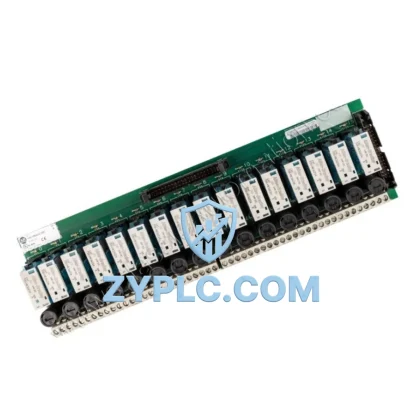
The Siemens 6DS1332-8BC is a PCB-level I/O Bus Control Module engineered specifically for the TELEPERM M Distributed Control System (DCS) platform. Within a layered automation architecture, this module occupies a critical position at the I/O bus coordination layer, managing the communication pathway between the central processing units and the field-level signal modules. Its role is not simply that of a passive interface card — it actively governs bus arbitration, signal sequencing, and data integrity across the entire I/O subsystem, making it an indispensable component for any engineer responsible for maintaining or expanding a TELEPERM M installation.
Understanding the 6DS1332-8BC requires viewing it within the full context of the TELEPERM M control hierarchy. At the top of the architecture, the AS 230 Automation Station or AS 235 Automation Station serves as the central processing node, executing control logic and managing process variables. Below this, the I/O bus — governed by modules such as the 6DS1332-8BC — connects the CPU to distributed I/O racks populated with analog input modules (e.g., 6DS1601-8AA), analog output modules (e.g., 6DS1611-8AA), digital input modules (e.g., 6DS1701-8AA), and digital output modules (e.g., 6DS1711-8AA). The bus control module ensures that each of these I/O cards communicates with the processor in a deterministic, collision-free manner, which is essential for process-critical applications in power generation, petrochemical refining, and continuous manufacturing.
From a system architecture perspective, the 6DS1332-8BC supports the modular expansion philosophy of the TELEPERM M platform. Engineers can extend the I/O capacity of an existing installation by adding additional I/O racks and bus segments, with the bus control module managing the increased communication load without requiring changes to the central processor configuration. This scalability is particularly valuable in brownfield projects where production continuity is paramount and system downtime must be minimized. The module’s compatibility with the TELEPERM M backplane and rack system — including the standard 19-inch subrack assemblies used across the platform — ensures that hardware integration is straightforward and does not require custom cabling or adapter solutions.
Redundancy is a defining characteristic of mission-critical DCS installations, and the 6DS1332-8BC is designed to operate within redundant bus architectures. In dual-bus configurations, two bus control modules can be deployed in parallel, with automatic switchover logic ensuring that a failure in one bus path does not interrupt process control. This redundancy extends to the power supply layer, where the TELEPERM M platform supports dual 24 VDC power supply modules (e.g., 6DS9200-8AA) feeding the I/O racks, ensuring that neither a bus fault nor a power supply failure results in a loss of field signal visibility. For plant operators managing continuous processes — such as distillation columns, turbine control loops, or water treatment dosing systems — this level of redundancy is not optional; it is a fundamental engineering requirement.
Signal flow through the 6DS1332-8BC follows a structured path: field instruments transmit analog or digital signals to the I/O modules in the rack, the bus control module aggregates and sequences this data onto the I/O bus, and the automation station processes the incoming values against configured control strategies. On the output side, the reverse path applies — the processor issues control commands, the bus control module routes these to the appropriate output modules, and the field actuators (control valves, motor starters, variable frequency drives) respond accordingly. This bidirectional signal management, handled transparently by the 6DS1332-8BC, is what allows the TELEPERM M system to maintain tight control loop performance even in installations with large numbers of I/O points.
For maintenance engineers, the 6DS1332-8BC offers practical advantages in terms of diagnostics and serviceability. The module’s status indicators provide real-time feedback on bus communication health, allowing technicians to identify faults at the module level without requiring specialized diagnostic tools. When replacement is necessary, the PCB form factor and standard connector interface mean that a trained engineer can swap the module during a planned maintenance window with minimal disruption to adjacent I/O channels. Maintaining a spare 6DS1332-8BC in the plant’s critical spares inventory is strongly recommended for any facility operating TELEPERM M systems, given the age of the platform and the potential lead times associated with sourcing legacy DCS components.
The 6DS1332-8BC is also relevant in the context of system migration and hybrid architectures. Many facilities operating TELEPERM M systems are in the process of phased migration toward modern DCS platforms, and the bus control module plays a role in maintaining the integrity of the legacy system during the transition period. By ensuring stable I/O bus operation, the 6DS1332-8BC allows engineers to migrate control loops incrementally — moving individual process areas to the new platform while keeping the remainder of the plant on TELEPERM M — without compromising overall system stability. This contextual integration capability is a key reason why experienced automation engineers continue to source and stock 6DS1332-8BC modules even as migration projects progress.
All units supplied by ZYPLC are subject to a comprehensive 12-Month Warranty covering manufacturing defects and functional performance. Each module undergoes pre-shipment functional verification to confirm bus communication integrity and electrical parameter compliance before dispatch. Global shipping is available with full export documentation support.
Architecture Specification Table
| System Role |
I/O Bus Control Module — TELEPERM M DCS Platform |
| Part Number |
6DS1332-8BC |
| Brand |
Siemens |
| Series |
TELEPERM M |
| Form Factor |
PCB Module (19-inch subrack compatible) |
| Bus Function |
I/O Bus Arbitration and Signal Sequencing |
| Supply Voltage |
24 VDC (via backplane) |
| Communication |
TELEPERM M Proprietary I/O Bus Protocol |
| Compatible Processors |
AS 230, AS 235 Automation Stations |
| Compatible I/O Modules |
6DS1601, 6DS1611, 6DS1701, 6DS1711 Series |
| Redundancy Support |
Dual-Bus Configuration Compatible |
| Installation Environment |
Industrial Control Cabinet, DIN Rail / Subrack Mounting |
| Operating Temperature |
0°C to +60°C |
| Country of Origin |
Germany |
| Warranty |
12-Month Warranty (ZYPLC) |
| Availability |
In Stock — Global Shipping Available |
Coordinated Control System Design
The 6DS1332-8BC does not operate in isolation — its value is realized through its coordination with the full suite of TELEPERM M hardware components. At the processor level, the AS 235 Automation Station provides the central control intelligence, executing PID loops, sequence programs, and alarm management functions. The bus control module serves as the communication backbone between this processor and the distributed I/O racks, ensuring that process data flows reliably in both directions.
Within the I/O racks, the 6DS1332-8BC works in concert with analog input modules such as the 6DS1601-8AA (4–20 mA signal acquisition), analog output modules such as the 6DS1611-8AA (control valve positioning), digital input modules such as the 6DS1701-8AA (limit switch and interlock monitoring), and digital output modules such as the 6DS1711-8AA (motor starter and solenoid valve control). The bus control module ensures that all of these I/O cards are polled in the correct sequence and that their data is presented to the processor without collision or data corruption.
At the power supply layer, the 6DS9200-8AA power supply module provides the regulated 24 VDC required by the I/O rack, with dual-supply configurations supporting the redundancy requirements of critical process areas. The 6DS1332-8BC is designed to operate within this power architecture, drawing its operating power from the backplane bus and presenting a stable load to the power supply system.
For installations requiring communication between the TELEPERM M system and higher-level SCADA or historian platforms, communication gateway modules and serial interface cards within the TELEPERM M family provide the necessary protocol conversion, with the bus control module ensuring that the I/O data presented to these gateways is current and accurate. Human-machine interface (HMI) stations connected to the TELEPERM M network rely on the integrity of the I/O bus — managed by the 6DS1332-8BC — to display accurate process values and accept operator commands in real time.
Application in Layered Automation Systems
The Siemens 6DS1332-8BC finds application across a wide range of process industries where the TELEPERM M DCS platform has been deployed. In power generation facilities — including coal-fired, gas turbine, and combined heat and power plants — the module supports boiler control, turbine protection, and auxiliary system automation, where bus communication reliability directly affects plant safety and availability.
In petrochemical and refining applications, the 6DS1332-8BC manages I/O bus communication for distillation column control, reactor temperature management, and compressor surge protection systems. The deterministic bus arbitration provided by the module is essential in these environments, where control loop scan times must be consistent and predictable to maintain product quality and process safety.
Water and wastewater treatment facilities operating TELEPERM M systems rely on the 6DS1332-8BC for dosing control, pump sequencing, and effluent monitoring applications. The module’s compatibility with the full range of TELEPERM M analog and digital I/O cards makes it suitable for the mixed-signal environments typical of water treatment installations, where both 4–20 mA analog signals and discrete digital inputs must be managed within the same control architecture.
In mining and metallurgical applications — including ore processing, smelting, and materials handling — the 6DS1332-8BC supports the high I/O point counts typical of these installations, managing communication between the central processor and the large numbers of field instruments and actuators distributed across the plant. The module’s robust PCB construction and compatibility with industrial-grade enclosures make it suitable for the demanding environmental conditions found in these facilities.
Packaging and discrete manufacturing lines that have integrated TELEPERM M systems for process control also benefit from the 6DS1332-8BC’s bus management capabilities, particularly in applications where precise synchronization between analog control loops and digital sequencing logic is required.
Architecture Engineering FAQ
Q1: Is the 6DS1332-8BC compatible with all TELEPERM M I/O rack configurations, and can it be used in both new rack builds and existing rack expansions?
The 6DS1332-8BC is designed for use within the standard TELEPERM M subrack system and is compatible with the full range of TELEPERM M I/O modules, including the 6DS1601, 6DS1611, 6DS1701, and 6DS1711 series. It can be installed in both new rack assemblies and existing racks as part of an expansion or replacement project. Engineers should verify the rack slot assignment and bus address configuration against the existing system documentation before installation to ensure correct integration with the AS 230 or AS 235 automation station.
Q2: How does the 6DS1332-8BC support redundant bus architectures, and what is the switchover behavior in the event of a bus fault?
In dual-bus TELEPERM M configurations, two 6DS1332-8BC modules are deployed in parallel, each managing one of the redundant bus paths. The system’s bus arbitration logic monitors the health of both bus paths continuously. In the event of a fault on the primary bus — such as a communication timeout or hardware failure — the system switches to the secondary bus path managed by the standby 6DS1332-8BC. This switchover is designed to be bumpless, meaning that process control is maintained without interruption during the transition. The specific switchover timing and behavior should be verified against the TELEPERM M system documentation for the installed firmware version.
Q3: What does the 12-Month Warranty cover for the 6DS1332-8BC, and what support is available for long-term maintenance planning?
All 6DS1332-8BC units supplied by ZYPLC are covered by a 12-Month Warranty against manufacturing defects and functional failures under normal operating conditions. Each unit is functionally tested prior to shipment to verify bus communication performance and electrical parameter compliance. For long-term maintenance planning, ZYPLC recommends maintaining at least one spare 6DS1332-8BC in the plant’s critical spares inventory, given the legacy status of the TELEPERM M platform and the potential for extended lead times on future sourcing. ZYPLC’s technical team is available to assist with compatibility verification, installation guidance, and spare parts planning for TELEPERM M installations.
© 2026 ZYPLC. All rights reserved.
Original Source: https://zyplc.com
Contact: +86 19859288691 | plc.sales@zyplc.com