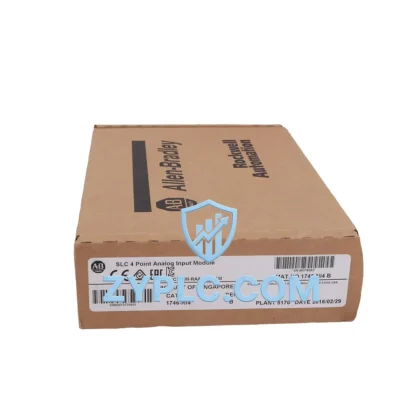
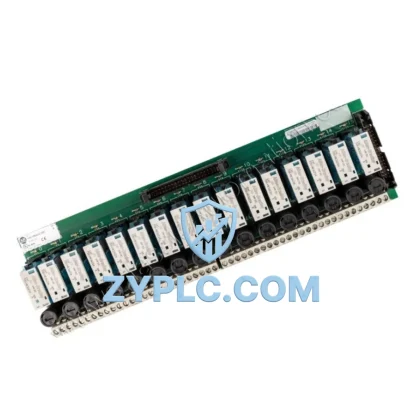
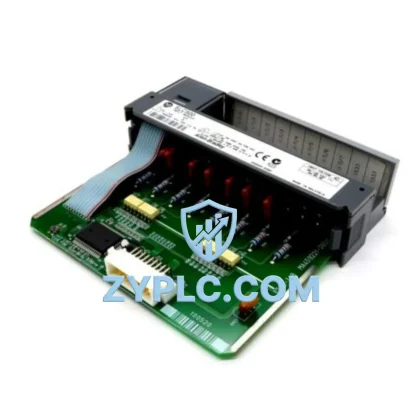
Siemens 6ES7 321-1BH01-0AA0 Energy-Saving Digital Input Module for Optimized S7-300 Automation
The Siemens 6ES7 321-1BH01-0AA0 is a 16-channel digital input module designed for the SIMATIC S7-300 programmable logic controller platform. Operating at 24 V DC, this SM 321 module serves as the critical signal acquisition layer between field sensors, limit switches, and proximity detectors and the central processing unit of your automation system. In energy-intensive manufacturing environments — from automotive assembly to food processing and chemical production — the accuracy and speed of digital signal capture directly determines how efficiently the CPU allocates control cycles, how quickly drives respond to process changes, and how effectively the system avoids unnecessary energy consumption during idle or transitional states.
At ZYPLC, every 6ES7 321-1BH01-0AA0 unit is sourced from verified supply channels, subjected to functional input-channel testing across all 16 points, and shipped with a 12-month warranty. Stock is maintained on-hand for immediate dispatch, supporting both urgent line-down recovery and planned maintenance schedules.
Efficiency Performance Table
| Parameter |
Specification |
| SKU / Part Number |
6ES7 321-1BH01-0AA0 |
| Module Type |
Digital Input Module (SM 321) |
| Compatible Platform |
SIMATIC S7-300 |
| Number of Input Channels |
16 × DC 24 V |
| Input Voltage Range |
24 V DC (15–30 V) |
| Current Consumption (backplane bus) |
≤ 50 mA at 5 V DC |
| Power Dissipation |
≤ 2.5 W |
| Input Delay (configurable) |
0.1 ms – 20 ms |
| Isolation |
Optocoupler (channel groups to backplane) |
| Compatible Systems |
S7-300 CPU 31x, ET 200M distributed I/O |
| Application Environment |
Industrial automation, process control, machine tools, energy management |
| Energy Optimization Value |
Precise signal acquisition reduces false triggers, minimizes redundant CPU cycles and unnecessary drive activations |
| Origin |
Germany (DE) |
| Warranty |
12 Months — ZYPLC Tested & Verified |
Energy-Aware Automation Architecture
In a well-designed S7-300 energy-aware control architecture, the 6ES7 321-1BH01-0AA0 input module works in close coordination with output and processing components to form a closed-loop efficiency system. On the output side, the 6ES7 322-1BH01-0AA0 (SM 322, 16-channel digital output module) receives processed commands from the CPU and actuates contactors, solenoids, and relay coils — ensuring that actuator energization is precisely timed to real process demand rather than running on fixed cycles that waste power.
The central processing unit — typically a 6ES7 315-2AH14-0AB0 (CPU 315-2 DP) or 6ES7 317-2AK14-0AB0 (CPU 317-2 DP/PN) — interprets the digital signals captured by the SM 321 and executes the control program. When input signals indicate that a conveyor zone is empty or a machine guard is open, the CPU can immediately suppress drive enable signals, preventing motors from running under no-load conditions — a direct reduction in idle energy consumption.
Power supply stability is maintained by the 6ES7 307-1EA01-0AA0 (PS 307, 5 A power supply module), which provides regulated 24 V DC to the S7-300 rack. A stable supply voltage ensures that the input module’s optocoupler isolation operates within its rated threshold window, preventing false signal reads that could trigger unnecessary actuator cycles and associated energy spikes.
For distributed production lines, the 6ES7 321-1BH01-0AA0 can be deployed within an ET 200M distributed I/O station connected to the main CPU via PROFIBUS DP using the 6GK7 343-1EX30-0XE0 (CP 343-1 EX30 communications processor) or a standard IM 153-x interface module. This distributed architecture reduces control cabinet wiring density, lowers heat generation inside panels, and shortens signal cable runs — all of which contribute to lower system-level energy losses.
On the drive side, variable frequency drives such as the 6SL3210-1KE21-3AF1 (SINAMICS G120 Power Module) receive speed and torque reference signals that originate from process feedback captured through digital and analog input modules. When the SM 321 detects a production pause signal — such as a part-present sensor going low — the CPU can command the SINAMICS drive to ramp down motor speed to a standby level, cutting motor energy consumption by 30–60% during non-productive intervals.
For energy monitoring and reporting, the S7-300 system can integrate with SENTRON PAC3200 power monitoring devices via PROFIBUS or Modbus, feeding real-time kWh, power factor, and demand data back to the CPU. The digital input module plays a role here too — capturing status signals from circuit breakers, contactors, and energy meters to build a complete picture of load states across the production line. Combined with the 6ES7 338-4BC01-0AB0 (SM 338 position input module) for servo axis feedback and the 6ES7 331-7KF02-0AB0 (SM 331 analog input module) for current and temperature monitoring, the system can implement predictive maintenance routines that prevent energy-wasting mechanical degradation before it causes unplanned downtime.
Power Optimization in Real Production Lines
Factory energy audits consistently identify three primary sources of avoidable electrical waste: motors running under no-load conditions, compressed air systems cycling unnecessarily, and lighting and HVAC systems operating on fixed schedules rather than occupancy demand. The 6ES7 321-1BH01-0AA0 addresses the first two categories directly through its role as the system’s primary field signal collector.
Consider a stamping press line where each press station has proximity sensors detecting part arrival and ejection. When the SM 321 module captures the part-ejected signal from station 3 before station 4 has completed its cycle, the CPU can hold the conveyor drive in a low-speed energy-saving mode rather than running at full speed into a blocked station. This signal-driven conveyor pacing — enabled by the fast 0.1 ms minimum input delay of the 6ES7 321-1BH01-0AA0 — can reduce conveyor motor energy consumption by 15–25% on lines with variable cycle times.
In injection molding applications, the module captures mold-open, mold-closed, and ejector-home signals that allow the CPU to coordinate hydraulic pump loading with actual machine demand. Rather than running the hydraulic pump at full pressure continuously, the control program uses these digital inputs to command pressure reduction during the cooling phase — a period that can represent 40–60% of total cycle time. The result is a measurable reduction in hydraulic pump motor energy consumption without any impact on part quality or cycle time.
Maintenance cost reduction is another measurable benefit. Because the 6ES7 321-1BH01-0AA0 provides optocoupler isolation between field wiring and the backplane bus, voltage transients from inductive loads — solenoids, motor starters, relay coils — are blocked from propagating into the CPU backplane. This protection extends the service life of the CPU and neighboring modules, reducing the frequency of unplanned module replacements and the associated production downtime costs. Each unit supplied by ZYPLC undergoes pre-shipment functional testing across all 16 input channels, and the 12-month warranty covers both early-life failures and latent defects identified during the warranty period.
Energy Optimization FAQ
Q1: How does the 6ES7 321-1BH01-0AA0 contribute to measurable energy savings on a production line?
The module enables precise, real-time signal acquisition from field sensors, allowing the S7-300 CPU to make immediate control decisions — such as ramping down drives, releasing compressed air, or pausing conveyors — based on actual process state rather than fixed timers. This demand-driven control approach eliminates the energy consumed during unnecessary machine run time and reduces idle-state power draw across connected actuators and drives.
Q2: Is the 6ES7 321-1BH01-0AA0 compatible with both centralized S7-300 racks and distributed ET 200M stations?
Yes. The SM 321 module is fully compatible with standard S7-300 centralized racks and with ET 200M distributed I/O stations connected via PROFIBUS DP. This flexibility allows it to be deployed close to field devices in distributed architectures, reducing signal cable lengths and associated wiring losses while maintaining full integration with the central CPU control program.
Q3: What is the recommended replacement or upgrade path if the existing SM 321 module is showing intermittent faults?
The 6ES7 321-1BH01-0AA0 is a direct replacement for earlier SM 321 variants in the same form factor. Before replacement, verify the 24 V DC supply voltage at the module connector is within the 15–30 V operating range, and check for wiring insulation faults on field sensor cables that may be introducing noise. If faults persist after supply and wiring checks, a like-for-like module swap is the recommended corrective action. ZYPLC maintains stock for immediate shipment to minimize line-down duration.
Q4: What does the 12-month warranty from ZYPLC cover, and what is the testing process before shipment?
Every 6ES7 321-1BH01-0AA0 supplied by ZYPLC is tested for correct operation across all 16 digital input channels prior to shipment, verifying input signal recognition, optocoupler response, and backplane communication integrity. The 12-month warranty covers functional failures arising from manufacturing defects or latent component faults under normal operating conditions. Warranty claims are supported by ZYPLC’s technical team, and replacement units are dispatched promptly to minimize customer downtime.
© 2026 ZYPLC. All rights reserved.
Original Source: https://zyplc.com
Contact: +86 19859288691 | plc.sales@zyplc.com