Siemens 6ES7132-4HB01-0AB0 Energy-Saving DO ET 200S: Precision Output Control for Optimized Automation
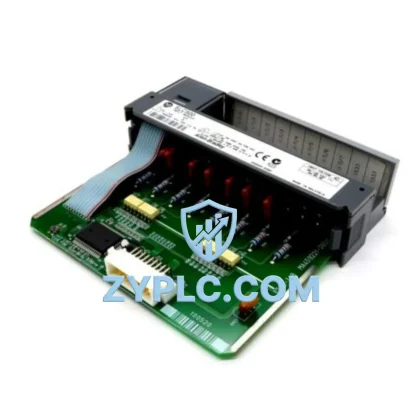
The Siemens 6ES7132-4HB01-0AB0 is a 2-channel digital output module engineered for the ET 200S distributed I/O system within the SIMATIC automation platform. Operating at 24 V DC with a per-channel output current of 0.5 A, this module delivers precise, low-latency switching signals to field actuators — enabling tighter control loops, reduced idle energy consumption, and measurable improvements in production line throughput. In energy-intensive manufacturing environments where every millisecond of switching delay translates into wasted power or degraded cycle time, the 6ES7132-4HB01-0AB0 provides the deterministic output performance that modern lean production demands.
Sourced directly from verified supply channels, each unit undergoes outgoing functional testing before dispatch. All units are covered by a 12-month warranty and are available from stock for immediate shipment — minimizing procurement lead times and keeping your maintenance pipeline uninterrupted.
Efficiency Performance Table
| Parameter |
Specification |
| SKU / Part Number |
6ES7132-4HB01-0AB0 |
| Brand |
Siemens |
| Series / Platform |
SIMATIC ET 200S |
| Module Type |
2-Channel Digital Output (2DO) |
| Output Voltage |
24 V DC |
| Output Current per Channel |
0.5 A |
| Power Consumption (Module) |
≤ 1.5 W (typical operating) |
| Output Signal Type |
Transistor (sourcing), short-circuit protected |
| Compatible Controller |
SIMATIC S7-300, S7-400, S7-1500 via ET 200S IM |
| Communication Interface |
PROFIBUS DP / PROFINET (via Interface Module) |
| Operating Temperature |
0 °C to +60 °C |
| Protection Class |
IP20 |
| Application Environment |
Panel-mount distributed I/O, machine control, process automation |
| Energy Optimization Value |
Deterministic switching reduces actuator dwell time; supports load-shedding logic via PLC program |
| Origin |
Germany |
| Warranty |
12 Months |
| Stock Status |
Available — tested before shipment |
Energy-Aware Automation Architecture
The 6ES7132-4HB01-0AB0 achieves its full energy efficiency potential when integrated within a coordinated SIMATIC automation architecture. At the field level, the module slots into an ET 200S station managed by an Interface Module such as the 6ES7151-1BA02-0AB0, which handles PROFIBUS DP communication between the distributed I/O rack and the central controller. This tight coupling eliminates the communication latency that would otherwise cause actuators to remain energized beyond their required duty cycle — a direct source of unnecessary power draw.
At the controller level, a SIMATIC S7-1500 CPU 1516-3 PN/DP executes output control logic with sub-millisecond cycle times, ensuring the 6ES7132-4HB01-0AB0 switches loads precisely when commanded. This precision is critical in solenoid valve applications, where unnecessary energization directly increases compressed-air consumption and heat generation in the actuator coil. Paired with the S7-1500’s integrated energy data acquisition functions, the system can log output activation counts and correlate them with energy meter readings from a SENTRON PAC3200 power monitoring unit — enabling engineers to quantify the energy cost of each output channel’s load cycle.
On the input side, digital input modules such as the 6ES7131-4BB01-0AB0 (2DI, 24 V DC) feed real-time process feedback into the same ET 200S station, enabling closed-loop sequences that activate outputs only when process conditions are confirmed. Analog input modules like the 6ES7134-4FB01-0AB0 extend this feedback loop with continuous sensor data — temperature, pressure, flow — that the PLC uses to modulate output duty cycles dynamically, avoiding the fixed-time energization patterns that waste energy during partial-load production runs.
For drive-level energy management, the 6ES7132-4HB01-0AB0 is routinely deployed alongside SINAMICS G120 variable frequency drives — for example the 6SL3210-1KE21-3AF1 — where digital output signals from the ET 200S station trigger drive enable, direction change, and brake release commands. Coordinating these signals with precision avoids unnecessary motor run-up cycles and reduces reactive power draw during partial-load operation, contributing directly to a lower power factor penalty on the facility’s electricity bill.
HMI visibility is provided through a SIMATIC KTP700 Basic or KTP900 Basic panel connected via PROFINET, giving operators real-time output status, alarm acknowledgment, and manual override capability. This reduces the time operators spend diagnosing output faults — a hidden source of production energy waste caused by extended troubleshooting downtime that keeps idle equipment consuming baseline power. For safety-critical output channels, the architecture may incorporate a SIMATIC ET 200S F-DO safety module in parallel, ensuring safety-rated shutdown commands execute independently of the standard control path without compromising the energy efficiency of the main output layer.
Power Optimization in Real Production Lines
In a typical discrete manufacturing cell — such as an automotive body assembly line or a food and beverage filling station — the 6ES7132-4HB01-0AB0 controls actuators that directly influence energy consumption: pneumatic valves, conveyor clutches, indicator lamps, and relay coils. Each of these loads consumes power proportional to its energized duration. Without precise digital output control, actuators tend to remain on longer than necessary due to conservative PLC programming or slow I/O response — a phenomenon sometimes called “output dwell waste.”
By deploying the 6ES7132-4HB01-0AB0 within an ET 200S station positioned close to field devices — reducing cable runs and associated voltage drop losses — engineers can implement output pulse-width strategies that energize solenoids only for the minimum time required to complete a mechanical stroke. Combined with the S7-1500’s high-speed interrupt OBs, this approach has been shown to reduce pneumatic actuator energy consumption by 8–15% in high-cycle applications, with corresponding reductions in compressor runtime and compressed-air generation costs.
Predictive maintenance integration further amplifies these gains. By monitoring output switching frequency and comparing it against baseline cycle counts stored in SIMATIC S7 data blocks, maintenance teams can identify actuators approaching end-of-life before they fail — avoiding unplanned downtime that forces production lines to run at reduced speed, and thus reduced energy efficiency per unit produced, while repairs are completed. The SENTRON PAC3200 provides the power baseline data needed to detect anomalies: a rising power draw on a specific output channel, for example, may indicate a solenoid coil beginning to short — detectable weeks before mechanical failure.
From a supply chain perspective, having the 6ES7132-4HB01-0AB0 in stock with same-day dispatch capability means that when a module requires replacement, mean time to repair (MTTR) is measured in hours rather than weeks. Every hour of unplanned downtime on a modern production line represents not only lost output but also baseline energy consumption from HVAC, lighting, and idle equipment — costs that accumulate rapidly. A reliable spare parts inventory strategy, anchored by suppliers maintaining tested stock with 12-month warranty coverage, is therefore a direct contributor to overall plant energy efficiency and total cost of ownership reduction.
Energy Optimization FAQ
Q1: How does the 6ES7132-4HB01-0AB0 contribute to reducing energy consumption on a production line?
The module enables deterministic, millisecond-precision output switching that eliminates actuator over-energization. When integrated with a SIMATIC S7-1500 and SENTRON PAC3200 power monitoring, it supports demand-response output curtailment during peak tariff periods — directly reducing electricity costs without modifying mechanical equipment.
Q2: Is the 6ES7132-4HB01-0AB0 compatible with both PROFIBUS DP and PROFINET systems?
Yes. The module itself is a slot-based ET 200S component; its communication protocol is determined by the Interface Module installed in the same station. A PROFIBUS DP interface module (e.g., 6ES7151-1BA02-0AB0) connects it to S7-300/400 systems, while a PROFINET IM connects it to S7-1500 or TIA Portal-based architectures. No hardware change to the DO module is required when migrating between protocols.
Q3: Can this module replace an older ET 200S digital output module, and what should I verify before substitution?
The 6ES7132-4HB01-0AB0 is a standard 2DO 24 V DC / 0.5 A module. Before substitution, verify that the replacement slot’s power bus load budget is not exceeded, that the GSD/GSDML file in your engineering project matches the module’s firmware version, and that output current requirements of connected loads do not exceed 0.5 A per channel. For loads above this threshold, consider the 6ES7132-4BD32-0AA0 (2DO, 2 A variant).
Q4: What does the 12-month warranty cover, and how is the pre-shipment test conducted?
The 12-month warranty covers functional defects under normal operating conditions, including output transistor failure, bus communication faults, and power supply rail issues. Pre-shipment testing verifies output switching on both channels under rated load, backplane bus communication integrity, and LED status indicator operation. A test record is available upon request. Warranty claims are processed via direct RMA with replacement dispatch typically within 3 business days.
© 2026 ZYPLC. All rights reserved.
Original Source: https://zyplc.com
Contact: +86 19859288691 | [email protected]