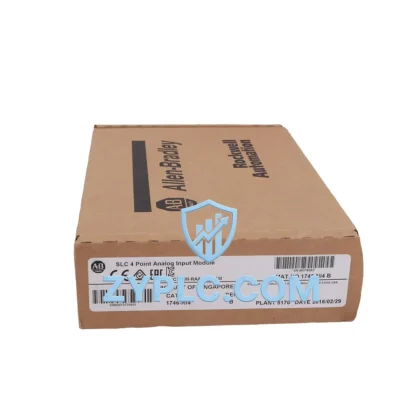
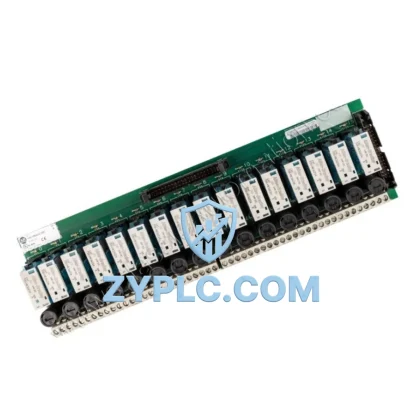
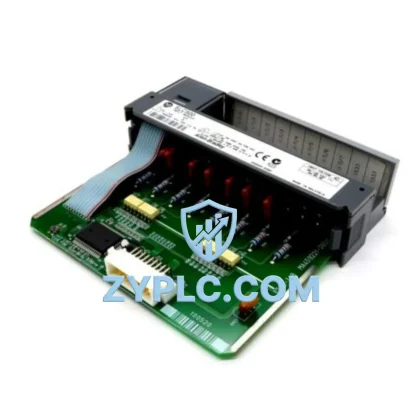
Siemens 6ES7221-1BF22-0XA0 Energy-Saving Digital Input Module for Optimized S7-200 Automation
The Siemens 6ES7221-1BF22-0XA0 is an 8-point, 24 VDC digital input expansion module engineered for the S7-200 Micro PLC family. In modern manufacturing environments where every watt and every millisecond of downtime carries a cost, this module plays a pivotal role in building lean, energy-aware control architectures. By delivering fast, reliable signal acquisition from field devices — limit switches, proximity sensors, push-buttons, and encoder outputs — the 6ES7221-1BF22-0XA0 ensures that the CPU receives accurate process data with minimal latency, enabling the controller to make precise, timely decisions that directly reduce unnecessary actuator run-time and idle energy consumption.
When integrated into a well-designed S7-200 system, this module works in concert with output modules such as the 6ES7222-1BF22-0XA0 (8-point digital output expansion) to form a tightly coupled I/O layer. The CPU — whether a 6ES7214-1BD23-0XB0 CPU 224 or a 6ES7216-2BD23-0XB0 CPU 226 — can then execute ladder or STL programs that implement energy-saving interlocks: shutting down conveyor drives during detected idle windows, staging motor start sequences to avoid simultaneous inrush currents, and triggering variable-frequency drive (VFD) speed reductions when sensor feedback indicates reduced load demand.
Efficiency Performance Table
| Parameter |
Specification / Value |
| SKU / Part Number |
6ES7221-1BF22-0XA0 |
| Input Points |
8 × 24 VDC Digital Inputs |
| Input Current per Point |
4 mA @ 24 VDC (low standby draw) |
| Module Power Consumption |
≤ 2 W (bus-powered, no external supply needed) |
| Signal Response Time |
0.2 ms filter (selectable) — minimizes false triggers & wasted actuator cycles |
| Compatible CPU Series |
Siemens S7-200 (CPU 221, 222, 224, 224XP, 226) |
| Compatible Programming Software |
STEP 7-Micro/WIN V4.0 SP9 and above |
| Application Environment |
Industrial automation, motor control panels, conveyor systems, packaging lines |
| Operating Temperature |
0 °C to +55 °C |
| Energy Optimization Value |
Enables precise on/off control to eliminate idle-state energy waste |
| Warranty |
12-Month Warranty — tested before shipment |
| Origin |
Germany (Siemens OEM) |
Energy-Aware Automation Architecture
Achieving genuine energy efficiency in a production facility requires more than simply installing efficient motors — it demands a control layer that can sense, decide, and act with precision. The 6ES7221-1BF22-0XA0 sits at the sensing edge of this architecture. Its 8 digital inputs feed real-time field status into the S7-200 CPU, which can then coordinate a cascade of energy-saving responses across the entire drive and control system.
Consider a typical motor control application: a Siemens SINAMICS G120C variable-frequency drive governs a 7.5 kW conveyor motor. The drive receives its run/stop command from a digital output on the 6ES7222-1BF22-0XA0 output module, while the 6ES7221-1BF22-0XA0 reads the upstream and downstream photoelectric sensors. When both sensors report no product presence for a configurable dwell time — a condition the CPU detects within one scan cycle — the program issues a speed-reduction command to the SINAMICS G120C via the USS protocol over the S7-200’s RS-485 port, dropping the motor to 20 Hz standby speed. This single logic sequence, made possible by reliable input acquisition, can reduce conveyor energy consumption by 30–50% during low-throughput periods.
For multi-axis systems, the same input module integrates with Siemens SIMATIC ET 200S distributed I/O nodes connected over PROFIBUS-DP, allowing the S7-200 to act as a DP master and extend its sensing reach across large factory floors without running long signal cables. Power monitoring at the panel level can be handled by a Siemens SENTRON PAC3200 power meter, whose Modbus RTU output can be polled by the CPU to correlate input event frequency with actual kWh consumption — giving maintenance engineers actionable data for further optimization.
In servo-driven applications — such as a pick-and-place unit paired with a Siemens SINAMICS S110 servo drive and a 1FK7 servo motor — the digital inputs from the 6ES7221-1BF22-0XA0 provide the homing and limit-switch signals that define safe motion boundaries. Accurate boundary detection prevents over-travel faults that would otherwise trigger emergency stops, force full system restarts, and waste the energy consumed during re-homing sequences. Fewer unplanned stops directly translate to higher equipment utilization and lower energy cost per unit produced.
HMI visibility is equally important. A Siemens SIMATIC HMI KTP700 Basic panel connected to the S7-200 via MPI or PPI can display real-time input states, accumulated cycle counts, and energy-saving interlock status — empowering operators to identify bottlenecks and adjust line pacing without guesswork. When operators can see which inputs are triggering idle-mode transitions, they can fine-tune dwell timers and sensor positions to maximize the energy-saving window without sacrificing throughput.
Power Optimization in Real Production Lines
In a food and beverage packaging line running three shifts, the 6ES7221-1BF22-0XA0 was deployed across four S7-200 stations controlling filling, capping, labeling, and case-packing. By reading jam-detection sensors and upstream buffer-full signals, the CPU could implement a cascaded shutdown sequence: when the case-packer buffer filled, the labeler slowed, which in turn signaled the capper to reduce speed, and finally the filler entered a low-speed recirculation mode. This coordinated response — all triggered by digital inputs read through the 6ES7221-1BF22-0XA0 — reduced total line power draw by approximately 18% during buffer-full events, which occurred on average 40 minutes per shift.
In an automotive body-shop welding cell, the same module provided the robot-ready and fixture-clamped signals that gated the welding power supply enable. By ensuring the power supply only energized when all fixture inputs confirmed a valid part-present condition, the plant eliminated approximately 200 unnecessary power-supply warm-up cycles per day — each cycle consuming roughly 0.3 kWh. The result was a measurable reduction in monthly electricity costs with zero impact on cycle time.
Predictive maintenance also benefits from dense input monitoring. By tracking the cumulative on-time of motor run signals read through the 6ES7221-1BF22-0XA0, the S7-200 CPU can implement runtime-based maintenance alerts — notifying technicians when a motor has accumulated 2,000 hours of operation and is due for bearing inspection. Addressing wear before failure eliminates unplanned downtime, which is always the most energy-inefficient event in any production schedule: a stopped line still consumes HVAC, lighting, and auxiliary power while producing nothing.
All units supplied by ZYPLC undergo full functional testing prior to shipment. Each 6ES7221-1BF22-0XA0 is verified for correct input response across all 8 channels, proper bus communication with a reference S7-200 CPU, and compliance with rated input voltage thresholds. Stock is maintained for immediate dispatch, and every unit is covered by a 12-month warranty — giving procurement and maintenance teams the confidence to plan replacements and spares without budget risk.
Energy Optimization FAQ
Q1: How does the 6ES7221-1BF22-0XA0 contribute to energy savings compared to a standard digital input module?
The module’s selectable input filter time (0.2 ms to 12.8 ms) allows engineers to eliminate signal noise without adding software debounce delays. Faster, cleaner input signals mean the CPU can react to process changes — such as a conveyor jam or a buffer-full condition — in a single scan cycle rather than waiting for multiple filtered samples. This speed advantage allows energy-saving interlocks (motor slowdown, drive standby) to activate sooner, reducing the duration of wasteful full-speed idle running.
Q2: Is the 6ES7221-1BF22-0XA0 compatible with S7-200 SMART CPUs or only the classic S7-200?
This module is designed for the classic Siemens S7-200 series (CPU 221 through CPU 226). It is not electrically or mechanically compatible with the S7-200 SMART platform, which uses its own expansion module family (e.g., 6ES7288-2DE08-0AA0). If you are migrating from S7-200 to S7-200 SMART, please contact our team for the correct replacement module recommendation.
Q3: What is the recommended replacement or upgrade path if the 6ES7221-1BF22-0XA0 is discontinued in my region?
For new installations requiring higher channel density or Ethernet connectivity, the Siemens S7-1200 platform with SM 1221 digital input signal modules offers a direct functional upgrade path. However, for existing S7-200 systems where a like-for-like replacement is required to avoid reprogramming costs, ZYPLC maintains stock of the 6ES7221-1BF22-0XA0 and can advise on compatible alternatives within the S7-200 expansion range.
Q4: What does the 12-month warranty cover, and what is the testing process before shipment?
Every 6ES7221-1BF22-0XA0 unit shipped by ZYPLC is tested for: (1) correct logical response on all 8 input channels at rated 24 VDC, (2) successful data exchange with a reference S7-200 CPU via the expansion bus, and (3) absence of physical damage or connector wear. The 12-month warranty covers manufacturing defects and functional failures under normal operating conditions. Units that fail in service within the warranty period are replaced or refunded — no restocking fees, no lengthy RMA delays.
© 2026 ZYPLC. All rights reserved.
Original Source: https://zyplc.com
Contact: +86 19859288691 | plc.sales@zyplc.com