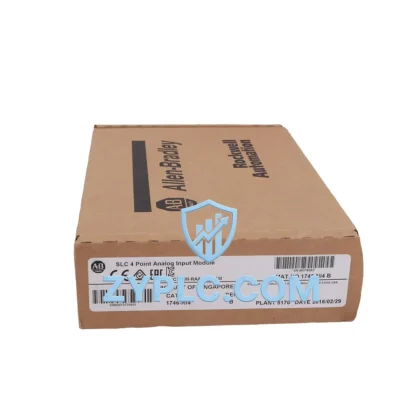
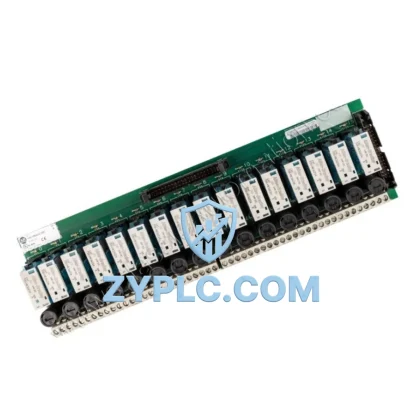
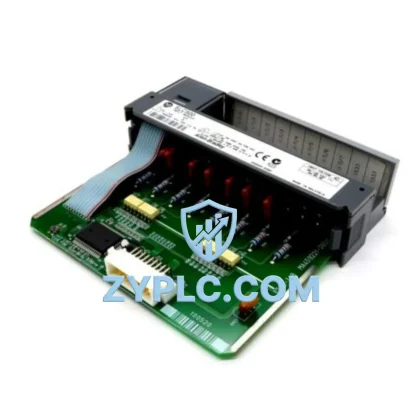
Siemens 6ES7331-7PF11-0AB0 SM 331 System-Ready Analog Input for S7-300 Architecture
The Siemens 6ES7331-7PF11-0AB0 is an 8-channel analog input module belonging to the SM 331 family within the SIMATIC S7-300 programmable logic controller platform. Designed to occupy a standard S7-300 rack slot, this module serves as the critical signal acquisition layer between field instrumentation and the central processing unit, enabling precise measurement of voltage and current signals across a wide range of industrial process environments. Its role within a layered automation architecture extends far beyond simple signal conversion — it anchors the I/O layer to the control layer, ensuring that real-time process data flows reliably to the CPU for closed-loop regulation, alarm management, and supervisory reporting.
In a complete S7-300 control system, the 6ES7331-7PF11-0AB0 operates in close coordination with the CPU module — typically a CPU 314, CPU 315-2 DP, or CPU 317-2 PN/DP — which handles program execution and data processing. The module communicates over the S7-300 backplane bus, delivering digitized analog values directly to the CPU’s process image input table with scan-cycle synchronization. This tight integration eliminates the latency and protocol overhead associated with external signal conditioning units, making the SM 331 module the preferred choice for high-density analog acquisition in compact and mid-range control cabinets.
Power distribution within the S7-300 rack is managed by the PS 307 power supply module, which provides stable 24 VDC to the backplane and all installed I/O modules including the 6ES7331-7PF11-0AB0. Proper power rail sizing is essential when combining multiple analog input modules with digital I/O modules such as the SM 321 digital input module and SM 322 digital output module on the same rack. The IM 360 and IM 361 interface modules extend the system across multiple racks when the I/O count exceeds single-rack capacity, preserving backplane communication integrity across expansion racks.
Signal wiring to the 6ES7331-7PF11-0AB0 is facilitated through front connector assemblies compatible with the S7-300 form factor, allowing field cables from transmitters, thermocouples, RTDs, and pressure sensors to be terminated directly at the module face. The module supports configurable input ranges per channel group, accommodating ±10 V, ±5 V, 0–10 V, 0–20 mA, and 4–20 mA signals, which makes it suitable for interfacing with a broad spectrum of field devices without requiring external signal converters. This flexibility is particularly valuable in process industries where instrumentation from multiple vendors must be integrated into a unified control architecture.
For applications requiring communication beyond the local rack, the S7-300 platform supports PROFIBUS DP and PROFINET IO network layers. The CP 342-5 PROFIBUS communication processor and CP 343-1 PROFINET module extend the control system’s reach to distributed I/O stations, variable frequency drives, and remote HMI panels. The 6ES7331-7PF11-0AB0 contributes to this networked architecture by providing the centralized analog acquisition backbone, while distributed analog signals can be handled by ET 200S or ET 200M remote I/O stations connected via PROFIBUS or PROFINET. This hybrid topology balances centralized processing efficiency with the flexibility of distributed field connectivity.
Human-machine interface integration is achieved through SIMATIC HMI panels such as the TP700 Comfort or MP377 Multi Panel, which communicate with the S7-300 CPU via MPI, PROFIBUS, or Ethernet. Analog values acquired by the 6ES7331-7PF11-0AB0 are mapped to HMI tags, enabling operators to monitor process variables, configure setpoints, and respond to alarms in real time. This end-to-end data path — from field sensor through the SM 331 module, across the backplane to the CPU, and up to the HMI — represents the fundamental signal flow of a well-engineered S7-300 automation system.
Redundancy considerations for critical process applications may involve duplicating the CPU and power supply layers while maintaining shared I/O through the standard rack. For applications demanding higher availability, the S7-400H redundant controller platform offers a migration path while preserving the investment in S7-300 field wiring and instrumentation. The 6ES7331-7PF11-0AB0’s compatibility with standard S7-300 racks ensures that it can remain in service during phased system upgrades, reducing capital expenditure and minimizing production downtime during modernization projects.
Long-term maintainability is a defining advantage of the SM 331 module family. The 6ES7331-7PF11-0AB0 is a direct replacement for aging analog input modules in existing S7-300 installations, requiring no rack modification or CPU firmware update in most cases. Spare module availability supports planned maintenance strategies, allowing engineering teams to pre-position inventory for rapid swap-out during scheduled shutdowns. All modules supplied by ZYPLC are tested, verified, and covered by a 12-Month Warranty, ensuring operational confidence throughout the replacement lifecycle.
Architecture Specification Table
| Parameter |
Specification |
| System Role |
Analog Input Module — I/O Layer, S7-300 Rack |
| SKU / Part Number |
6ES7331-7PF11-0AB0 |
| Module Family |
SM 331, SIMATIC S7-300 |
| Number of Channels |
8 Analog Inputs (configurable per channel group) |
| Input Signal Types |
±10 V, ±5 V, 0–10 V, 0–20 mA, 4–20 mA |
| Resolution |
Up to 12-bit + sign |
| Conversion Time |
Approx. 52 ms per channel (all 8 channels active) |
| Supply Voltage |
24 VDC via S7-300 backplane (PS 307 compatible) |
| Current Consumption |
Approx. 100 mA from backplane 5 VDC bus |
| Communication Interface |
S7-300 Backplane Bus (internal) |
| Compatible CPUs |
CPU 312, 314, 315-2 DP, 317-2 PN/DP and others |
| Installation |
Standard S7-300 rack slot, DIN rail mountable |
| Operating Temperature |
0 °C to +60 °C |
| Protection Class |
IP20 |
| Country of Origin |
Germany |
| Warranty |
12-Month Warranty (ZYPLC) |
| Contextual Integration |
Supported — compatible with existing S7-300 racks without hardware modification |
Coordinated Control System Design
A production-ready S7-300 system built around the 6ES7331-7PF11-0AB0 typically includes the following coordinated components. The CPU 315-2 DP serves as the central processing unit, executing the control program and managing the process image that includes analog values from the SM 331 module. The PS 307 5A power supply provides regulated 24 VDC to the rack, ensuring stable operation of both the CPU and all I/O modules under varying load conditions. The SM 321 digital input module and SM 322 digital output module complement the analog acquisition function by handling discrete field signals such as limit switches, solenoid valves, and motor contactors within the same rack.
When the I/O count exceeds the capacity of a single rack, the IM 360 send interface module and IM 361 receive interface module extend the backplane across up to three additional racks, maintaining seamless communication between the CPU and all installed modules. For distributed field connectivity, the CP 342-5 PROFIBUS DP communication processor connects the S7-300 system to remote ET 200M or ET 200S I/O stations, variable frequency drives, and intelligent field devices. The CP 343-1 PROFINET module enables Ethernet-based integration with SCADA systems, MES platforms, and SIMATIC HMI panels such as the TP700 Comfort, completing the vertical data integration from field sensor to enterprise reporting layer.
Application in Layered Automation Systems
The 6ES7331-7PF11-0AB0 finds application across a wide range of process and discrete manufacturing industries. In chemical and petrochemical plants, the module acquires 4–20 mA signals from pressure transmitters, flow meters, and level sensors, feeding real-time process data to the S7-300 CPU for PID loop control and safety interlock management. In water and wastewater treatment facilities, it monitors pH, turbidity, dissolved oxygen, and flow rate signals across multiple treatment stages, supporting both regulatory compliance reporting and automated dosing control.
In power generation and distribution substations, the SM 331 module interfaces with current transformers and voltage transducers to provide continuous electrical parameter monitoring, enabling the S7-300 system to manage load balancing, fault detection, and protection relay coordination. In metallurgical and mining operations, the module handles temperature signals from thermocouples and RTDs in furnace control systems, where precise thermal management directly impacts product quality and energy efficiency. In packaging and material handling lines, the 6ES7331-7PF11-0AB0 monitors tension, weight, and position signals from load cells and linear transducers, ensuring consistent product quality and minimizing waste across high-speed production cycles.
Architecture Engineering FAQ
Q1: Is the 6ES7331-7PF11-0AB0 compatible with all S7-300 CPU variants, and does it require any special configuration in STEP 7 or TIA Portal?
The SM 331 module is compatible with all standard S7-300 CPUs that support analog I/O modules, including the CPU 312, 314, 315-2 DP, and 317-2 PN/DP. Configuration is performed in SIMATIC STEP 7 (v5.x) or TIA Portal (with S7-300 support package) by inserting the module into the hardware configuration at the correct rack slot and setting the input range and measurement type per channel group. No special firmware update is required on the CPU for standard replacement scenarios.
Q2: How does the module support long-term maintenance and spare parts strategy in an existing S7-300 installation?
The 6ES7331-7PF11-0AB0 is a direct form-fit-function replacement for the same part number in any S7-300 rack. Because it uses the standard S7-300 front connector wiring system, field cables do not need to be re-terminated during module replacement — the front connector detaches from the old module and attaches to the new one, preserving all wiring. ZYPLC maintains stock of this module to support planned maintenance and emergency replacement requirements, and all supplied modules carry a 12-Month Warranty covering functional defects.
Q3: What does Contextual Integration mean for this module, and how does it affect system commissioning?
Contextual Integration refers to the module’s ability to be installed and commissioned within an existing S7-300 architecture without requiring changes to the rack, backplane, power supply, or CPU configuration beyond the hardware configuration update in STEP 7 or TIA Portal. This means engineering teams can replace or expand analog input capacity with minimal disruption to the running system, reducing commissioning time and the risk of configuration errors during scheduled maintenance windows.
© 2026 ZYPLC. All rights reserved.
Original Source: https://zyplc.com
Contact: +86 19859288691 | [email protected]