Siemens 6ES7421-7BH01-0AB0 System-Ready Digital Input for S7-400 Architecture
The Siemens 6ES7421-7BH01-0AB0 is the SM 421 digital input module engineered for the SIMATIC S7-400 control system architecture — one of Siemens’ most powerful and scalable platforms for process automation, power distribution, and heavy industrial environments. This module does not operate in isolation; it is a precision-engineered component within a layered automation hierarchy, receiving discrete field signals from sensors, limit switches, proximity detectors, and push-button stations, then delivering that data with deterministic accuracy to the S7-400 CPU for real-time decision-making.
In a fully integrated S7-400 system, the 6ES7421-7BH01-0AB0 occupies a defined slot within the central rack or expansion rack, working in close coordination with the CPU modules — such as the 6ES7414-2XK05-0AB0 or 6ES7416-3XR05-0AB0 — which execute the control logic and manage the overall program cycle. The module supports 32 digital input channels at 24 V DC, providing high-density signal acquisition that reduces rack space requirements while maintaining full diagnostic transparency. Each channel is individually monitored, and wire-break or short-circuit faults are reported directly to the CPU and the engineering station via PROFIBUS DP or MPI communication, enabling rapid fault isolation without manual inspection of field wiring.
The S7-400 backplane bus architecture ensures that the 6ES7421-7BH01-0AB0 communicates with the CPU at backplane bus speeds, eliminating the latency associated with fieldbus polling. This is critical in applications where input scan time directly affects control loop performance — such as turbine protection systems, emergency shutdown sequences, or high-speed conveyor interlocking. When paired with the PS 407 power supply module (e.g., 6ES7407-0KA02-0AA0), the entire rack maintains stable 24 V DC and 5 V DC bus voltages, ensuring that the digital input module operates within its specified electrical parameters even under fluctuating load conditions.
System architects designing redundant S7-400 configurations will find the 6ES7421-7BH01-0AB0 fully compatible with the H-system (High Availability) architecture. In these deployments, two S7-400H CPUs — such as the 6ES7414-4HM14-0AB0 — operate in hot-standby mode, and the digital input module’s signals are mirrored across both CPU subsystems via the synchronization modules. This ensures that a single CPU failure does not interrupt the acquisition of field signals, maintaining process continuity in critical applications such as oil and gas separation trains, chemical reactor control, or water treatment dosing systems.
On the network layer, the S7-400 system communicates upstream to SCADA platforms and MES systems via Industrial Ethernet using CP 443-1 communication processors (e.g., 6GK7443-1EX30-0XE0), enabling the 6ES7421-7BH01-0AB0’s input states to be visualized in real time on WinCC SCADA or third-party OPC UA-compatible HMI systems. Operators at the control room level can monitor individual channel states, acknowledge alarms, and review historical input trends without leaving the supervisory interface. This contextual integration between the field input layer and the supervisory layer is what transforms raw discrete signals into actionable operational intelligence.
For distributed I/O architectures, the S7-400 CPU can also manage remote ET 200M stations via PROFIBUS DP, where additional SM 421-series digital input modules extend the system’s reach to field junction boxes located hundreds of meters from the central control cabinet. This allows engineers to standardize on the same module family across both centralized and distributed topologies, simplifying spare parts management and reducing training overhead for maintenance teams.
The 6ES7421-7BH01-0AB0 is also compatible with the SIMATIC S7-400 FM (Function Module) slots, allowing it to coexist in racks alongside FM 450-1 counter modules, FM 451 positioning modules, and CP 441-2 serial communication processors, all sharing the same backplane bus and power infrastructure. This modularity is a defining characteristic of the S7-400 platform and is one of the primary reasons it remains the preferred choice for large-scale process industries requiring long system lifecycles and high component availability.
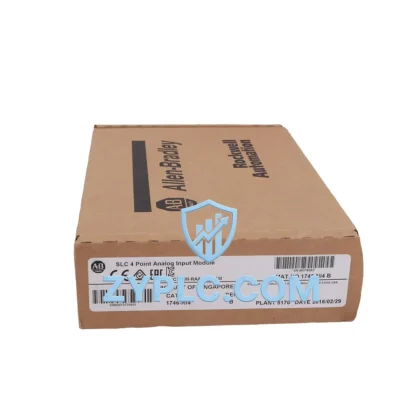
Every 6ES7421-7BH01-0AB0 unit supplied by ZYPLC undergoes pre-shipment functional verification, including channel continuity checks and communication handshake testing with an S7-400 CPU. Units are shipped with original packaging and documentation where available, and all orders are covered by a 12-Month Warranty. ZYPLC maintains ready stock of this module to support urgent maintenance requirements, planned shutdowns, and new system builds across global industrial sites.
Architecture Specification Table
| Parameter |
Specification |
| System Role |
Digital Input Module — Signal Acquisition Layer |
| Compatible Platform |
SIMATIC S7-400 (Central Rack & Expansion Rack) |
| Number of Inputs |
32 Digital Inputs |
| Input Voltage |
24 V DC |
| Input Current (per channel) |
Approx. 7 mA at 24 V DC |
| Signal Groups |
2 groups of 16 channels |
| Isolation |
Optocoupler isolation between field and backplane |
| Communication Interface |
S7-400 Backplane Bus (MPI / PROFIBUS DP via CPU) |
| Diagnostics |
Wire-break detection, short-circuit monitoring per channel |
| Installation |
S7-400 rack slot (CR / ER), DIN rail compatible rack |
| Operating Temperature |
0°C to +60°C |
| Protection Class |
IP20 |
| Origin |
Germany |
| Warranty |
12-Month Warranty — All units pre-shipment tested |
Coordinated Control System Design
The 6ES7421-7BH01-0AB0 achieves its full value when integrated within a complete S7-400 system architecture. At the control layer, the S7-400 CPU — such as the 6ES7414-2XK05-0AB0 or the high-availability 6ES7414-4HM14-0AB0 — processes the discrete input states delivered by this module and executes the corresponding control logic within each program scan cycle. The PS 407 power supply module (6ES7407-0KA02-0AA0) provides the stable 24 V DC and 5 V DC bus voltages required for reliable module operation across the entire rack.
On the output side, the SM 421 digital input module works in tandem with SM 422 digital output modules (e.g., 6ES7422-1BL00-0AA0) to form complete discrete I/O pairs — inputs reading field device states, outputs driving actuators, solenoid valves, motor starters, and relay coils. For analog process variables, SM 431 analog input modules (e.g., 6ES7431-1KF20-0AB0) complement the digital input layer by capturing temperature, pressure, and flow signals from transmitters, giving the CPU a complete picture of both discrete and continuous process states.
At the network layer, CP 443-1 Ethernet communication processors connect the S7-400 system to plant-wide Industrial Ethernet networks, enabling SCADA integration via OPC UA or S7 protocol. IM 460/461 interface modules extend the system to remote expansion racks, while PROFIBUS DP master interfaces in the CPU allow the S7-400 to manage distributed ET 200M I/O stations in remote field cabinets. The TP 1500 Comfort HMI panel provides local operator visualization, displaying the real-time status of digital inputs — including the channels served by the 6ES7421-7BH01-0AB0 — with alarm management and trend logging capabilities.
Application in Layered Automation Systems
The 6ES7421-7BH01-0AB0 is deployed across a wide range of heavy industrial and process automation environments where signal integrity, system redundancy, and long-term maintainability are non-negotiable requirements.
In power generation and distribution facilities, this module acquires discrete status signals from circuit breakers, isolator switches, and protection relay contacts, feeding the S7-400 CPU with the real-time switchgear state required for load management and fault isolation sequences. In oil and gas processing plants, it monitors valve position feedback, emergency shutdown (ESD) pushbutton states, and gas detector alarm contacts, forming the discrete input backbone of safety instrumented systems (SIS) operating alongside the main process control system.
In chemical and petrochemical facilities, the module’s per-channel diagnostic capability is essential for detecting wiring faults in hazardous area junction boxes before they escalate into process upsets. In water and wastewater treatment plants, it monitors pump run/fail feedback, level switch states, and valve open/close confirmations across multiple treatment stages, enabling the S7-400 CPU to execute sequential control logic with full awareness of field device status.
In automotive and discrete manufacturing environments, the 6ES7421-7BH01-0AB0 handles high-density discrete input requirements from conveyor interlocks, robot safety gates, part-present sensors, and end-of-line test fixtures, supporting production line throughput rates that demand sub-millisecond input response times. In mining and metallurgy applications, it operates reliably in high-vibration, high-dust environments within sealed control cabinets, monitoring crusher status, conveyor belt alignment switches, and hoisting system interlocks.
Architecture Engineering FAQ
Q1: Is the 6ES7421-7BH01-0AB0 compatible with both the S7-400 central rack and expansion racks?
Yes. The module is designed for installation in any S7-400 rack slot — including the CR (Central Rack) and ER (Expansion Rack) configurations. When used in expansion racks, IM 460/461 interface modules handle the inter-rack communication, and the CPU addresses the module transparently as part of the unified I/O address space. No special configuration is required beyond standard STEP 7 or TIA Portal hardware configuration.
Q2: Can this module be used in an S7-400H redundant system, and how does failover affect input signal continuity?
The 6ES7421-7BH01-0AB0 is fully compatible with S7-400H high-availability architectures. In an H-system, both CPUs continuously synchronize their process images, including the digital input states from this module. In the event of a CPU failure, the standby CPU assumes control within the synchronization cycle time, and the input states are preserved without interruption. This makes the module suitable for safety-critical and continuous-process applications where input signal loss during failover is unacceptable.
Q3: What does the 12-Month Warranty cover, and how does ZYPLC support long-term maintenance requirements?
All 6ES7421-7BH01-0AB0 units supplied by ZYPLC are covered by a 12-Month Warranty against manufacturing defects and functional failures under normal operating conditions. Each unit undergoes pre-shipment functional testing to verify channel operation and backplane communication integrity. ZYPLC maintains ready inventory of this module to support both planned maintenance shutdowns and emergency replacement requirements, with fast global shipping to minimize plant downtime. For long-term maintenance planning, ZYPLC can advise on compatible replacement modules and system upgrade paths as the S7-400 platform evolves.
© 2026 ZYPLC. All rights reserved.
Original Source: https://zyplc.com
Contact: +86 19859288691 | plc.sales@zyplc.com