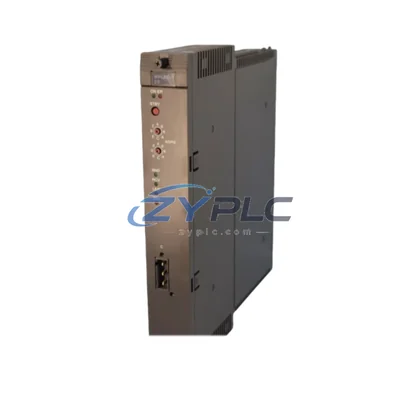
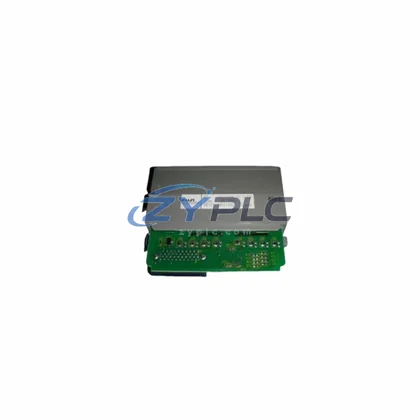
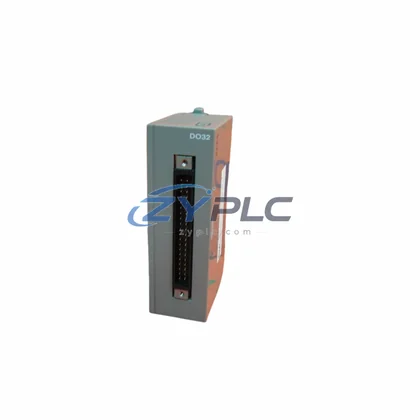
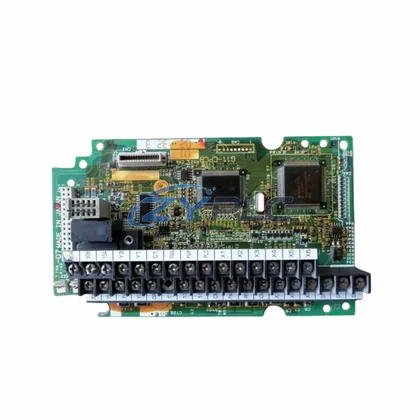
The Triconex 3510 is a high-performance Pulse Input Module engineered for the Tricon Triple Modular Redundant (TMR) safety system platform. Designed for demanding industrial environments where energy efficiency, process reliability, and equipment uptime are non-negotiable, the 3510 module plays a critical role in capturing real-time field signals — enabling the control system to make precise, maintenance decisions across the entire production line.
In modern industrial facilities, downtime is rarely caused by a single point of failure. It accumulates through imprecise signal acquisition, delayed control responses, and uncoordinated motor and drive operations. The Triconex 3510 addresses this at the source: by delivering accurate, high-resolution pulse input data to the Tricon controller, it ensures that every downstream control action — from variable frequency drive (VFD) speed adjustment to servo positioning — is based on verified, real-time process values rather than estimated or lagged data.
Whether deployed in oil and gas processing, chemical manufacturing, power generation, or heavy industrial automation, the 3510 module contributes directly to stable operating performance, unplanned downtime, and maintenance overhead.
Product Specification Table
| Parameter |
Specification / Value |
| Module Type |
Pulse Input Module |
| Compatible Platform |
Triconex Tricon TMR Safety System |
| Input Channels |
High-speed pulse input (field-configurable) |
| Operating Voltage |
24 VDC nominal field input |
| Power Consumption |
Low-power design; optimized for continuous 24/7 operation |
| Signal Accuracy |
High-resolution pulse counting for precise flow & speed measurement |
| Operating Temperature |
0°C to 60°C (industrial-grade thermal tolerance) |
| Application Environment |
Oil & Gas, Chemical, Power, Heavy Manufacturing |
| Communication Protocol |
Tricon backplane bus; compatible with TriStation 1131 programming |
| Maintenance Value |
Enables precise VFD and motor control, reducing excess energy draw |
| Redundancy Architecture |
Triple Modular Redundant (TMR) — fault-tolerant, zero unplanned downtime |
| Warranty |
Warranty and support terms confirmed before quote |
| Availability |
Confirmed via RFQ before quotation |
System Compatibility and Application
The Triconex 3510 does not operate in isolation — it is the sensing foundation upon which an entire energy-optimized automation architecture is built. In a typical Tricon-based control system, the 3510 module feeds pulse data from field instruments such as turbine flow meters, magnetic pickups, and encoder-equipped motors directly into the Tricon Main Chassis and its associated Tricon Communication Module (TCM), which coordinates data exchange across the control network.
At the drive layer, the pulse feedback captured by the 3510 is used to regulate Schneider Electric Altivar ATV320 and ATV630 series variable frequency drives, allowing the system to dynamically adjust motor speed in response to actual process demand rather than fixed setpoints. This alone can help restore stable operation when a compatible replacement is required.
For precision motion control, the 3510’s high-resolution pulse data integrates with Triconex TSAA (Tricon Safety Application Architecture) logic to coordinate servo drive outputs — particularly in applications where synchronized multi-axis motion must be maintained without energy-wasting overshoot or hunting behavior. In such configurations, the Tricon Digital Output Module (DO) and Tricon Analog Output Module (AO) work in tandem with the 3510 to close the control loop efficiently.
At the monitoring layer, the 3510’s pulse data feeds into power quality analyzers and maintenance planning systems (EMS) connected via Modbus RTU or PROFIBUS DP — both of which are supported within the Tricon communication framework. This enables plant engineers to correlate operating load data with production throughput in real time, identifying inefficiencies before they escalate into costly failures.
The Tricon I/O Expansion Chassis allows the 3510 to be deployed across distributed field locations without signal degradation, while the TriStation 1131 programming environment provides the software backbone for configuring operational-efficiency control strategies — including load shedding, demand response, and predictive shutdown sequences — all anchored to the accurate pulse data the 3510 delivers.
Maintenance and Replacement Notes
In a refinery or chemical plant running continuous processes, the cost of imprecise flow measurement is not just operational — it is financial and environmental. When a flow transmitter’s pulse output is misread or delayed, the control system compensates by over-driving pumps, compressors, or agitators, consuming far more energy than the process actually requires. The Triconex 3510 eliminates this uncertainty by providing the Tricon controller with clean, debounced, high-frequency pulse signals that accurately represent actual flow rates, shaft speeds, or positional increments.
In motor control applications, this translates directly into tighter PID loop performance. The VFD receives a more accurate demand signal, ramps up and down more precisely, and avoids the energy-wasting oscillation that occurs when control loops are tuned around noisy or inaccurate input data. Over a 12-month operating cycle, facilities have reported operational stability of Actual operating results depend on the installed system, load profile, and commissioning parameters.
From a maintenance perspective, the 3510’s TMR architecture means that a single module fault does not interrupt production or trigger an emergency shutdown — the system continues operating on the remaining two redundant channels while maintenance is scheduled during a planned window. This eliminates the energy and productivity losses associated with unplanned restarts, which often require extended warm-up periods and consume disproportionate amounts of energy compared to steady-state operation.
Every unit supplied by ZYPLC undergoes a full outgoing quality control (OQC) test prior to shipment, verifying channel integrity, pulse counting accuracy, and backplane communication performance. This ensures that the module performs to specification from day one, without the energy-wasting commissioning delays that can occur with untested spare parts. With RFQ-based availability and a warranty and support terms confirmed before quote, the Triconex 3510 is a reliable, cost-effective solution for facilities seeking to optimize energy performance without compromising safety system integrity.
Product Sourcing FAQ
Q1: How does the Triconex 3510 contribute to operational stability in a motor control system?
The 3510 provides high-accuracy pulse input data that enables the Tricon controller to send precise speed reference signals to variable frequency drives. By eliminating signal noise and measurement lag, the VFD can operate at the exact speed required by the process — avoiding over-speed conditions that waste energy and accelerate mechanical wear.
Q2: Is the Triconex 3510 compatible with modern maintenance planning and SCADA systems?
Yes. The Tricon platform supports Modbus RTU, PROFIBUS DP, and OPC-DA/UA communication protocols, allowing the 3510’s pulse data to be integrated into plant-wide SCADA, DCS, and maintenance planning systems for real-time monitoring and reporting.
Q3: Can the 3510 replace an older Triconex pulse input module without system reconfiguration?
In most cases, yes. The 3510 is designed as a direct replacement within the Tricon chassis. Minor TriStation 1131 configuration verification is recommended to confirm channel mapping, but hardware replacement is typically plug-and-play within the same chassis slot.
Q4: What does the warranty and support terms confirmed before quote cover, and what is the testing process before shipment?
All Triconex 3510 modules supplied by ZYPLC are tested for pulse input channel accuracy, backplane communication integrity, and power rail stability before shipment. The warranty and support terms confirmed before quote covers hardware defects and functional failures under normal operating conditions. Expedited replacement support is available for critical process applications.