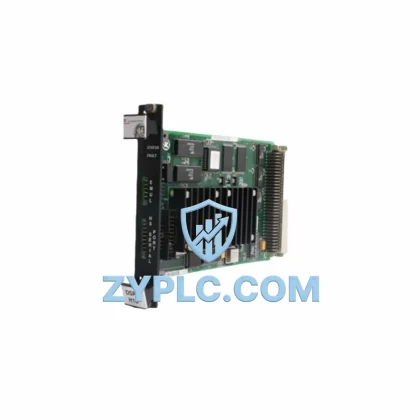
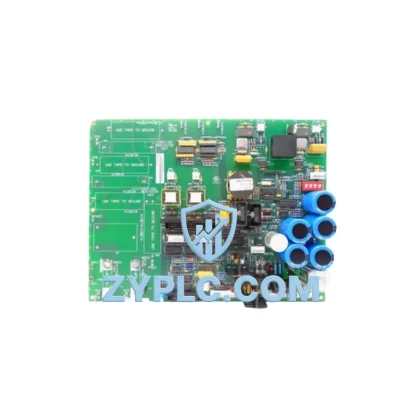
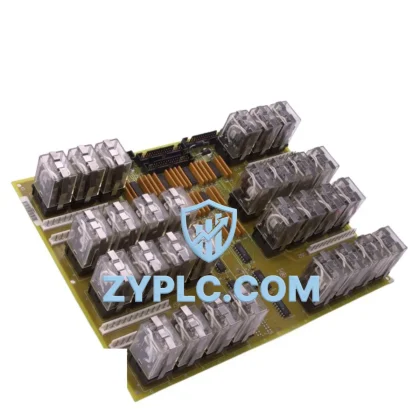
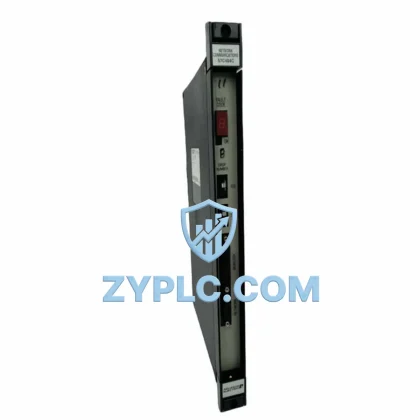
Woodward SST-DN3-PCI-2 DeviceNet Master/Slave PCI Card: Control System and system integration
In modern industrial automation, the integrity of a control system depends not on any single component, but on the seamless coordination of every layer — from the CPU and I/O modules down to the fieldbus communication interfaces that bind them together. The Woodward SST-DN3-PCI-2 is a high-performance DeviceNet Master/Slave PCI interface card engineered to serve as a critical communication bridge within layered automation architectures. Whether deployed in discrete manufacturing, process control, power distribution, or water treatment facilities, this card delivers the protocol-level reliability that system integrators and maintenance engineers depend on for long-term operational continuity.
The SST-DN3-PCI-2 occupies a pivotal position in the network layer of a control system hierarchy. It connects host PCs or embedded controllers directly to the DeviceNet fieldbus, enabling deterministic, real-time data exchange between the control layer and field devices such as variable frequency drives, smart sensors, motor starters, and distributed I/O blocks. Its dual Master/Slave capability means it can function as a network master — scanning and managing up to 63 DeviceNet nodes — or operate as a slave device under a higher-level controller, providing exceptional architectural flexibility across diverse system topologies.
Product Specification Table
| Parameter |
Specification |
| Model / SKU |
SST-DN3-PCI-2 |
| Brand |
Woodward SST |
| System Role |
DeviceNet Master / Slave PCI Interface Card |
| Bus Interface |
PCI (32-bit, 33 MHz) |
| Network Protocol |
DeviceNet (CIP-based, ISO 11898) |
| Node Capacity |
Up to 63 DeviceNet nodes (Master mode) |
| Data Rate |
125 kbps / 250 kbps / 500 kbps (auto-detect) |
| Operating Mode |
Master and/or Slave (configurable) |
| I/O Data Exchange |
Polled, Strobe, Change-of-State (COS), Cyclic |
| Electrical Interface |
Isolated CAN transceiver, 24 VDC bus power compatible |
| OS Compatibility |
Windows, Linux, VxWorks, QNX (driver support) |
| Operating Temperature |
0°C to +60°C |
| Storage Temperature |
-40°C to +85°C |
| Humidity |
5% to 95% RH, non-condensing |
| Mounting |
Standard PCI slot (half-length card) |
| Certifications |
CE, UL (industrial grade) |
| Warranty |
12-Month Warranty — covers hardware defects and functional failures under normal operating conditions |
| system integration |
Fully compatible with SST DeviceNet configuration utilities; supports EDS file import and network commissioning tools |
System Compatibility Notes
The SST-DN3-PCI-2 is rarely deployed in isolation. Its true value emerges when it is integrated as part of a coordinated, multi-layer control architecture. In a typical system design, the card is installed in an industrial PC or embedded controller that serves as the DeviceNet network master. From this position, it communicates with a broad range of field devices and subsystems across the DeviceNet trunk line.
At the control layer, the SST-DN3-PCI-2 interfaces with SCADA software platforms and DCS controllers, providing the communication backbone that allows supervisory systems to issue commands and receive real-time feedback from the field. In systems where a Siemens S7-300 or S7-400 PLC serves as the primary controller, the SST card can be used in an adjacent PC-based gateway role, bridging DeviceNet field devices into the broader PROFIBUS or PROFINET architecture via protocol conversion middleware.
At the I/O layer, the card directly manages distributed I/O blocks such as the Allen-Bradley 1756-DNB DeviceNet Scanner or equivalent third-party DeviceNet I/O adapters, collecting digital and analog signals from sensors, limit switches, and transmitters distributed across the plant floor. This eliminates the need for point-to-point wiring back to a central marshalling cabinet, dramatically reducing installation complexity and improving signal integrity over long cable runs.
In drive and motion control applications, the SST-DN3-PCI-2 communicates with Rockwell PowerFlex 700 variable frequency drives and similar DeviceNet-enabled drives, enabling speed reference, torque control, and fault status monitoring to be handled entirely over the network. This integration supports coordinated multi-axis motion sequences in packaging lines, conveyor systems, and material handling applications without requiring dedicated analog signal wiring for each drive.
For power and maintenance planning layers, the card can interface with DeviceNet-compatible power monitors and circuit protection relays, enabling real-time energy consumption data to be fed back to the control system for load balancing and predictive maintenance algorithms. In conjunction with SST-DN3-104-2 or SST-PBMS-PCI DeviceNet/PROFIBUS multi-protocol cards, engineers can build hybrid communication architectures that bridge legacy fieldbus segments with newer Ethernet-based control networks.
At the HMI layer, operator interface terminals connected to the host PC running the SST-DN3-PCI-2 can display live network diagnostics, node status, and I/O data maps — providing operators with full visibility into the DeviceNet segment without requiring a separate network analyzer. The SST configuration software supports EDS file management, node commissioning, and live I/O monitoring, which significantly reduces the time required for initial system startup and ongoing troubleshooting.
Redundancy considerations are also addressed within the SST architecture. In critical applications, a secondary SST-DN3-PCI-2 card can be installed in a standby host system, with network switchover logic implemented at the application level to ensure continuity of DeviceNet master functions in the event of a primary host failure. This approach is commonly used in water treatment SCADA systems and substation automation environments where unplanned downtime carries significant operational and safety consequences.
Industrial Application Notes
Discrete Manufacturing: In automotive assembly and electronics manufacturing lines, the SST-DN3-PCI-2 manages DeviceNet segments connecting robotic end-effectors, vision systems, barcode scanners, and pneumatic valve manifolds. Its high-speed polling capability ensures that cycle times remain consistent even as the number of networked devices increases, supporting lean manufacturing objectives and OEE improvement programs.
Power and Utilities: In electrical substation automation and power distribution control rooms, the card provides a reliable interface between PC-based SCADA workstations and DeviceNet-enabled protection relays, energy meters, and switchgear controllers. Its isolated CAN transceiver design provides electrical noise immunity in environments where high-voltage switching events can introduce significant electromagnetic interference on communication lines.
Petrochemical and Refining: Process control systems in oil refineries and chemical plants rely on deterministic fieldbus communication to manage flow control valves, pressure transmitters, and temperature sensors across geographically distributed process units. The SST-DN3-PCI-2 supports Change-of-State (COS) messaging, which minimizes unnecessary network traffic while ensuring that critical process variable changes are reported to the control system without delay.
Water and Wastewater Treatment: Municipal water treatment facilities use DeviceNet to connect pump motor starters, level sensors, chlorination dosing systems, and SCADA RTUs across treatment stages. The SST-DN3-PCI-2’s ability to operate as both master and slave within the same network segment provides the architectural flexibility needed to integrate legacy DeviceNet installations with newer supervisory control platforms during phased system upgrades.
Mining and Metallurgy: In underground mining and surface ore processing operations, the card supports communication with conveyor drive systems, crusher motor controls, and ventilation fan controllers over DeviceNet. Its wide operating temperature range and robust electrical isolation make it suitable for deployment in control rooms adjacent to heavy industrial equipment where environmental conditions are demanding.
Packaging and Material Handling: High-speed packaging lines require precise coordination between filling stations, capping machines, labelers, and reject systems. The SST-DN3-PCI-2 provides the low-latency DeviceNet communication needed to synchronize these subsystems, with polled I/O messaging ensuring that each device receives its command within a defined scan cycle regardless of overall network load.
Product Compatibility FAQ
Q1: Is the SST-DN3-PCI-2 compatible with existing DeviceNet networks that use Allen-Bradley or Omron master controllers?
Yes. The SST-DN3-PCI-2 is fully compliant with the DeviceNet specification (ODVA) and uses standard CIP messaging, making it interoperable with networks managed by Allen-Bradley 1756-DNB scanners, Omron DeviceNet masters, and other ODVA-certified controllers. When deployed as a slave, it responds to standard explicit and I/O messaging from any compliant master. EDS files are provided to simplify integration into existing network configurations without requiring manual parameter entry.
Q2: Can the SST-DN3-PCI-2 be used in a redundant architecture, and what is required to implement network failover?
The card supports redundant deployment through a dual-host architecture. Two host systems, each equipped with an SST-DN3-PCI-2, can be configured so that the secondary system monitors the primary’s health via a separate communication channel (Ethernet or serial). Upon detecting a primary failure, the secondary system assumes the DeviceNet master role. Application-level failover logic must be implemented in the host software; the SST API and driver libraries provide the necessary hooks for network state management and master token handover. This architecture is validated for use in water treatment SCADA and substation automation applications requiring high availability.
Q3: What does the 12-Month Warranty cover, and what support is available for installation and commissioning?
The 12-Month Warranty covers all hardware defects and functional failures arising under normal operating conditions from the date of shipment. This includes PCB-level component failures, connector integrity issues, and firmware defects that affect card functionality. Physical damage resulting from incorrect installation, overvoltage events, or environmental exposure beyond rated limits is excluded. For installation and commissioning support, ZYPLC provides pre-sales technical consultation to verify system compatibility, and post-sales engineering support to assist with driver installation, EDS file configuration, and network diagnostics. Replacement units are dispatched within 3 business days upon warranty claim approval.
© 2026 ZYPLC. All rights reserved.
Original Source: https://zyplc.com
Contact: +86 19859288691 | plc.sales@zyplc.com