YOKOGAWA AAI135-H03 S1 System-Ready Analog Input for CENTUM VP Control System Architecture
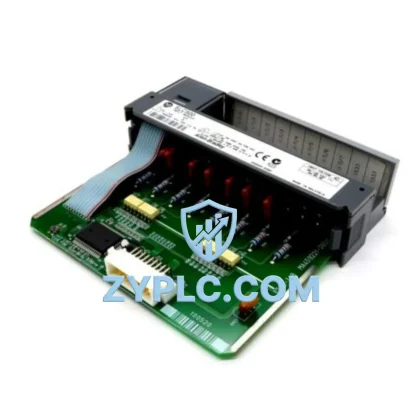
The YOKOGAWA AAI135-H03 S1 is a high-precision analog input module engineered for seamless integration within the CENTUM VP distributed control system (DCS) architecture. Rather than functioning as a standalone component, this module is designed to operate as a critical node within a layered automation hierarchy — connecting field instrumentation at the I/O layer to the control layer, communication backbone, and human-machine interface in a unified, coherent system. Its role in maintaining signal fidelity, system consistency, and long-term operational reliability makes it an essential element for engineers designing or maintaining process control infrastructure across demanding industrial environments.
In a complete CENTUM VP control system, the AAI135-H03 S1 occupies the field I/O layer, receiving 4–20 mA analog signals from transmitters, sensors, and field devices and converting them into digital values that the CPU unit — such as the FCU (Field Control Unit) — can process in real time. This signal flow is foundational to closed-loop control: without accurate, stable analog input acquisition, the entire control strategy from PID regulation to advanced process control becomes unreliable. The AAI135-H03 S1 addresses this by providing multi-channel, isolated analog input with high resolution and low drift, ensuring that the data reaching the control layer accurately reflects field conditions at all times.
System architects integrating the AAI135-H03 S1 will typically pair it with complementary modules within the same I/O nest or remote I/O station. Analog output modules such as the AAO145 work in tandem with the AAI135-H03 S1 to complete the measurement-and-actuation loop, while digital input modules like the ADV151 and digital output modules such as the ADV551 handle discrete signal acquisition and control. Together, these modules populate the I/O nest mounted on the CENTUM VP node unit, all communicating upstream via the Vnet/IP control network — YOKOGAWA’s high-speed, deterministic Ethernet-based control bus that ensures low-latency, high-reliability data exchange between field nodes and the central control domain.
At the control layer, the FCU (Field Control Unit) — including variants such as the AFV10D or AFV30D — processes the digitized analog inputs from the AAI135-H03 S1 and executes the configured control functions. The FCU communicates with the engineering workstation and operator station via the Vnet/IP network, enabling real-time monitoring, alarm management, and control parameter adjustment. For systems requiring redundancy, the AAI135-H03 S1 can be deployed in redundant I/O configurations, where dual-redundant field control units and redundant power supply modules — such as the PW482 or PW484 — ensure that a single point of failure at the power or control layer does not interrupt process operations.
The human-machine interface layer, typically realized through YOKOGAWA’s CENTUM VP Operator Station (HIS) or integrated SCADA displays, receives processed data from the FCU and presents it to operators in real time. The accuracy and stability of the AAI135-H03 S1’s analog input acquisition directly influences the quality of the process data displayed at the HMI, making it a silent but critical contributor to operator situational awareness and decision-making. In alarm-intensive environments such as petrochemical plants or power generation facilities, reliable analog input data is the foundation of effective alarm rationalization and process safety management.
From a maintenance and lifecycle perspective, the AAI135-H03 S1 supports hot-swap capability within the CENTUM VP architecture, allowing field engineers to replace modules without shutting down the control system. This is particularly valuable in continuous process industries — such as oil refining, chemical manufacturing, water treatment, and pulp and paper — where unplanned downtime carries significant operational and financial consequences. Combined with YOKOGAWA’s modular I/O nest design, the AAI135-H03 S1 enables a structured, predictable maintenance workflow that reduces mean time to repair (MTTR) and supports long-term asset management strategies.
For system integrators and procurement engineers, sourcing the AAI135-H03 S1 as part of a broader CENTUM VP architecture refresh or expansion project ensures compatibility across the entire I/O layer. Pairing this module with other YOKOGAWA CENTUM VP components — including communication gateway modules, terminal boards, and marshalling cabinets — guarantees that the system operates as a validated, tested assembly rather than a collection of individually sourced parts. This approach reduces commissioning risk, simplifies documentation, and supports the long-term availability of spare parts for the installed base.
All units supplied are covered by a 12-Month Warranty, with full Contextual Integration support to assist engineers in verifying module compatibility, configuring I/O assignments, and validating signal integrity within the existing CENTUM VP system architecture. Stock is available for immediate dispatch, supporting both planned maintenance schedules and urgent replacement requirements.
Architecture Specification Table
| Parameter |
Specification |
| Model |
AAI135-H03 S1 |
| Brand |
YOKOGAWA |
| Series |
CENTUM VP |
| Module Type |
Analog Input Module |
| System Role |
Field I/O Layer — Analog Signal Acquisition |
| Signal Type |
4–20 mA DC (Current Input) |
| Number of Channels |
16 Channels (typical for AAI135 series) |
| Resolution |
16-bit A/D Conversion |
| Isolation |
Channel-to-channel isolation |
| Communication |
Vnet/IP (YOKOGAWA proprietary control network) |
| Compatible CPU/FCU |
AFV10D, AFV30D (CENTUM VP Field Control Unit) |
| Power Supply |
Supplied via I/O nest backplane (PW482 / PW484) |
| Installation |
DIN rail / I/O nest mount, CENTUM VP node unit |
| Operating Temperature |
0°C to 55°C |
| Humidity |
10% to 90% RH (non-condensing) |
| Certifications |
CE, UL (subject to variant) |
| Origin |
Japan |
| Warranty |
12-Month Warranty |
| Integration Support |
Contextual Integration |
Coordinated Control System Design
A fully realized CENTUM VP control system built around the AAI135-H03 S1 draws on a coordinated set of modules and components across every system layer. At the I/O layer, the AAI135-H03 S1 works alongside analog output modules such as the AAO145 to complete measurement-and-control loops, while discrete signal handling is managed by digital input modules like the ADV151 and digital output modules such as the ADV551. These I/O modules are mounted within the CENTUM VP node unit’s I/O nest, connected to field devices via terminal boards and marshalling assemblies.
At the control layer, the AFV10D or AFV30D Field Control Unit (FCU) processes all I/O data and executes the configured control strategy. Redundant FCU configurations are supported, with dual FCUs operating in active-standby mode to eliminate single points of failure. Power integrity across the node is maintained by redundant power supply modules — the PW482 and PW484 — which provide stable, filtered DC power to the I/O nest and FCU simultaneously.
Network connectivity between field nodes and the central control domain is handled by the Vnet/IP communication infrastructure, a deterministic, high-speed Ethernet-based control network that supports ring topology for network-level redundancy. For systems requiring integration with third-party devices or legacy fieldbus networks, communication gateway modules such as the ALF111 (FOUNDATION Fieldbus H1 interface) or the ALE111 (PROFIBUS DP interface) extend the CENTUM VP architecture to heterogeneous field environments. At the human-machine interface layer, the CENTUM VP Operator Station (HIS) aggregates real-time process data from all FCUs and presents it to operators through configurable graphic displays, trend views, and alarm management panels.
Application in Layered Automation Systems
The YOKOGAWA AAI135-H03 S1 is deployed across a wide range of process industries where reliable analog signal acquisition is fundamental to safe and efficient operations. In oil refining and petrochemical plants, the module acquires temperature, pressure, and flow signals from field transmitters distributed across distillation columns, heat exchangers, and reactor vessels, feeding real-time process data to the CENTUM VP FCU for closed-loop control and safety interlock evaluation. In power generation facilities — including thermal, combined-cycle, and renewable energy plants — the AAI135-H03 S1 supports turbine control, boiler management, and grid synchronization by providing high-resolution analog inputs to the DCS control strategy.
In water and wastewater treatment plants, the module monitors flow rates, pH levels, dissolved oxygen, and chemical dosing parameters across multiple treatment stages, enabling automated process control that reduces chemical consumption and ensures regulatory compliance. In mining and metallurgical operations, the AAI135-H03 S1 acquires signals from load cells, level sensors, and temperature probes in ore processing, smelting, and refining circuits, where harsh environmental conditions demand robust, isolated analog input performance. In pharmaceutical and food processing facilities, the module supports batch process control and continuous manufacturing lines where precise analog measurement is essential for product quality and regulatory validation.
Across all these applications, the AAI135-H03 S1’s role within the CENTUM VP architecture ensures that analog signal acquisition is not a bottleneck but a reliable, scalable foundation for the entire control system — from field instrumentation through to operator decision-making and management reporting.
Architecture Engineering FAQ
Q1: Is the AAI135-H03 S1 compatible with both new CENTUM VP installations and existing CENTUM CS 3000 system upgrades?
The AAI135-H03 S1 is designed for the CENTUM VP platform. While YOKOGAWA provides migration pathways from CENTUM CS 3000 to CENTUM VP, direct hardware compatibility between the two generations is not guaranteed at the module level. For upgrade projects, it is recommended to verify I/O nest and node unit compatibility with YOKOGAWA’s migration documentation or contact our technical team for a system-level compatibility assessment as part of our Contextual Integration support service.
Q2: Can the AAI135-H03 S1 be installed in a redundant I/O configuration, and what additional components are required?
Yes, the CENTUM VP architecture supports redundant I/O configurations. Implementing redundancy at the I/O layer typically requires a redundant FCU pair (e.g., dual AFV10D units in active-standby mode), redundant power supply modules (PW482 or PW484), and appropriate I/O nest configurations that support dual-module redundancy. The specific redundancy topology — whether at the FCU, network, or I/O module level — should be defined during the system architecture design phase. Our team can assist with redundancy configuration validation as part of the 12-Month Warranty and Contextual Integration support package.
Q3: What does the 12-Month Warranty cover, and how is long-term spare parts availability managed for the AAI135-H03 S1?
The 12-Month Warranty covers manufacturing defects and functional failures under normal operating conditions from the date of shipment. In the event of a warranty claim, replacement units are dispatched to minimize system downtime. For long-term spare parts management, we recommend maintaining a defined inventory of critical I/O modules — including the AAI135-H03 S1 — as part of a structured spare parts strategy aligned with the CENTUM VP system’s maintenance schedule. Our stock availability supports both planned procurement cycles and urgent replacement requirements, ensuring that aging CENTUM VP installations can maintain operational continuity without dependency on extended lead times from the original manufacturer.
© 2026 ZYPLC. All rights reserved.
Original Source: https://zyplc.com
Contact: +86 19859288691 | [email protected]