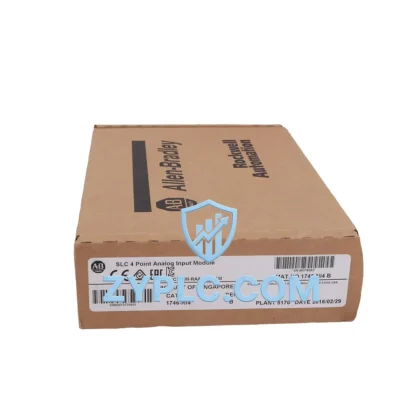
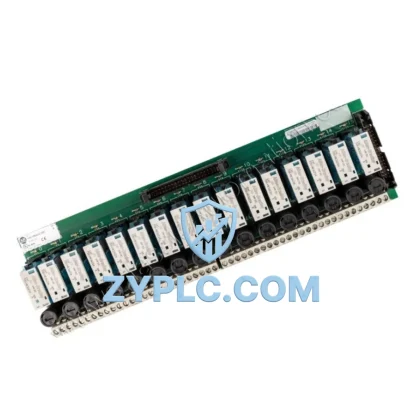
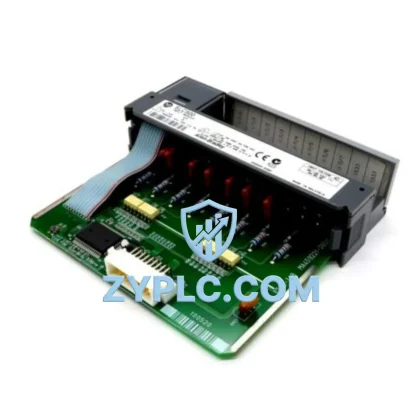
Yokogawa AAI135-S50 S3 System-Ready AI Module: Control Architecture and Upstream-Downstream Coordination in CENTUM VP Systems
The Yokogawa AAI135-S50 S3 is a high-density analog input module engineered for seamless integration within the CENTUM VP distributed control system architecture. Rather than functioning as a standalone component, this module occupies a critical position in the I/O layer of a multi-tier automation hierarchy — receiving, conditioning, and transmitting field-level analog signals upward to the control layer for real-time process decision-making. Its design philosophy reflects Yokogawa’s commitment to system-level consistency, long-term maintainability, and deterministic signal integrity across complex industrial environments.
In a fully realized CENTUM VP architecture, the AAI135-S50 S3 is mounted within a field control station (FCS) node unit, interfacing directly with field instruments such as pressure transmitters, temperature sensors, and flow meters via 4–20 mA current loop signals. The module’s role is not isolated — it operates in concert with the node unit backplane, the power supply module, the communication bus, and the CPU card to form a coherent, synchronized control node. Signal data acquired by the AAI135-S50 S3 is processed by the FCS processor and transmitted via Vnet/IP — Yokogawa’s proprietary high-speed control network — to the human-machine interface layer, where operators monitor and respond to process conditions in real time.
System architects integrating the AAI135-S50 S3 into a new or expanded CENTUM VP installation will find that this module supports the platform’s native redundancy framework. When paired with a redundant FCS configuration, the module contributes to a fault-tolerant I/O architecture that maintains continuous process visibility even during hardware failures or scheduled maintenance windows. This capability is particularly valuable in industries where unplanned downtime carries significant operational or safety consequences.
Architecture Specification Table
| Parameter |
Specification |
| System Role |
Analog Input Module — I/O Layer, CENTUM VP FCS Node |
| SKU / Part Number |
AAI135-S50 S3 |
| Brand |
Yokogawa Electric Corporation |
| Series |
CENTUM VP Distributed Control System |
| Signal Type |
4–20 mA Analog Input (Current Loop) |
| Channel Count |
16 Channels (Single-ended) |
| Input Range |
4–20 mA DC |
| Isolation |
Channel-to-channel and channel-to-bus isolation |
| Communication Interface |
Internal FCS backplane bus (Vnet/IP compatible node) |
| Power Supply |
Supplied via node unit backplane (24 VDC bus) |
| Installation Environment |
Control cabinet / field control station enclosure |
| Operating Temperature |
0°C to 55°C |
| Origin |
Japan |
| Warranty |
12-Month Warranty — Tested, inspected, and verified prior to shipment |
Coordinated Control System Design
The AAI135-S50 S3 achieves its full value when considered within the broader CENTUM VP system topology. At the control layer, the FCS CPU card — such as the CP451-10 or CP461-50 — executes the control logic that acts upon the analog data delivered by this module. The CPU card and I/O modules share a common node unit backplane, ensuring low-latency, deterministic data exchange without reliance on external fieldbus arbitration.
Power integrity is maintained by the PW481 or PW482 power supply modules, which provide regulated 24 VDC to the node unit. In redundant power configurations, dual power supply modules operate in parallel, eliminating the power supply as a single point of failure — a design consideration that complements the AAI135-S50 S3’s role in high-availability architectures.
On the network layer, the BCV1D Vnet/IP communication module connects the FCS node to the plant-wide control network, enabling real-time data exchange between field control stations, the HIS (Human Interface Station), and the EWS (Engineering Workstation). Operators interacting with the HIS — typically running CENTUM VP’s integrated SCADA environment — receive live process values sourced directly from the AAI135-S50 S3’s analog input channels.
For installations requiring expanded I/O capacity, the ANB10D node unit provides additional module slots, allowing engineers to add further analog input modules, analog output modules such as the AAO145-S50, or digital I/O modules such as the ADV151-P50 within the same FCS node. This modular expansion capability ensures that the control architecture can grow alongside process requirements without requiring a complete system redesign.
In applications where field instruments are connected via terminal assemblies, the TB820V or equivalent terminal board provides the physical interface between field wiring and the module’s I/O connectors, simplifying installation, cable management, and future maintenance activities.
Application in Layered Automation Systems
The Yokogawa AAI135-S50 S3 is deployed across a wide range of process industries where reliable analog signal acquisition is fundamental to safe and efficient operations.
In oil refining and petrochemical plants, this module acquires temperature, pressure, and flow signals from critical process streams, feeding real-time data to the CENTUM VP control layer for distillation column management, reactor temperature control, and pipeline pressure regulation. The module’s channel isolation and signal conditioning capabilities ensure measurement accuracy even in electrically noisy industrial environments.
In power generation facilities — including thermal, hydro, and combined-cycle plants — the AAI135-S50 S3 monitors turbine inlet temperatures, steam pressures, and generator output parameters. Its integration within a redundant FCS architecture supports the continuous availability requirements of grid-connected generation assets.
In water and wastewater treatment systems, the module acquires flow rate, pH, dissolved oxygen, and turbidity signals from distributed field instruments across large treatment facilities. The CENTUM VP platform’s ability to manage geographically distributed FCS nodes — each equipped with modules like the AAI135-S50 S3 — makes it well-suited to the spatially extended nature of water infrastructure.
In pharmaceutical and fine chemical manufacturing, where process validation and data integrity are regulatory requirements, the AAI135-S50 S3’s deterministic signal acquisition and integration with CENTUM VP’s audit trail and historian functions support compliance with GMP and FDA 21 CFR Part 11 documentation standards.
In mining and metallurgical operations, the module supports continuous monitoring of smelting temperatures, conveyor load signals, and flotation cell parameters, contributing to process optimization and energy efficiency in high-throughput production environments.
Architecture Engineering FAQ
Q1: Is the AAI135-S50 S3 compatible with both CENTUM VP R5 and R6 system revisions?
The AAI135-S50 S3 is designed for use within the CENTUM VP platform and is compatible with standard CENTUM VP node unit configurations. Compatibility with specific system revisions (R5, R6, or later) should be confirmed against the FCS node unit model and the system’s I/O module compatibility matrix available from Yokogawa’s engineering documentation. Our technical team can assist with revision-specific compatibility verification prior to order confirmation.
Q2: Can this module be installed in a hot-standby redundant FCS configuration, and what additional components are required?
Yes. The CENTUM VP architecture supports hot-standby FCS redundancy, in which a primary and secondary FCS node operate in parallel with automatic failover. Implementing this configuration requires a redundant CPU card pair (e.g., dual CP451-10 units), redundant power supply modules, and a redundant Vnet/IP communication path. The AAI135-S50 S3 itself is shared between the primary and secondary FCS nodes via the node unit backplane, contributing to a fully redundant I/O architecture without requiring duplicate I/O modules. System-level redundancy design should be validated by a qualified CENTUM VP system integrator.
Q3: What does the 12-Month Warranty cover, and what is the process for warranty claims?
All modules supplied by ZYPLC — including the AAI135-S50 S3 — are covered by a 12-Month Warranty from the date of shipment. Each unit undergoes functional testing and visual inspection prior to dispatch. The warranty covers defects in materials and workmanship under normal operating conditions. In the event of a warranty claim, customers should contact our technical support team with the order reference and a description of the observed fault. Replacement or repair will be arranged promptly to minimize impact on your operations. For warranty inquiries, contact us at [email protected] or +86 19859288691.
© 2026 ZYPLC. All rights reserved.
Original Source: https://zyplc.com
Contact: +86 19859288691 | [email protected]