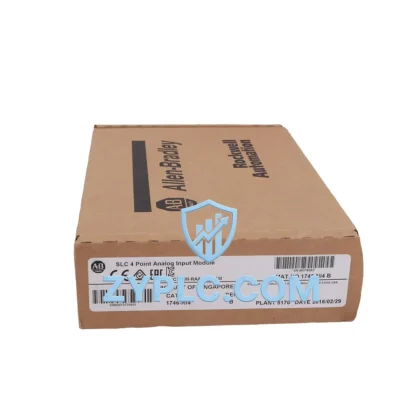
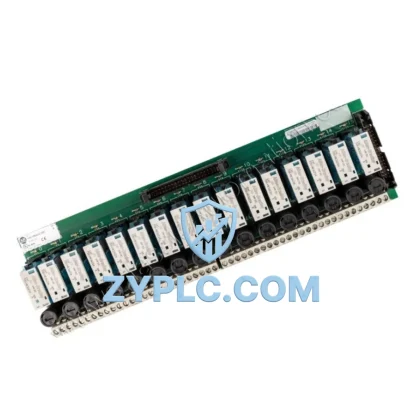
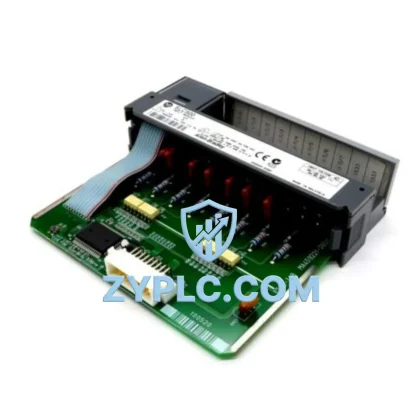
YOKOGAWA AAM10 System-Ready Analog Input Module for CENTUM Architecture
The YOKOGAWA AAM10 Analog Input Module is a precision-engineered field I/O component designed to operate within the layered architecture of YOKOGAWA’s CENTUM VP and CENTUM CS 3000 Distributed Control Systems. Rather than functioning as a standalone device, the AAM10 is conceived as an integral node within a coordinated control hierarchy — one that bridges the physical process environment with the supervisory logic layer through reliable, high-fidelity analog signal acquisition. Its role in the system is to receive 4–20 mA or 1–5 V DC analog signals from field transmitters, condition those signals, and deliver digitized process values to the CPU module for real-time control execution. This Contextual Integration capability ensures that the AAM10 does not merely collect data — it participates in the continuous feedback loop that defines modern process automation.
In a fully realized CENTUM architecture, the AAM10 occupies the I/O layer, mounted on a field control station (FCS) node unit alongside complementary modules. Its installation within the node unit backplane allows it to communicate directly with the CPU module — typically the CP451 or CP461 processor card — via the internal V-net or Vnet/IP communication bus. This tight coupling between the I/O layer and the control layer eliminates latency that would otherwise compromise loop performance in fast-responding processes such as flow control, pressure regulation, or temperature management in petrochemical and power generation environments.
System designers integrating the AAM10 into a CENTUM VP architecture will find that it supports hot-standby redundancy configurations when paired with a redundant CPU module and dual power supply units such as the PW481 or PW482. In redundant deployments, the AAM10 continues to deliver uninterrupted signal acquisition even during a primary CPU switchover, ensuring that critical process variables remain visible to the control system at all times. This capability is particularly valued in continuous process industries — including oil refining, chemical manufacturing, and power plant operations — where any gap in measurement data can trigger unsafe conditions or regulatory non-compliance.
The AAM10 is designed to be installed within YOKOGAWA’s standard node unit chassis, which accommodates multiple I/O modules in a structured slot arrangement. Within the same chassis, engineers commonly deploy the AAM21 or AAM22 analog output modules to complete the measurement-and-actuation loop, the ADM12 or ADM16 digital input modules for discrete signal monitoring, and the AAM51 or AAM50 modules for thermocouple and RTD temperature inputs. This modular co-location within a single node unit reduces wiring complexity, simplifies cabinet layout, and enables a unified diagnostic view from the CENTUM VP engineering workstation.
Network connectivity in a CENTUM-based system is managed through the Vnet/IP Ethernet backbone, which links all field control stations to the human-machine interface (HMI) layer running YOKOGAWA’s FAST/TOOLS or HIS (Human Interface Station) software. The AAM10’s data, once processed by the CPU module, is transmitted across this network to the HIS for operator visualization, alarm management, and trend logging. In larger installations, the network layer may also include an exaquantum historian server for long-term data archiving and process performance analysis — a configuration common in refinery-wide or plant-wide automation projects.
From a power architecture perspective, the AAM10 draws its operating voltage from the node unit’s internal power bus, which is fed by the station power supply module. In high-availability designs, dual power supply modules are installed in a redundant configuration, ensuring that a single power supply failure does not interrupt I/O module operation. The power supply modules are typically sourced from YOKOGAWA’s PW series, and their selection is coordinated with the total power budget of all installed I/O modules within the node unit.
Maintenance engineers benefit from the AAM10’s support for online module replacement in systems configured for hot-swap capability. Without shutting down the field control station, a faulty AAM10 can be removed and replaced, with the new module automatically recognized and configured by the CENTUM VP system. This feature dramatically reduces mean time to repair (MTTR) and supports the long-term maintainability goals of plant operators who manage aging DCS infrastructure across multi-decade operational lifespans.
For projects requiring system expansion, the AAM10 integrates seamlessly into node unit configurations that are added to an existing CENTUM VP system. Additional node units can be connected to the Vnet/IP network without requiring changes to the existing control logic, provided that the new I/O points are mapped correctly in the engineering database. This scalability makes the AAM10 a preferred choice for phased plant expansions where capital expenditure must be distributed across multiple budget cycles.
ZYPLC maintains verified inventory of the YOKOGAWA AAM10 and supports global procurement requirements with a 12-Month Warranty on all supplied units. Each module undergoes functional verification prior to shipment, and documentation including test records and traceability certificates is available upon request. Our technical team provides pre-sales architecture consultation to confirm module compatibility within your specific CENTUM system version and node unit configuration.
Architecture Specification Table
| Parameter |
Specification |
| System Role |
Analog Input Module — I/O Layer, CENTUM FCS Node Unit |
| Compatible Platforms |
YOKOGAWA CENTUM VP, CENTUM CS 3000 |
| Signal Type |
4–20 mA DC / 1–5 V DC Analog Input |
| Number of Channels |
8 Channels (typical AAM10 configuration) |
| Input Impedance |
250 Ω (current input mode) |
| Isolation |
Channel-to-channel and channel-to-bus isolation |
| Communication Interface |
Internal node unit backplane bus (Vnet/IP compatible FCS) |
| Power Supply |
Supplied via node unit internal bus (PW481/PW482 compatible) |
| Mounting |
YOKOGAWA standard node unit chassis slot |
| Operating Temperature |
0°C to 55°C |
| Humidity |
10% to 90% RH (non-condensing) |
| Redundancy Support |
Compatible with redundant CPU and dual power supply configurations |
| Hot-Swap Capability |
Supported in configured CENTUM VP systems |
| Country of Origin |
Japan |
| Warranty |
12-Month Warranty (ZYPLC verified supply) |
Coordinated Control System Design
The AAM10 achieves its full value when evaluated within the context of a complete CENTUM control station assembly. A typical FCS node unit housing the AAM10 will also contain the CP451 or CP461 CPU module, which executes the control logic and manages all I/O communication. Analog output functions are handled by the AAM21 or AAM22 analog output modules, which receive setpoint commands from the CPU and drive final control elements such as control valves and variable-speed drives. Digital input monitoring is provided by the ADM12 or ADM16 modules, which capture discrete signals from limit switches, motor status contacts, and safety interlocks.
Temperature measurement — a critical variable in process industries — is addressed by the AAM51 thermocouple input module or the AAM50 RTD input module, both of which share the same node unit backplane as the AAM10. The PW481 or PW482 power supply modules provide regulated DC power to the entire node unit, and in redundant configurations, two power supply modules operate in parallel to eliminate single points of failure. Communication between the FCS and the operator HIS is managed through the Vnet/IP network interface embedded in the CPU module, with the HIS running YOKOGAWA’s FAST/TOOLS SCADA or the standard CENTUM VP HIS software for real-time process visualization and alarm management.
In larger system architectures, the YOKOGAWA STARDOM FCN/FCJ remote I/O controllers may be deployed at satellite process areas, with their data aggregated at the central CENTUM VP system through OPC-UA or Modbus TCP gateways. This multi-tier architecture — with the AAM10 at the field I/O layer, the CP-series CPU at the control layer, and the HIS at the supervisory layer — represents the standard reference design for YOKOGAWA-based process automation in refinery, power, and chemical plant applications.
Application in Layered Automation Systems
The YOKOGAWA AAM10 is deployed across a wide range of industrial sectors where reliable analog signal acquisition is fundamental to process safety and efficiency. In petroleum refining, the AAM10 monitors pressure, flow, and level transmitters throughout distillation columns, heat exchangers, and storage tank farms, providing the CENTUM VP system with the real-time data required for advanced process control (APC) and safety instrumented system (SIS) coordination. In power generation — including thermal, combined-cycle, and nuclear facilities — the AAM10 supports turbine control, boiler management, and auxiliary system monitoring within CENTUM-based distributed control architectures.
In petrochemical and chemical manufacturing plants, the AAM10 is integrated into reactor temperature and pressure control loops, where measurement accuracy and signal integrity directly affect product quality and process safety. Water and wastewater treatment facilities use the AAM10 to monitor flow rates, pH levels, dissolved oxygen, and turbidity across multiple treatment stages, with the CENTUM VP system coordinating dosing pumps, aeration blowers, and filtration systems based on the acquired analog data. In mining and metallurgical operations, the AAM10 supports ore processing, smelting, and materials handling systems where harsh environmental conditions demand robust, industrially rated I/O hardware.
For packaging and discrete manufacturing production lines that incorporate process control elements — such as temperature-controlled curing ovens, pressure-regulated forming presses, or flow-controlled adhesive dispensing systems — the AAM10 provides the analog measurement capability required to maintain product consistency across high-volume production runs. In all these applications, the AAM10’s role is not merely to collect signals but to serve as the sensory foundation upon which the entire CENTUM control architecture builds its operational intelligence.
Architecture Engineering FAQ
Q1: Is the YOKOGAWA AAM10 compatible with both CENTUM VP and CENTUM CS 3000 systems?
The AAM10 is designed for use within YOKOGAWA’s CENTUM platform family, and compatibility with specific system versions — including CENTUM VP R5, R6, and CENTUM CS 3000 — depends on the node unit type and FCS configuration in your installation. ZYPLC’s technical team can verify compatibility based on your system’s engineering revision and node unit model number prior to procurement. We recommend providing your FCS model and CENTUM software version to confirm direct interchangeability.
Q2: Can the AAM10 be installed in a redundant FCS configuration, and does it support online replacement?
Yes. In CENTUM VP systems configured for dual-redundant FCS operation, the AAM10 operates within the active node unit and continues signal acquisition during a CPU switchover event. Hot-swap replacement is supported in systems where the node unit is configured for online module exchange, allowing maintenance personnel to replace a faulty AAM10 without shutting down the field control station. This capability is critical for continuous process operations where planned or unplanned shutdowns carry significant production and safety implications.
Q3: What warranty and quality assurance does ZYPLC provide for the AAM10?
All YOKOGAWA AAM10 modules supplied by ZYPLC are covered by a 12-Month Warranty from the date of shipment. Each unit undergoes functional testing and visual inspection prior to dispatch, and traceability documentation is available upon request. Our inventory is sourced through verified supply channels, and our technical team provides post-sale support for installation, commissioning, and system integration queries. For volume procurement or urgent project requirements, please contact us directly to discuss lead times and logistics arrangements.
© 2026 ZYPLC. All rights reserved.
Original Source: https://zyplc.com
Contact: +86 19859288691 | plc.sales@zyplc.com