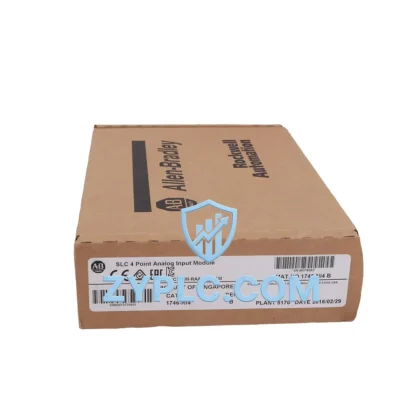
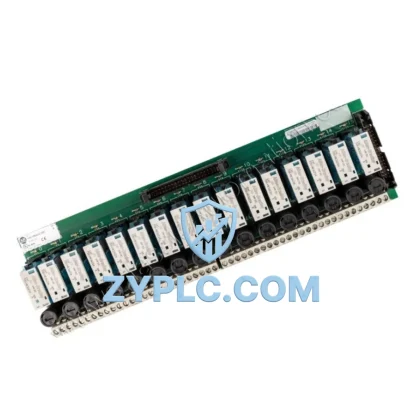
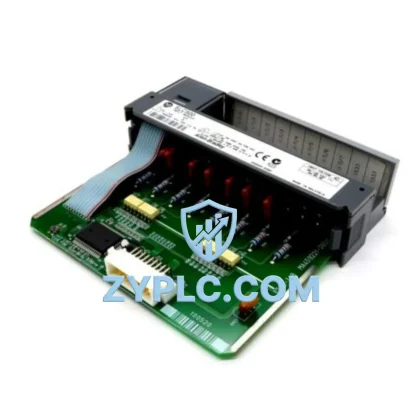
Yokogawa AAM51-S2 System-Ready Analog Output Module for CENTUM CS3000 Architecture
In modern distributed control system (DCS) deployments, every module must fulfill a precise role within a layered automation hierarchy. The Yokogawa AAM51-S2 is a high-precision analog output module engineered for seamless integration within the CENTUM CS and CENTUM CS3000 control architecture. Rather than functioning as a standalone component, the AAM51-S2 is designed to operate as a coordinated element within a complete control system — interfacing with field instruments, communicating with the central processing unit, and responding to supervisory commands from the human-machine interface layer.
The AAM51-S2 delivers 4–20 mA analog output signals to final control elements such as control valves, variable frequency drives, and positioners. Its role in the signal chain is critical: it converts digital setpoints generated by the CPU into precise analog commands that drive physical processes. In a typical CENTUM CS3000 architecture, the AAM51-S2 is installed within a field control station (FCS) node unit alongside input modules such as the AAI543-S00 analog input module and the AAI141-S00 multi-point analog input module, forming a tightly integrated I/O subsystem that handles both measurement and actuation within the same rack environment.
System architects deploying the AAM51-S2 benefit from its compatibility with the CENTUM CS3000 node unit backplane, which supports hot-swap capability and redundant power supply configurations. The module communicates with the CP451-10 or CP461-50 field control unit via the internal V-net or Vnet/IP communication bus, ensuring deterministic data exchange between the I/O layer and the control layer. This architecture eliminates single points of failure and supports continuous process operation even during module maintenance or replacement cycles.
From a system design perspective, the AAM51-S2 integrates naturally with the broader CENTUM CS3000 ecosystem. Engineering workstations running Yokogawa’s CENTUM VP or CS3000 builder software can configure output ranges, fail-safe values, and signal scaling parameters directly through the system database, without requiring manual jumper settings or field calibration. This contextual integration between the hardware module and the software environment reduces commissioning time and minimizes the risk of configuration errors during plant startup or expansion.
In redundant control architectures, the AAM51-S2 can be paired with a redundant I/O module configuration supported by the ESB (Extended Serial Backplane) bus structure. This allows the control system to maintain output continuity even in the event of a module fault, which is essential in applications such as power generation, petrochemical processing, and water treatment where process interruptions carry significant operational and safety consequences. The redundant configuration is managed transparently by the CP451-10 or CP461-50 controller, with automatic switchover occurring within milliseconds.
The module’s installation within the node unit follows standard CENTUM CS3000 mechanical conventions. It slots into the I/O card cage alongside power supply modules such as the PW481 or PW482 dual-redundant power units, which provide stable 24 VDC rail voltage to all installed I/O cards. The combination of a stable power layer, a deterministic communication bus, and a well-structured I/O backplane creates the foundation for long-term system reliability — a key requirement in industries where control systems are expected to operate continuously for 10 to 20 years between major overhauls.
For system integrators and maintenance engineers, the AAM51-S2 represents a well-documented, widely deployed component with a proven track record across manufacturing, refining, chemical, and utility applications. Its compatibility with the CENTUM CS3000 platform means that spare parts management is straightforward, and replacement modules can be sourced and installed without requiring system reconfiguration. ZYPLC maintains verified stock of the AAM51-S2 and related CENTUM CS3000 components, supporting both planned maintenance programs and emergency replacement scenarios with fast global shipping and a 12-Month Warranty on every unit supplied.
Architecture Specification Table
| Parameter |
Specification |
| System Role |
Analog Output I/O Module — CENTUM CS / CS3000 FCS Node |
| Output Channels |
8 channels (model-dependent) |
| Output Signal |
4–20 mA DC (current output) |
| Output Resolution |
13-bit (or higher, per revision) |
| Load Resistance |
Up to 750 Ω per channel |
| Communication Interface |
Internal V-net / Vnet/IP via node unit backplane |
| Compatible Controllers |
CP451-10, CP461-50 (CENTUM CS3000 FCS) |
| Compatible Node Units |
CENTUM CS3000 standard and extended node units |
| Power Supply |
Supplied via backplane from PW481 / PW482 power modules |
| Operating Temperature |
0°C to 55°C |
| Mounting |
Card cage slot, hot-swap supported |
| Isolation |
Channel-to-channel and channel-to-bus isolation |
| Fail-Safe Output |
Configurable via CENTUM CS3000 system builder |
| Warranty |
12-Month Warranty — supplied by ZYPLC |
Coordinated Control System Design
The AAM51-S2 does not operate in isolation. Its value is realized through coordinated deployment within a complete CENTUM CS3000 control system architecture. A typical system configuration integrating the AAM51-S2 includes the following components working in concert:
At the control layer, the CP451-10 or CP461-50 field control station processor executes the control strategy — PID loops, cascade control, ratio control — and generates the digital setpoints that the AAM51-S2 converts into analog output signals. The processor communicates with all I/O modules via the node unit backplane and the V-net communication bus, ensuring synchronized data exchange across the entire I/O subsystem.
At the input layer, the AAI543-S00 multi-range analog input module and the AAI141-S00 analog input module collect process measurements from field transmitters — pressure, temperature, flow, and level — and feed this data to the controller. The controller processes these inputs and issues corrective output commands through the AAM51-S2, closing the control loop between measurement and actuation.
At the network layer, the Vnet/IP communication infrastructure connects field control stations to the engineering workstation and the human-machine interface. The HIS (Human Interface Station) running CENTUM CS3000 or CENTUM VP operator graphics provides real-time visibility into output values, alarm states, and module health — allowing operators to monitor the AAM51-S2’s output channels without accessing the field cabinet.
At the power layer, the PW481 and PW482 dual-redundant power supply modules ensure that the node unit maintains stable voltage to all installed I/O cards, including the AAM51-S2. Power redundancy eliminates the risk of a single power supply failure causing a loss of analog output, which could result in uncontrolled process conditions.
At the terminal layer, terminal boards and marshalling cabinets connect the AAM51-S2’s field wiring to the process instruments and final control elements. Proper terminal block selection and cable segregation are essential for maintaining signal integrity across long cable runs in industrial environments.
Together, these components — the CP451-10 controller, AAI543-S00 and AAI141-S00 input modules, PW481/PW482 power supplies, Vnet/IP network, HIS operator station, and the AAM51-S2 output module — form a complete, validated control system architecture that meets the reliability and performance requirements of continuous process industries.
Application in Layered Automation Systems
The AAM51-S2 is deployed across a wide range of industrial sectors where precise analog output control is essential to process stability and product quality.
In petroleum refining and petrochemical processing, the AAM51-S2 drives control valves on distillation columns, reactor feed systems, and heat exchanger bypass loops. Its configurable fail-safe output ensures that valves move to a defined safe position in the event of a controller fault, preventing runaway conditions in high-temperature, high-pressure processes.
In power generation — including thermal, combined-cycle, and hydroelectric plants — the AAM51-S2 provides analog setpoints to turbine governor systems, boiler feedwater control valves, and generator excitation systems. The module’s compatibility with redundant CENTUM CS3000 architectures ensures that control output continuity is maintained even during planned maintenance activities.
In water and wastewater treatment, the AAM51-S2 controls dosing pumps, aeration blowers, and sludge handling equipment. Its integration with the CENTUM CS3000 alarm management system allows operators to detect output deviations early and respond before process quality is affected.
In mining and metallurgical processing, the AAM51-S2 is used in flotation cell control, conveyor speed regulation, and furnace temperature management. The module’s robust construction and wide operating temperature range make it suitable for the demanding environmental conditions found in mineral processing facilities.
In pharmaceutical and food manufacturing, where batch process control and regulatory compliance are paramount, the AAM51-S2 supports precise analog output management for reactor temperature control, filling line speed regulation, and clean-in-place (CIP) system valve control. Its integration with CENTUM CS3000’s audit trail and electronic batch record capabilities supports 21 CFR Part 11 compliance requirements.
Architecture Engineering FAQ
Q1: Is the AAM51-S2 compatible with both CENTUM CS and CENTUM CS3000 systems?
The AAM51-S2 is designed for the CENTUM CS and CENTUM CS3000 platform family. Compatibility depends on the specific node unit generation and backplane revision installed in your system. ZYPLC recommends verifying the node unit model number and system software version before ordering. Our technical team can assist with compatibility confirmation based on your existing system configuration.
Q2: Can the AAM51-S2 be replaced without shutting down the control system?
The CENTUM CS3000 architecture supports hot-swap replacement of I/O modules in node units equipped with the appropriate backplane and power configuration. When the system is configured for redundant I/O, the standby module maintains output continuity during replacement of the active module. For non-redundant configurations, output will be interrupted during the swap procedure. ZYPLC recommends coordinating module replacement with your process safety team and following Yokogawa’s documented hot-swap procedures.
Q3: What warranty and after-sales support does ZYPLC provide for the AAM51-S2?
Every AAM51-S2 supplied by ZYPLC is covered by a 12-Month Warranty against manufacturing defects and functional failures. Our warranty process includes direct technical support, advance replacement options for critical applications, and documentation support for incoming inspection. ZYPLC maintains verified stock of the AAM51-S2 and related CENTUM CS3000 components to support both planned maintenance programs and emergency replacement requirements. Contact our team at [email protected] or +86 19859288691 for warranty claims and technical inquiries.
© 2026 ZYPLC. All rights reserved.
Original Source: https://zyplc.com
Contact: +86 19859288691 | [email protected]