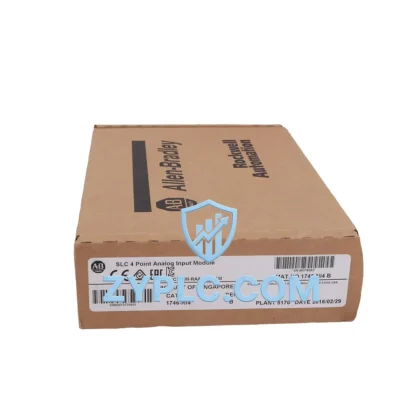
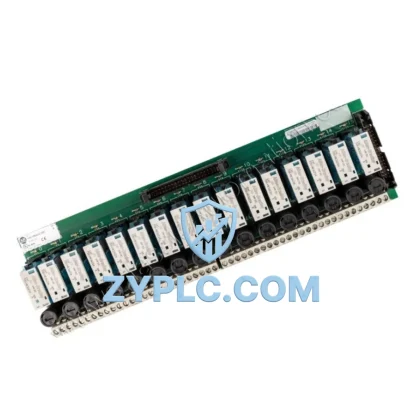
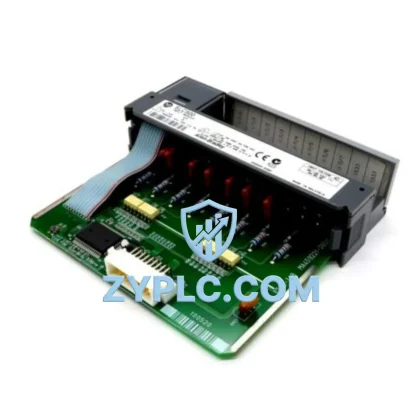
Yokogawa AAR145-S53/S1 System-Ready RTD Input for CENTUM VP Architecture
The Yokogawa AAR145-S53/S1 is a precision RTD and potentiometer analog input module engineered for seamless integration within the CENTUM VP and CS 3000 Distributed Control System (DCS) architecture. As a critical component at the field I/O layer, this module bridges the gap between process instrumentation and the control execution layer, enabling high-fidelity temperature and resistance signal acquisition across demanding industrial environments. Its role within a layered automation system extends far beyond simple signal conversion — it is a foundational element that determines the accuracy, reliability, and scalability of the entire control loop.
In a fully realized CENTUM VP system architecture, the AAR145-S53/S1 operates in close coordination with the field control station (FCS), the I/O unit backplane, and the engineering workstation. Signals acquired by this module are transmitted through the Vnet/IP control network to the CPU node — typically an FCU (Field Control Unit) such as the AFV10D or AFV30D — where process logic is executed in real time. The module’s compatibility with the standard CENTUM VP I/O nest and its support for the system’s unified engineering environment (CENTUM VP Engineering Environment, or EWS) ensures that commissioning, calibration, and loop testing can be performed without specialized hardware adapters or protocol converters.
From a system architecture perspective, the AAR145-S53/S1 contributes directly to signal integrity at the I/O layer. Its multi-channel RTD input capability allows engineers to consolidate temperature measurement points within a single module slot, reducing backplane footprint and simplifying wiring in marshalling cabinets. When deployed alongside complementary modules such as the AAI143-S (4–20 mA analog input), AAT141-S (thermocouple input), or AAO145-S (analog output), the AAR145-S53/S1 enables a fully coordinated I/O strategy that supports both standard and redundant configurations.
Architecture Specification Table
| Parameter |
Specification |
| Model |
AAR145-S53/S1 |
| Manufacturer |
Yokogawa Electric Corporation |
| System Role |
RTD / Potentiometer Analog Input Module |
| Compatible Platform |
CENTUM VP, CENTUM CS 3000 |
| Input Type |
RTD (Pt100, Pt1000, JPt100), Potentiometer |
| Number of Channels |
4 channels (isolated) |
| Measurement Range |
-200°C to +850°C (RTD dependent) |
| Accuracy |
±0.1°C typical (Pt100) |
| Communication |
Internal I/O bus via CENTUM VP I/O nest |
| Power Supply |
Supplied via I/O unit backplane (internal bus) |
| Isolation |
Channel-to-channel and channel-to-bus isolation |
| Installation |
Plug-in module, CENTUM VP standard I/O nest |
| Operating Temperature |
0°C to +60°C |
| Ingress Protection |
IP20 (panel-mounted enclosure required) |
| Origin |
Japan |
| Warranty |
12-Month Warranty (ZYPLC) |
| Contextual Integration |
Supported — CENTUM VP EWS, FCS, Vnet/IP |
Coordinated Control System Design
The AAR145-S53/S1 does not function in isolation — its value is realized through its position within a coordinated, multi-layer control architecture. In a typical CENTUM VP installation, this module is mounted in an I/O unit (such as the ANB10D or ANR10D nest) alongside other I/O modules, all of which communicate with the Field Control Unit (FCU) via the internal I/O bus. The FCU — commonly an AFV10D or AFV30D processor card — executes the control strategy defined in the engineering environment and manages data exchange across the Vnet/IP network.
At the power layer, the I/O unit is supplied by a dedicated power supply module (such as the APW11D or APW12D), which provides stable, regulated DC power to all installed I/O cards including the AAR145-S53/S1. Redundant power configurations are supported, ensuring that a single power supply failure does not interrupt signal acquisition. This is particularly important in continuous process industries such as petrochemicals, power generation, and water treatment, where uninterrupted temperature monitoring is a safety and regulatory requirement.
At the network layer, the Vnet/IP protocol connects the FCS to the human-machine interface (HMI) layer, typically realized through Yokogawa’s CENTUM VP HIS (Human Interface Station) running on Windows-based operator workstations. Operators can monitor RTD readings from the AAR145-S53/S1 in real time through process graphics, trend displays, and alarm management screens. The seamless data path from field sensor through the AAR145-S53/S1, across the I/O bus, through the FCU, and onto the Vnet/IP network to the HIS represents the full signal flow of a CENTUM VP system.
For redundancy-critical applications, the AAR145-S53/S1 can be deployed in dual-redundant I/O configurations using Yokogawa’s standard redundancy framework. Paired with redundant FCU processor cards and dual Vnet/IP network paths, this module supports a fully fault-tolerant architecture where no single point of failure can interrupt process control. Terminal modules (such as the ATD series) and marshalling components further simplify field wiring and enable hot-swap maintenance without process interruption.
In systems requiring communication with third-party devices or supervisory SCADA platforms, the CENTUM VP architecture supports gateway modules and OPC DA/UA interfaces, allowing RTD data from the AAR145-S53/S1 to be shared with MES, historian, or enterprise systems. This Contextual Integration capability ensures that temperature data is not siloed within the DCS but contributes to plant-wide analytics, energy management, and predictive maintenance programs.
Application in Layered Automation Systems
The AAR145-S53/S1 finds application across a broad spectrum of process industries where precise temperature measurement is integral to safe and efficient operation. In oil refining and petrochemical plants, RTD inputs from this module monitor reactor temperatures, heat exchanger performance, and distillation column profiles, feeding data directly into advanced process control (APC) strategies executed by the CENTUM VP FCS. The module’s high accuracy and channel isolation prevent cross-talk between measurement points, which is essential when monitoring closely spaced temperature zones in packed-bed reactors or multi-stage heat exchangers.
In power generation facilities — including thermal, combined-cycle, and nuclear plants — the AAR145-S53/S1 supports turbine bearing temperature monitoring, boiler feed water temperature control, and generator cooling system supervision. Its compatibility with Pt100 and JPt100 RTD standards makes it suitable for both IEC and JIS instrumentation environments, a common requirement in Asian power markets where mixed instrumentation standards are prevalent.
In water and wastewater treatment plants, the module is used to monitor process temperatures in biological treatment reactors, sludge digesters, and UV disinfection systems. Its low power consumption and compact form factor make it well-suited for distributed I/O installations in remote pump stations and treatment cells connected back to a central CENTUM VP control room via fiber-optic Vnet/IP links.
In mining and metallurgical operations, the AAR145-S53/S1 supports temperature monitoring in smelting furnaces, flotation circuits, and conveyor drive systems. The module’s robust isolation and wide operating temperature range ensure reliable performance in electrically noisy environments typical of heavy industry. In pharmaceutical and food processing applications, its precision RTD measurement supports CIP (Clean-in-Place) temperature validation and batch process temperature profiling, contributing to regulatory compliance and product quality assurance.
Architecture Engineering FAQ
Q1: Is the AAR145-S53/S1 compatible with both CENTUM VP and CENTUM CS 3000 systems?
Yes. The AAR145-S53/S1 is designed for use within Yokogawa’s CENTUM VP and CENTUM CS 3000 DCS platforms, both of which share a common I/O module form factor and backplane interface standard. The module can be installed in standard I/O nests (ANB10D, ANR10D) used across both platforms. However, engineers should verify the specific I/O unit and FCS firmware version compatibility using Yokogawa’s system configuration tool (CENTUM VP Engineering Environment) prior to installation, as certain advanced features may require specific software revisions. Our technical team can assist with compatibility verification as part of the 12-Month Warranty support service.
Q2: Can the AAR145-S53/S1 be used in a redundant I/O configuration, and what additional components are required?
Yes, redundant I/O configurations are supported within the CENTUM VP architecture. To implement I/O redundancy for the AAR145-S53/S1, a dual-nest arrangement is required, with each nest containing a mirror image of the I/O module configuration. Redundant FCU processor cards (e.g., AFV10D pairs) manage automatic switchover in the event of a module or nest failure. Additional components typically include redundant power supply modules (APW11D/APW12D pairs), dual Vnet/IP network interface cards, and appropriate terminal modules for field wiring. ZYPLC can supply matched sets of redundant components with coordinated 12-Month Warranty coverage to simplify procurement and system integration.
Q3: What does the 12-Month Warranty cover, and how does Contextual Integration support long-term system maintenance?
The 12-Month Warranty provided by ZYPLC covers the AAR145-S53/S1 against manufacturing defects and functional failures under normal operating conditions. Warranty claims are supported by our technical team, who can assist with failure diagnosis, module replacement coordination, and system re-commissioning guidance. Contextual Integration support means that our team understands the module’s role within your specific CENTUM VP architecture — including its interaction with the FCU, I/O nest, power supply, and Vnet/IP network — enabling faster and more accurate troubleshooting compared to generic component suppliers. For long-term maintenance planning, ZYPLC maintains inventory of AAR145-S53/S1 and related CENTUM VP I/O modules to support emergency replacement requirements with minimal lead time.
© 2026 ZYPLC. All rights reserved.
Original Source: https://zyplc.com
Contact: +86 19859288691 | plc.sales@zyplc.com