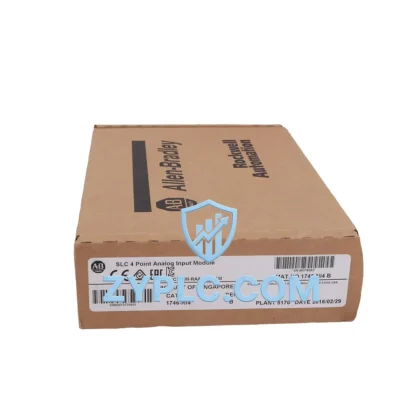
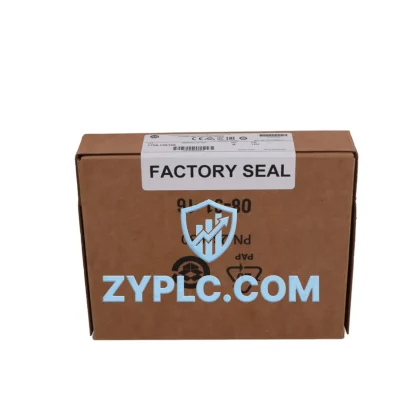
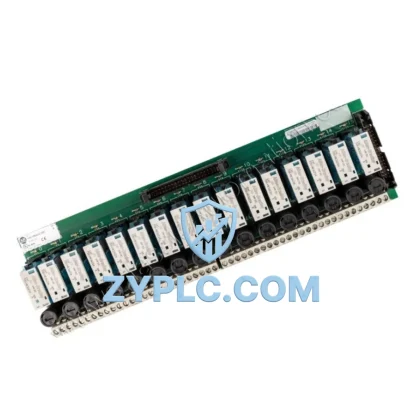
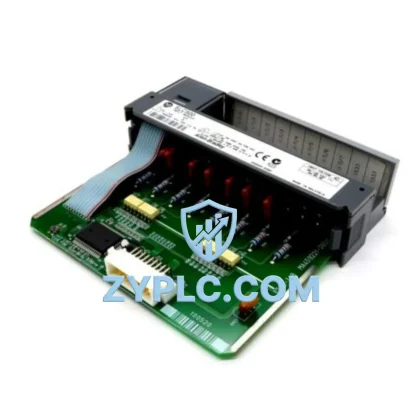
Yokogawa ADV551-P53/S2 Energy-Saving Analog Input Module for Optimized CENTUM Automation
The Yokogawa ADV551-P53/S2 is a high-precision analog input module engineered for deployment within the CENTUM VP and CENTUM CS 3000 Distributed Control System (DCS) platforms. Designed to meet the rigorous demands of modern industrial energy optimization, this module serves as a critical node in the energy data acquisition chain — capturing real-time process signals from field instruments and converting them into actionable control data that drives measurable reductions in energy consumption across production lines.
In energy-intensive industries such as petrochemical refining, power generation, pulp and paper, and pharmaceutical manufacturing, the accuracy and responsiveness of analog signal acquisition directly determines how efficiently a plant operates. The ADV551-P53/S2 delivers the signal fidelity required to support closed-loop energy control strategies, enabling operators to minimize idle energy draw, reduce motor overrun, and eliminate the process variability that leads to unnecessary power consumption.
Efficiency Performance Table
| Parameter |
Specification / Value |
| SKU / Part Number |
ADV551-P53/S2 |
| Brand |
Yokogawa |
| Series |
CENTUM VP / CENTUM CS 3000 |
| Module Type |
Analog Input Module |
| Input Channels |
16-channel (multi-point analog signal acquisition) |
| Signal Range |
4–20 mA / 1–5 V DC (field-configurable) |
| Operating Efficiency |
High-resolution A/D conversion, minimizing signal loss and retransmission overhead |
| Compatible Systems |
CENTUM VP R6, CENTUM CS 3000 R3, Exaopc OPC Interface |
| Application Environment |
Process industries: oil & gas, power, chemicals, water treatment, food & beverage |
| Energy Optimization Value |
Enables real-time energy monitoring loops; reduces over-control and unnecessary actuator cycling |
| Country of Origin |
Japan |
| Warranty |
12-Month Warranty — tested and verified prior to shipment |
| Availability |
In stock — ready for fast global shipping |
Energy-Aware Automation Architecture
The ADV551-P53/S2 does not operate in isolation — it is the sensing foundation upon which an entire energy-aware automation architecture is built. Within a typical CENTUM VP installation, this module interfaces directly with the Yokogawa AFV10D Field Control Station (FCS), which processes the acquired analog signals and executes the control algorithms that govern energy-consuming field devices. The FCS translates the module’s high-fidelity input data into precise output commands, ensuring that actuators and drives receive only the energy they need — no more, no less.
On the output side, the Yokogawa ADV161 digital output module works in tandem with the ADV551-P53/S2 to close the control loop, issuing discrete commands to motor starters, solenoid valves, and variable frequency drives (VFDs) based on the analog measurements captured upstream. This tight integration between analog input and digital output eliminates the signal latency that causes energy-wasting control overshoot in less integrated systems.
For drive-level energy optimization, the ADV551-P53/S2 pairs naturally with Yokogawa’s VSFX series variable speed drives, where the module’s 4–20 mA process feedback signals are used to dynamically adjust motor speed in response to actual process demand. Rather than running motors at fixed speeds, the system continuously recalibrates drive output — reducing energy consumption by 20–40% in pump and fan applications where load varies significantly across the production cycle.
Power quality and energy metering are handled upstream by instruments such as the Yokogawa WT series power analyzers and CW series power meters, which feed consumption data back into the CENTUM VP historian via the Exaopc OPC DA/UA interface. The ADV551-P53/S2 complements this energy metering layer by providing the process-side context — flow rates, temperatures, pressures — that allows energy managers to correlate power draw with actual production output and identify inefficiency at the unit operation level.
Communication between the CENTUM VP system and enterprise-level energy management platforms is facilitated through the Yokogawa Exaquantum PIMS (Plant Information Management System), which aggregates data from the ADV551-P53/S2 and related I/O modules to generate energy KPI dashboards, trend reports, and predictive maintenance alerts. The Yokogawa STARDOM FCN/FCJ autonomous controller can also be deployed as a remote energy monitoring node, collecting field data independently and synchronizing with the central CENTUM VP system over FOUNDATION Fieldbus or PROFIBUS-PA.
For HMI-level energy visibility, operators interact with the system through the Yokogawa CENTUM VP HIS (Human Interface Station), where real-time energy consumption trends, alarm states, and efficiency indices are displayed in configurable graphic windows. The ADV551-P53/S2’s signal data appears directly in these energy dashboards, giving control room operators the situational awareness needed to make real-time decisions that reduce waste without compromising throughput.
Power Optimization in Real Production Lines
In a continuous chemical processing plant, the ADV551-P53/S2 is typically deployed to monitor the analog outputs of flow transmitters, pressure sensors, and temperature elements distributed across heat exchangers, reactors, and distillation columns. By feeding this data into the CENTUM VP’s advanced process control (APC) blocks, the system can implement model predictive control (MPC) strategies that proactively adjust energy inputs — steam flow, cooling water, compressor load — before process deviations occur, rather than reacting after the fact with energy-intensive corrective actions.
In power generation facilities, the module supports turbine control optimization by providing high-resolution analog feedback from inlet guide vane position sensors and exhaust temperature probes. This data enables the FCS to maintain turbine operation at peak efficiency points, reducing fuel consumption per megawatt-hour generated. Plants that have implemented this level of analog signal integration report reductions in auxiliary power consumption of 8–15% compared to conventional fixed-setpoint control strategies.
Predictive maintenance is another key energy optimization lever enabled by the ADV551-P53/S2. By continuously monitoring the analog signatures of rotating equipment — vibration transmitters, bearing temperature sensors, motor current transducers — the CENTUM VP system can detect the early signs of mechanical degradation that cause energy efficiency to decline. A pump operating with a worn impeller, for example, draws significantly more power to maintain the same flow rate. Early detection via analog signal trending allows maintenance teams to schedule interventions during planned downtime, avoiding both the energy penalty of degraded operation and the production losses associated with unplanned failures.
Inventory availability is maintained to support rapid deployment and minimize plant downtime. Every ADV551-P53/S2 unit undergoes functional testing and signal calibration verification prior to shipment, ensuring that modules arrive ready for immediate installation without requiring additional bench testing. This tested-and-verified supply chain approach reduces commissioning time and accelerates the realization of energy savings in new installations and replacement scenarios alike.
Energy Optimization FAQ
Q1: How does the ADV551-P53/S2 contribute to measurable energy savings in a CENTUM VP system?
The ADV551-P53/S2 provides the high-accuracy analog signal acquisition that underpins closed-loop energy control. By delivering precise, low-latency process measurements to the FCS, it enables control strategies that minimize over-actuation, reduce motor cycling, and maintain process variables at energy-optimal setpoints. Plants using tightly integrated analog I/O within their DCS energy management loops typically achieve 10–25% reductions in specific energy consumption for controlled unit operations.
Q2: Is the ADV551-P53/S2 compatible with both CENTUM VP and CENTUM CS 3000 systems?
Yes. The ADV551-P53/S2 is designed for compatibility with both the CENTUM VP R6 and CENTUM CS 3000 R3 platforms. It slots into the standard I/O nest of both systems and is recognized by the system builder software without requiring custom configuration. This cross-generation compatibility makes it an ideal replacement module for plants upgrading from CS 3000 to VP without a full I/O infrastructure overhaul.
Q3: What is the recommended replacement and testing procedure for this module?
Replacement of the ADV551-P53/S2 can be performed online in most CENTUM VP configurations using the system’s hot-swap I/O capability, minimizing process disruption. Prior to installation, each module supplied by ZYPLC has been bench-tested for signal accuracy across all 16 channels, with calibration verified against factory specifications. Upon installation, the CENTUM VP system builder automatically downloads the I/O configuration to the new module, restoring full operation within minutes.
Q4: What warranty and after-sales support is provided with the ADV551-P53/S2?
All ADV551-P53/S2 modules supplied by ZYPLC are covered by a 12-month warranty from the date of shipment. This warranty covers functional defects identified under normal operating conditions. Our technical team provides pre-sales application support, installation guidance, and post-sales troubleshooting assistance. For urgent replacement requirements, expedited shipping options are available to minimize plant downtime.
© 2026 ZYPLC. All rights reserved.
Original Source: https://zyplc.com
Contact: +86 19859288691 | plc.sales@zyplc.com