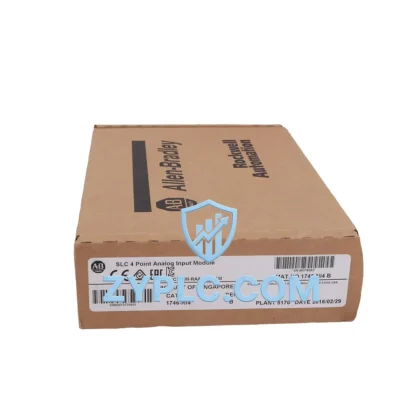
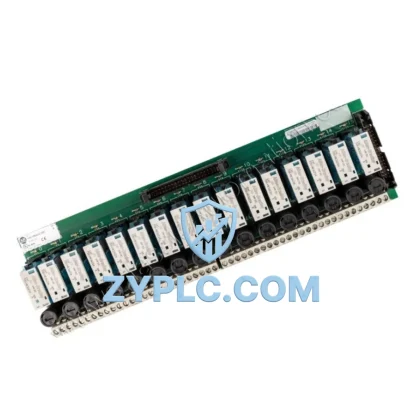
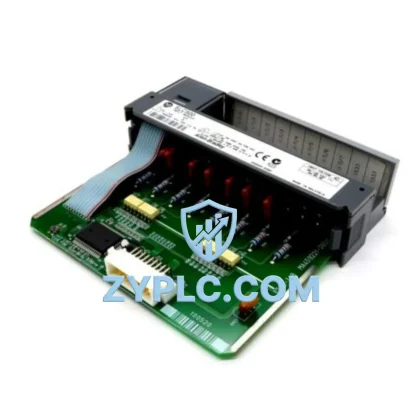
Yokogawa AMM42 S3 System-Ready Multiplexer Input for CENTUM VP Architecture
The Yokogawa AMM42 S3 is a high-density multiplexer analog input module engineered for seamless integration within the CENTUM VP Distributed Control System (DCS) architecture. Designed to serve as a critical node in the I/O layer of large-scale process automation environments, the AMM42 S3 enables engineers to consolidate multiple analog signal channels into a structured, high-integrity data acquisition framework. Its role extends far beyond simple signal conversion — it is a foundational component that defines the scalability, redundancy, and long-term maintainability of the entire control system.
In modern industrial automation, the effectiveness of a DCS is measured not by individual module performance, but by how seamlessly each component integrates across the control hierarchy. The AMM42 S3 is purpose-built to fulfill this requirement, offering deterministic signal processing, robust electrical isolation, and native compatibility with the CENTUM VP field control station (FCS) backplane architecture. Whether deployed in a greenfield installation or as a replacement module in an existing system, the AMM42 S3 delivers consistent performance that upholds the integrity of the entire control loop.
Architecture Specification Table
| Parameter |
Specification |
| System Role |
Multiplexer Analog Input Module — I/O Layer |
| Compatible Platform |
Yokogawa CENTUM VP DCS |
| Module Series |
AMM Series (Analog Multi-point Module) |
| Input Channels |
Up to 16 analog input channels (multiplexed) |
| Signal Types |
4–20 mA, 1–5 V DC, thermocouple, RTD (configuration-dependent) |
| Electrical Isolation |
Channel-to-channel and channel-to-bus isolation |
| Communication Interface |
Internal V-net / ESB bus via FCS backplane |
| Mounting |
Node Unit (NU) rack / FCS I/O nest — DIN rail compatible |
| Operating Temperature |
0°C to 55°C |
| Power Supply |
Supplied via backplane bus (no external power required) |
| Ingress Protection |
IP20 (panel-mount installation) |
| Country of Origin |
Japan |
| Warranty |
12-Month Warranty — tested and verified before shipment |
Coordinated Control System Design
The AMM42 S3 does not operate in isolation. Its value is fully realized when considered within the broader CENTUM VP system architecture, where it interfaces with a coordinated set of hardware components across multiple functional layers.
At the control layer, the AMM42 S3 connects directly to the Yokogawa FCS (Field Control Station) — the computational core of the CENTUM VP system — which executes the control algorithms and manages real-time data exchange between the I/O modules and the supervisory layer. The FCS relies on accurate, low-latency analog data from the AMM42 S3 to maintain closed-loop control integrity across process variables such as temperature, pressure, flow, and level.
Power integrity is maintained through the Yokogawa PW481 or PW482 Power Supply Modules, which provide regulated DC power to the FCS node unit. These power modules support redundant configurations, ensuring that a single power supply failure does not interrupt the operation of the AMM42 S3 or any other I/O module in the nest.
For high-availability installations, the AMM42 S3 is commonly deployed alongside Yokogawa ADM (Analog Dual-redundant Module) configurations or paired with redundant FCS units, where dual-path signal processing ensures continuous operation even during module maintenance or unexpected failures. This redundancy architecture is particularly critical in industries such as oil refining, chemical processing, and power generation, where process interruptions carry significant safety and financial consequences.
At the network layer, the CENTUM VP system utilizes Vnet/IP — Yokogawa’s proprietary high-speed control network — to facilitate real-time communication between FCS units, the HIS (Human Interface Station), and the EWS (Engineering Workstation). The AMM42 S3’s data is transmitted upstream through this network, enabling operators to monitor analog process values in real time via the HIS display environment.
Field-level connectivity is managed through Yokogawa terminal boards and marshalling panels, which provide the physical interface between field instrument wiring and the AMM42 S3 module. Proper selection of terminal boards — such as the TB series terminal boards — ensures signal integrity and simplifies field wiring during commissioning and maintenance activities.
For systems requiring FOUNDATION Fieldbus or HART communication integration, the AMM42 S3 works in conjunction with Yokogawa ALF111 FOUNDATION Fieldbus communication modules or AAI141 analog input modules, which handle digital field device communication while the AMM42 S3 manages conventional 4–20 mA analog inputs. This hybrid I/O strategy allows engineers to modernize field instrumentation incrementally without replacing the entire I/O infrastructure.
At the human-machine interface layer, the Yokogawa HIS (Human Interface Station) running CENTUM VP’s CAMS for HIS software provides operators with real-time process graphics, alarm management, and trend displays driven by the analog data acquired through the AMM42 S3. The seamless data path from field sensor through the AMM42 S3 to the HIS display is a defining characteristic of the CENTUM VP system’s end-to-end integration capability.
Application in Layered Automation Systems
The AMM42 S3 is deployed across a wide range of process industries where high-channel-density analog input acquisition is essential to safe and efficient operation.
In petroleum refining and petrochemical plants, the AMM42 S3 is used to monitor temperature profiles across distillation columns, heat exchangers, and reactor vessels. Its ability to handle multiple thermocouple and RTD inputs within a single module slot reduces rack space consumption and simplifies system wiring in environments where hundreds of analog loops must be managed simultaneously.
In power generation facilities — including thermal, hydro, and combined-cycle plants — the AMM42 S3 supports turbine control systems by providing high-integrity analog input data for parameters such as bearing temperature, steam pressure, and generator output. Its compatibility with the CENTUM VP FCS redundancy architecture ensures that critical measurements remain available even during planned maintenance windows.
In water and wastewater treatment plants, the AMM42 S3 enables centralized monitoring of flow meters, pH sensors, dissolved oxygen analyzers, and level transmitters distributed across large treatment facilities. Its multiplexed input design reduces the number of I/O modules required, lowering both capital expenditure and ongoing maintenance costs.
In mining and metallurgical operations, the AMM42 S3 is integrated into smelting furnace control systems, ore processing lines, and tailings management facilities, where robust analog signal acquisition under harsh environmental conditions is a fundamental requirement.
In pharmaceutical and food processing applications, the AMM42 S3 supports batch process control systems where precise temperature and pressure monitoring is required to maintain product quality and regulatory compliance. Its clean signal processing and electrical isolation characteristics make it suitable for environments with strict electromagnetic interference (EMI) requirements.
Architecture Engineering FAQ
Q1: Is the AMM42 S3 compatible with all CENTUM VP FCS configurations, including redundant FCS setups?
The AMM42 S3 is designed for use within the CENTUM VP I/O nest and is compatible with both standard and redundant FCS configurations. In redundant FCS deployments, the module communicates with the active FCS unit while the standby unit maintains a synchronized copy of all I/O data, ensuring bumpless switchover in the event of an FCS failure. Engineers should verify the specific node unit and nest configuration against the CENTUM VP hardware engineering guide to confirm slot compatibility and I/O capacity planning.
Q2: What is the recommended approach for replacing an AMM42 S3 module in a live production system?
Module replacement in a live CENTUM VP system should follow Yokogawa’s hot-swap procedures where supported by the FCS configuration. Prior to replacement, the affected channels should be placed in manual control mode at the FCS level to prevent process upsets. The replacement AMM42 S3 module should be sourced from a verified supplier with a 12-Month Warranty to ensure the module has been tested and validated before installation. After physical replacement, channel calibration and loop checks should be performed to confirm signal integrity before returning the loops to automatic control.
Q3: How does the 12-Month Warranty apply to the AMM42 S3, and what does it cover?
Every AMM42 S3 module supplied by ZYPLC is covered by a 12-Month Warranty from the date of shipment. This warranty covers manufacturing defects, functional failures under normal operating conditions, and any issues identified during incoming inspection. Each module undergoes functional testing prior to shipment to verify analog input accuracy, channel isolation, and backplane communication integrity. In the event of a warranty claim, ZYPLC provides replacement or repair support to minimize system downtime and protect the continuity of your control system architecture.
© 2026 ZYPLC. All rights reserved.
Original Source: https://zyplc.com
Contact: +86 19859288691 | plc.sales@zyplc.com