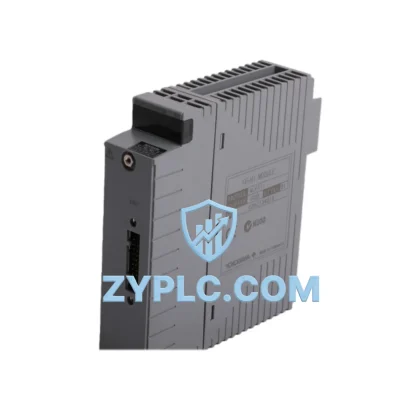
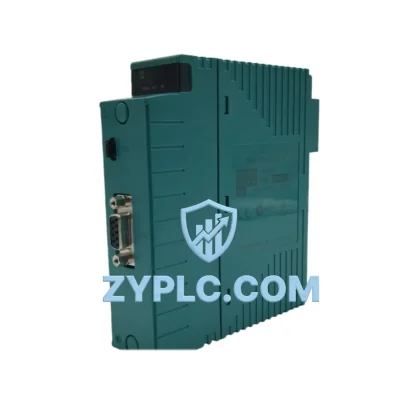
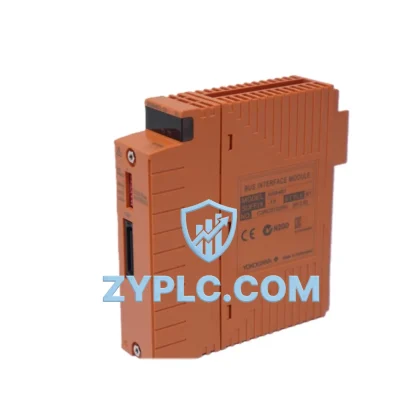
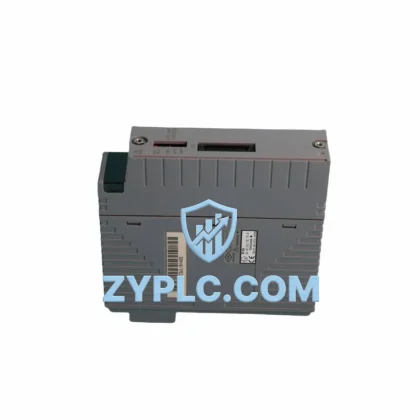
Yokogawa ANB10D-427/CU2N System-Ready ESB Bus Node for CENTUM VP Control Architecture
The Yokogawa ANB10D-427/CU2N is a dedicated ESB (Enhanced Signal Bus) Bus Node Module engineered for seamless integration within the CENTUM VP and CS 3000 distributed control system platforms. Rather than functioning as a standalone component, this module serves as a critical communication bridge within a layered automation architecture — connecting field-level I/O subsystems to the central control domain with deterministic, high-integrity signal transmission. Its role in the system hierarchy directly influences the reliability of process data flow, the scalability of I/O expansion, and the long-term maintainability of the entire control network.
In modern industrial automation, the ESB bus infrastructure forms the backbone of intra-cabinet and inter-cabinet communication within CENTUM VP systems. The ANB10D-427/CU2N occupies a pivotal position in this architecture: it acts as the node interface between the ESB highway and the field control station (FCS) subsystems, ensuring that real-time process variables, control commands, and diagnostic signals are transmitted with minimal latency and maximum consistency. This contextual integration capability makes the module indispensable in applications where system coherence across multiple control layers is non-negotiable.
Architecture Specification Table
| Parameter |
Specification |
| Model / SKU |
ANB10D-427/CU2N |
| Manufacturer |
Yokogawa Electric Corporation |
| Compatible Platform |
CENTUM VP, CENTUM CS 3000 |
| Module Function |
ESB Bus Node Module — Field Control Station I/O Bus Interface |
| System Role |
ESB Highway Node / I/O Subsystem Communication Bridge |
| Communication Protocol |
ESB (Enhanced Signal Bus) — Yokogawa Proprietary High-Speed Bus |
| Installation Environment |
Control Cabinet / Field Control Station (FCS) Rack |
| Mounting |
DIN Rail / Rack-Mount within CENTUM VP FCS Nest |
| Operating Temperature |
0°C to 55°C (standard industrial environment) |
| Power Supply |
Supplied via FCS backplane / ESB bus power rail |
| Redundancy Support |
Compatible with dual-redundant ESB bus configurations |
| Origin |
Japan |
| Warranty |
12-Month Warranty — Tested, verified, and ready to deploy |
Coordinated Control System Design
The ANB10D-427/CU2N does not operate in isolation — its value is fully realized when considered within the complete CENTUM VP system architecture. At the control layer, the module interfaces directly with Yokogawa’s PFCS (Field Control Station) and SFCS (Subsea Field Control Station) processors, ensuring that the ESB bus node maintains synchronization with the primary control execution cycle. The FCS processor units, such as the CP451 and CP461 controller modules, rely on stable ESB bus node communication to execute PID loops, sequence logic, and advanced process control algorithms without interruption.
At the I/O layer, the ANB10D-427/CU2N coordinates with analog input modules such as the AAI141 and AAI543, as well as digital I/O modules including the ADV151 and ADV161. These I/O modules are mounted within the same FCS nest or extended I/O nest, and the ESB bus node ensures that all field signals — whether 4–20 mA analog process variables or discrete on/off status signals — are accurately and promptly relayed to the control processor. The integrity of this signal path is fundamental to closed-loop control performance.
For power distribution, the ANB10D-427/CU2N operates within a system powered by Yokogawa’s PW481 and PW482 power supply modules, which provide regulated DC power to the FCS nest and all installed I/O and communication modules. In redundant power configurations, dual power supplies ensure that a single power unit failure does not interrupt bus node operation or compromise process data continuity.
At the network and communication layer, the ESB bus node works in conjunction with the BCV1 ESB coupler and EB401 ESB bus interface modules to extend the ESB highway across multiple nests or cabinets. This allows a single CENTUM VP FCS to manage a large number of I/O points distributed across physically separated control panels — a common requirement in large-scale process plants. The ANB10D-427/CU2N ensures that each node on the extended ESB highway maintains consistent communication timing and data integrity.
For human-machine interface integration, the CENTUM VP system connects to Yokogawa’s HIS (Human Interface Station) operator consoles via the V-net/IP control network. The data collected and processed through the ESB bus node — including process values, alarm states, and control outputs — is ultimately presented to operators through the HIS display, enabling real-time monitoring and intervention. The reliability of the ANB10D-427/CU2N directly supports the accuracy and timeliness of the information displayed at the operator level.
In redundant architecture designs, the ANB10D-427/CU2N supports dual ESB bus configurations where two parallel bus highways carry identical data streams. Should one ESB bus segment experience a fault, the redundant bus node automatically maintains communication continuity without operator intervention or process disruption. This redundancy capability is critical in safety-instrumented and high-availability process environments where unplanned downtime carries significant operational and financial consequences.
Application in Layered Automation Systems
Oil Refining and Petrochemical Plants: In continuous process environments such as crude distillation units, catalytic crackers, and ethylene plants, the ANB10D-427/CU2N provides the stable ESB bus node communication required to maintain tight control over temperature, pressure, flow, and level loops. The module’s compatibility with redundant bus architectures ensures that process uptime targets — often exceeding 99.9% — are consistently met.
Power Generation and Utilities: Thermal power stations, combined-cycle plants, and cogeneration facilities rely on CENTUM VP systems for boiler control, turbine management, and balance-of-plant automation. The ANB10D-427/CU2N supports the high I/O density and fast scan rates required in these applications, where millisecond-level control response is essential for safe and efficient power generation.
Water and Wastewater Treatment: Municipal and industrial water treatment facilities use CENTUM VP DCS platforms to automate dosing, filtration, aeration, and sludge handling processes. The ESB bus node module enables reliable communication between distributed I/O panels located across large treatment plant footprints, supporting centralized monitoring and control from a single operator station.
Mining and Mineral Processing: In ore processing, flotation, and smelting operations, the ANB10D-427/CU2N facilitates robust I/O communication in electrically noisy environments. Its compatibility with the CENTUM VP platform’s noise immunity features ensures signal integrity even in the presence of high-power motor drives, variable frequency drives, and heavy electrical equipment.
Pharmaceutical and Fine Chemical Manufacturing: Batch and continuous pharmaceutical production processes demand precise control and comprehensive audit trail capabilities. The ANB10D-427/CU2N supports the CENTUM VP system’s compliance-ready architecture, enabling accurate data acquisition and control execution that meets GMP and FDA 21 CFR Part 11 documentation requirements.
Architecture Engineering FAQ
Q1: Is the ANB10D-427/CU2N compatible with both CENTUM VP and CENTUM CS 3000 systems?
Yes. The ANB10D-427/CU2N is designed for use within Yokogawa’s CENTUM VP and CENTUM CS 3000 DCS platforms, both of which utilize the ESB (Enhanced Signal Bus) architecture for intra-FCS communication. When integrating this module into an existing system, engineers should verify the FCS firmware version and nest configuration to confirm full compatibility. ZYPLC’s technical team can assist with compatibility verification prior to shipment.
Q2: Can the ANB10D-427/CU2N be used in a redundant ESB bus configuration, and what are the installation requirements?
Yes. The ANB10D-427/CU2N supports dual-redundant ESB bus configurations, which are strongly recommended for critical process applications. In a redundant setup, two ANB10D-427/CU2N modules are installed in parallel bus node positions within the FCS nest, with each module connected to a separate ESB bus highway. The system automatically switches to the standby bus node in the event of a primary node failure. Installation must follow Yokogawa’s FCS nest wiring guidelines, and bus termination resistors must be correctly positioned at each end of the ESB highway to prevent signal reflection.
Q3: What does the 12-Month Warranty cover, and what support is available for long-term maintenance?
All ANB10D-427/CU2N modules supplied by ZYPLC are covered by a 12-Month Warranty from the date of shipment. This warranty covers manufacturing defects, functional failures under normal operating conditions, and verified compatibility issues. Each module undergoes functional testing prior to dispatch. For long-term maintenance, ZYPLC maintains inventory of CENTUM VP and CS 3000 spare parts to support planned maintenance cycles and emergency replacement requirements. Our engineering team is available to provide installation guidance, configuration support, and troubleshooting assistance throughout the warranty period and beyond.
© 2026 ZYPLC. All rights reserved.
Original Source: https://zyplc.com
Contact: +86 19859288691 | [email protected]