Yokogawa SB401-51-S1 System-Ready Bus Interface for CENTUM VP Architecture
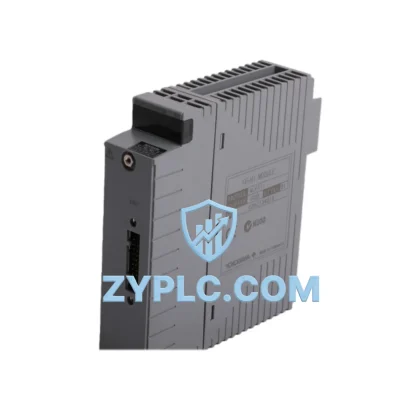
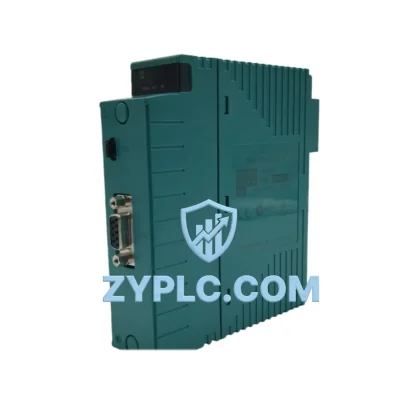
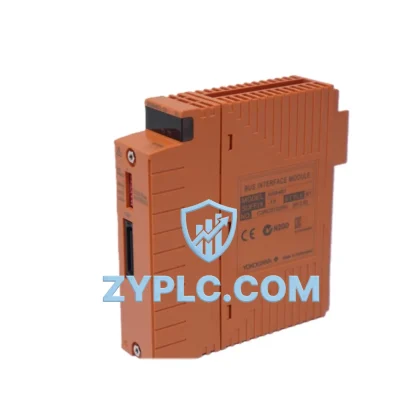
The Yokogawa SB401-51-S1 is a dedicated bus interface module engineered for seamless Contextual Integration within the CENTUM VP and CS 3000 distributed control system (DCS) architecture. Rather than functioning as a standalone component, the SB401-51-S1 serves as a critical communication bridge between the control layer and the I/O subsystem, enabling high-integrity signal transmission across multi-node process automation environments. Its role in the overall system hierarchy directly influences redundancy capability, diagnostic transparency, and long-term maintainability — making it an essential element for engineers designing or expanding CENTUM VP-based control platforms.
In layered automation architectures, the bus interface module occupies the intersection of the control layer and the field I/O layer. The SB401-51-S1 connects the CENTUM VP controller units — such as the FCN/FCJ autonomous controllers or the AFV10D/AFV30D field control units — to the V-net/R bus or ESB bus backbone, ensuring deterministic data exchange with minimal latency. This communication stability is foundational to achieving the real-time process visibility that modern industrial operations demand, particularly in continuous process industries where millisecond-level response accuracy is non-negotiable.
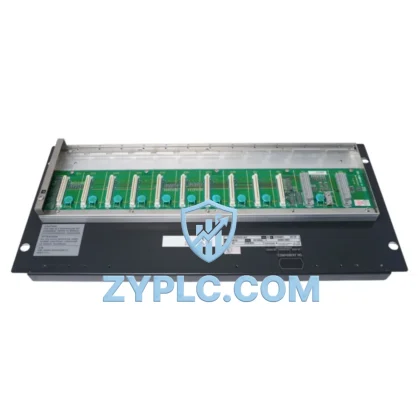
System architects integrating the SB401-51-S1 into a CENTUM VP platform benefit from its compatibility with the standard node unit backplane, including the ANB10D and ANB11D node units. The module slots directly into the I/O nest, maintaining electrical continuity with adjacent I/O modules such as the AAI141-S00 analog input module, the AAI841-S00 analog output module, and the ADV151-P00 digital input module. This plug-and-play compatibility within the CENTUM VP I/O family reduces commissioning time and eliminates the need for custom wiring adapters or protocol converters, streamlining both initial deployment and future expansion.
From a redundancy design perspective, the SB401-51-S1 supports dual-redundant bus configurations when paired with a secondary interface module in a mirrored slot arrangement. This architecture ensures that a single point of failure in the communication path does not interrupt process control, a requirement mandated in safety-critical applications such as refinery distillation columns, power plant boiler control loops, and offshore platform emergency shutdown systems. The module’s built-in self-diagnostics continuously monitor bus integrity and report fault conditions to the CENTUM VP HIS (Human Interface Station), enabling maintenance teams to respond proactively before process disruption occurs.
At the network layer, the SB401-51-S1 interfaces with the Vnet/IP communication network, which underpins the CENTUM VP system’s plant-wide data highway. This integration allows the module to participate in cross-domain data sharing between the DCS, the SCADA layer, and third-party systems connected via OPC-DA or OPC-UA gateways. Engineers working on digital transformation initiatives can leverage this connectivity to feed real-time process data into historian platforms, MES systems, or cloud-based analytics engines without disrupting the primary control loop.
For power layer considerations, the SB401-51-S1 draws regulated DC power from the node unit’s internal power bus, which is typically supplied by the Yokogawa PW481 or PW482 power supply modules. These power supplies support dual-redundant input configurations, ensuring that the bus interface module remains energized even during a primary power source failure. This power architecture, combined with the module’s own internal voltage regulation, guarantees stable operation across the full industrial temperature range and in environments subject to electrical noise from variable frequency drives, motor starters, and high-current switching equipment.
In terms of human-machine interface integration, the SB401-51-S1’s diagnostic data is surfaced directly on the CENTUM VP HIS operator console, providing maintenance engineers with real-time bus health indicators, communication error counters, and module status flags. This visibility reduces mean time to repair (MTTR) by eliminating the need for physical inspection of the control cabinet during fault investigation. When combined with the Yokogawa Exaopc OPC server, the module’s status data can also be forwarded to third-party CMMS platforms for predictive maintenance scheduling.
From an engineering and commissioning standpoint, the SB401-51-S1 is configured through the CENTUM VP Engineering Environment (ENG), which provides a graphical node configuration interface. Engineers can assign bus addresses, configure redundancy parameters, and validate communication paths without requiring command-line interaction or manual register editing. This reduces the risk of configuration errors during initial system startup and simplifies the process of adding new I/O nodes to an existing architecture during plant expansion projects.
Long-term inventory availability is a key consideration for plant asset managers responsible for maintaining aging DCS installations. ZYPLC maintains dedicated stock of the SB401-51-S1 to support both planned maintenance cycles and emergency replacement scenarios. All units supplied by ZYPLC are covered by a 12-Month Warranty, providing assurance of functional integrity from the date of delivery. Each module undergoes pre-shipment functional verification to confirm bus communication capability, electrical parameter compliance, and firmware version compatibility with current CENTUM VP system releases.
Architecture Specification Table
| Parameter |
Specification |
| Part Number |
SB401-51-S1 |
| Brand |
Yokogawa |
| Series |
CENTUM VP / CS 3000 |
| System Role |
Bus Interface Module — Control-to-I/O Communication Bridge |
| Compatible Bus |
V-net/R Bus, ESB Bus, Vnet/IP |
| Compatible Controllers |
FCN, FCJ, AFV10D, AFV30D Field Control Units |
| Compatible Node Units |
ANB10D, ANB11D |
| Redundancy Support |
Dual-Redundant Bus Configuration |
| Power Supply |
Internal Node Bus (PW481 / PW482 Compatible) |
| Communication Protocol |
Vnet/IP, OPC-DA, OPC-UA (via gateway) |
| Diagnostics |
Real-time bus health monitoring via CENTUM VP HIS |
| Installation Environment |
Industrial control cabinet, DIN rail or backplane mount |
| Origin |
Japan |
| Warranty |
12-Month Warranty (ZYPLC) |
| Contextual Integration |
Yes — native CENTUM VP architecture compatibility |
Coordinated Control System Design
The SB401-51-S1 achieves its full value when deployed as part of a coordinated CENTUM VP system rather than as an isolated replacement part. In a typical process control node, the module operates alongside the AFV10D field control unit at the control layer, receiving process variable data from AAI141-S00 analog input modules and issuing control outputs through AAI841-S00 analog output modules. Digital process states are captured via ADV151-P00 digital input modules, while discrete actuator commands are routed through ADV551-P00 digital output modules.
At the power layer, the PW481 and PW482 power supply modules provide redundant DC power to the node unit backplane, ensuring that the SB401-51-S1 and all co-resident I/O modules maintain continuous operation during power source transitions. The ANB10D node unit provides the physical backplane into which the SB401-51-S1 is installed, defining the slot addressing and bus arbitration logic for the entire I/O nest.
For network-layer integration, the SB401-51-S1 connects to the plant-wide Vnet/IP communication network, which links all CENTUM VP nodes to the HIS operator console and the Exaopc OPC server. This architecture enables seamless data flow from field instruments through the I/O layer, across the bus interface, into the controller, and up to the HIS display — all within a single, unified engineering environment. The result is a control system with consistent signal traceability, simplified fault isolation, and a reduced total cost of ownership over the full plant lifecycle.
Application in Layered Automation Systems
The SB401-51-S1 is deployed across a wide range of process industries where CENTUM VP systems form the backbone of plant-wide automation. In petroleum refining, the module supports multi-node DCS architectures controlling crude distillation units, hydrotreaters, and catalytic reformers, where bus communication reliability directly impacts product yield and safety system response time. In power generation, it is used in boiler management systems and turbine control loops where redundant bus paths are mandated by functional safety standards such as IEC 61511.
In petrochemical and chemical processing plants, the SB401-51-S1 enables high-density I/O configurations that support the large number of analog measurement points typical of reactor temperature profiling and distillation column control. Water and wastewater treatment facilities use the module in SCADA-integrated DCS architectures where remote node communication over Vnet/IP allows centralized monitoring of geographically distributed pump stations and treatment processes.
In mining and metallurgical applications, the module’s robust industrial design supports operation in environments with elevated electrical noise from large motor drives and smelting equipment. Packaging and discrete manufacturing lines leverage the SB401-51-S1’s fast bus cycle time to synchronize I/O updates across multiple control nodes, ensuring precise coordination between conveyor drives, filling stations, and labeling systems. Across all these applications, the module’s Contextual Integration capability ensures that it operates as a native element of the CENTUM VP architecture rather than a third-party add-on, preserving system certification and vendor support continuity.
Architecture Engineering FAQ
Q1: Is the SB401-51-S1 compatible with both CENTUM VP and CS 3000 systems?
Yes. The SB401-51-S1 is designed for use within the CENTUM VP and CS 3000 DCS families, both of which share the V-net/R bus and ESB bus communication architecture. It is compatible with standard node units including the ANB10D and ANB11D, and integrates with the CENTUM VP Engineering Environment for configuration and diagnostics. Engineers migrating from CS 3000 to CENTUM VP can retain existing SB401-51-S1 modules, reducing hardware replacement costs during system upgrades.
Q2: Can the SB401-51-S1 be used in a redundant bus configuration, and what additional components are required?
Yes. Dual-redundant bus operation requires a second SB401-51-S1 installed in the designated redundant slot of the node unit backplane, along with a redundant field control unit (such as a second AFV10D) and a redundant power supply module (PW481 or PW482). The CENTUM VP system automatically manages bus switchover in the event of a primary bus fault, with switchover times typically within one bus scan cycle. No additional software configuration is required beyond enabling redundancy in the Engineering Environment node settings.
Q3: What does the 12-Month Warranty cover, and how does ZYPLC support long-term maintenance requirements?
All SB401-51-S1 units supplied by ZYPLC are covered by a 12-Month Warranty from the date of delivery, covering functional defects in bus communication, electrical parameter compliance, and physical integrity under normal operating conditions. ZYPLC maintains dedicated inventory of the SB401-51-S1 to support both scheduled preventive maintenance and unplanned emergency replacement scenarios. For long-term maintenance planning, ZYPLC can provide multi-unit supply agreements to ensure continuous availability throughout the operational life of your CENTUM VP installation. Contact our technical team at [email protected] or +86 19859288691 for availability confirmation and lead time.
© 2026 ZYPLC. All rights reserved.
Original Source: https://zyplc.com
Contact: +86 19859288691 | [email protected]