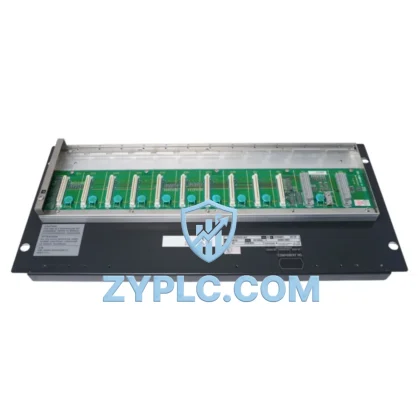
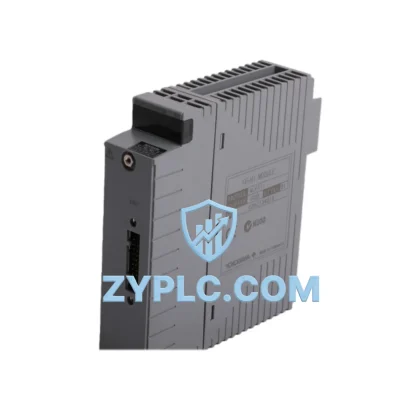
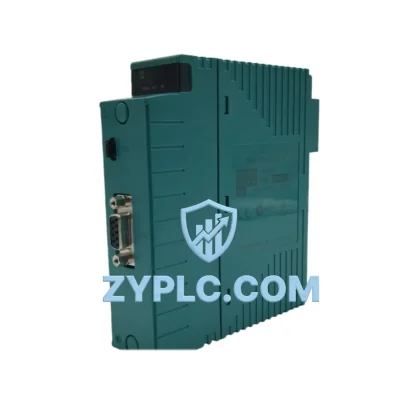
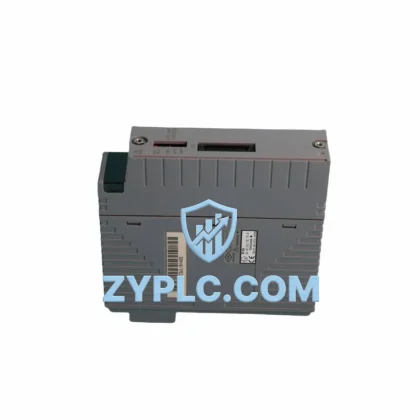
Yokogawa SSB401-13 S1 System-Ready Bus Interface for CENTUM VP Architecture
The Yokogawa SSB401-13 S1 is a dedicated bus interface module engineered to serve as a critical communication bridge within the CENTUM VP distributed control system (DCS) architecture. Rather than functioning as a standalone component, this module is designed to operate within a tightly integrated control hierarchy — connecting field control stations, I/O subsystems, and supervisory layers through a structured, high-reliability bus topology. In large-scale industrial automation environments, the integrity of inter-module communication directly determines system uptime, diagnostic accuracy, and the ability to scale without architectural disruption. The SSB401-13 S1 addresses all of these requirements through its role as a system-level interface node.
Within the CENTUM VP platform, the SSB401-13 S1 occupies the I/O bus layer, facilitating deterministic data exchange between the field control station (FCS) processor and downstream I/O modules. This positioning makes it indispensable in any architecture where signal latency, data consistency, and fault isolation are engineering priorities. The module supports the V-net/IP and ESB bus protocols native to the CENTUM VP ecosystem, ensuring seamless interoperability with Yokogawa’s broader portfolio of control and I/O hardware without requiring protocol conversion or additional gateway hardware.
System architects integrating the SSB401-13 S1 into a CENTUM VP installation will find it compatible with a range of upstream and downstream components. On the processor side, it interfaces directly with FCS units such as the AFV10D and AFV30D field control stations, which manage real-time control execution and communicate process data upward to the HIS (Human Interface Station) layer. On the I/O side, the SSB401-13 S1 coordinates with analog input modules such as the AAI141-S00 and AAI543-H00, digital output modules including the ADO141-P50 and ADO551-P50, and communication interface cards that bridge to FOUNDATION Fieldbus or HART-enabled field instruments. This layered connectivity ensures that the SSB401-13 S1 functions not merely as a passive conduit but as an active participant in the system’s signal flow architecture.
Redundancy is a core design consideration in any mission-critical DCS deployment, and the SSB401-13 S1 supports dual-redundant bus configurations that allow the control system to maintain uninterrupted operation in the event of a single-point bus failure. When paired with a redundant FCS processor pair and a mirrored power supply module such as the PW481 or PW482, the overall system achieves the fault-tolerant architecture required for continuous process industries including petroleum refining, chemical manufacturing, and power generation. The module’s hot-swap capability further reduces maintenance downtime by allowing replacement without shutting down the associated control loop.
From a network layer perspective, the SSB401-13 S1 integrates into the plant-wide Vnet/IP Ethernet backbone that connects multiple FCS nodes, engineering workstations, and the CENTUM VP HIS operator consoles. This network layer supports OPC DA/UA data exchange with third-party SCADA systems and MES platforms, enabling the SSB401-13 S1’s data pathway to extend beyond the DCS boundary into enterprise-level process monitoring and reporting systems. The module’s communication architecture is fully compatible with Yokogawa’s Exaopc OPC server, which aggregates real-time process data for historian and analytics applications.
Installation of the SSB401-13 S1 follows the standard CENTUM VP node unit (NU) rack mounting procedure. The module slots into the designated bus interface position within the node unit, where it draws power from the rack’s internal power bus and establishes communication with the FCS via the ESB (Extended Serial Backplane) bus. Commissioning engineers should verify bus address configuration using the CENTUM VP Engineering Environment (ENG) software, confirming that the module’s node address does not conflict with other devices on the same ESB segment. Firmware version compatibility between the SSB401-13 S1 and the FCS processor should also be validated prior to system startup to prevent initialization errors.
For long-term maintenance planning, the SSB401-13 S1 is supported by Yokogawa’s global spare parts network, and ZYPLC maintains verified stock of this module with full functional testing completed prior to shipment. Each unit supplied by ZYPLC is covered by a 12-Month Warranty, providing engineering teams and procurement managers with the assurance needed for both planned maintenance cycles and emergency replacement scenarios. The module’s diagnostic LED indicators provide real-time status feedback on bus communication health, power status, and fault conditions, simplifying on-site troubleshooting without requiring connection to the engineering workstation.
In summary, the Yokogawa SSB401-13 S1 is not simply a replacement part — it is a system architecture component whose correct specification, installation, and maintenance directly impacts the reliability and scalability of the entire CENTUM VP control platform. Whether deployed in a greenfield DCS installation, a system expansion project, or a lifecycle replacement program, this module delivers the contextual integration and communication consistency that modern industrial automation demands.
Architecture Specification Table
| Parameter |
Specification |
| System Role |
ESB Bus Interface Module for CENTUM VP Node Unit |
| Compatible Platform |
Yokogawa CENTUM VP DCS |
| Bus Protocol |
ESB (Extended Serial Backplane) / V-net/IP |
| Mounting |
Node Unit (NU) Rack, Designated Bus Interface Slot |
| Power Supply |
Supplied via Internal Rack Power Bus |
| Operating Temperature |
0°C to 55°C (Standard Industrial DCS Environment) |
| Communication Compatibility |
AFV10D, AFV30D FCS; AAI141-S00, ADO141-P50 I/O Modules |
| Redundancy Support |
Dual-Redundant Bus Configuration Supported |
| Hot-Swap Capability |
Yes |
| Diagnostic Indicators |
LED Status for Bus Health, Power, and Fault Conditions |
| Origin |
Japan |
| Warranty |
12-Month Warranty (ZYPLC Verified Stock) |
Coordinated Control System Design
The SSB401-13 S1 achieves its full operational value when considered within the context of a complete CENTUM VP system architecture. At the control layer, it works in direct coordination with the AFV10D and AFV30D field control station processors, which execute real-time PID control, sequence logic, and alarm management functions. These FCS units rely on the SSB401-13 S1 to maintain deterministic communication with the I/O subsystem, ensuring that process variable data arrives at the controller within the required scan cycle time.
At the I/O layer, the module interfaces with analog input cards such as the AAI141-S00 (4-channel, 4–20 mA HART) and the AAI543-H00 (multi-channel analog input with HART pass-through), as well as digital output modules including the ADO141-P50 and ADO551-P50, which drive field actuators, solenoid valves, and motor starters. The SSB401-13 S1 aggregates the I/O data from these modules and presents it to the FCS processor in a structured, time-stamped format that supports accurate process historization.
At the power layer, the PW481 and PW482 redundant power supply modules provide the stable DC bus voltage required by the node unit rack, ensuring that the SSB401-13 S1 and its associated I/O modules operate within their specified electrical tolerances even during utility power fluctuations. At the human-machine interface layer, operator consoles running the CENTUM VP HIS software receive process data that has passed through the SSB401-13 S1’s communication pathway, making the module’s reliability directly visible to plant operators through real-time trend displays and alarm annunciation screens. Communication gateways such as the ALR111 or ACF11 further extend the system’s reach to FOUNDATION Fieldbus and PROFIBUS field device networks, all of which depend on the SSB401-13 S1’s bus integrity for upstream data delivery.
Application in Layered Automation Systems
The Yokogawa SSB401-13 S1 finds application across a broad range of process industries where the CENTUM VP platform is the DCS of choice. In petroleum refining and petrochemical plants, the module supports continuous process control loops managing distillation columns, heat exchangers, and reactor temperature profiles, where bus communication reliability directly affects product quality and safety system response times. In power generation facilities — including thermal, combined-cycle, and nuclear auxiliary systems — the SSB401-13 S1 enables the high-availability DCS architecture required by regulatory standards, supporting redundant FCS configurations that maintain control continuity during planned maintenance windows.
In water and wastewater treatment plants, the module’s compatibility with HART-enabled analog I/O cards allows integration with intelligent field transmitters measuring flow, level, pH, and turbidity, providing operators with diagnostic data that extends beyond simple process variable monitoring. In mining and mineral processing operations, where environmental conditions can be demanding and maintenance access is limited, the SSB401-13 S1’s hot-swap capability and LED-based diagnostics reduce the mean time to repair (MTTR) for bus-related faults. In pharmaceutical manufacturing and food processing facilities operating under GMP or HACCP frameworks, the module’s deterministic communication architecture supports the data integrity and audit trail requirements imposed by regulatory bodies. Across all of these applications, the SSB401-13 S1 serves as the communication foundation upon which reliable, scalable, and maintainable process automation is built.
Architecture Engineering FAQ
Q1: Is the SSB401-13 S1 compatible with both CENTUM VP R5 and R6 system revisions?
The SSB401-13 S1 is designed for the CENTUM VP platform and is generally compatible across multiple system revisions, including R5 and R6. However, firmware version alignment between the module and the FCS processor is essential. Engineers should verify compatibility using the CENTUM VP Engineering Environment (ENG) software and consult the applicable hardware compatibility matrix prior to installation. ZYPLC can provide pre-shipment firmware version documentation upon request to support compatibility verification.
Q2: Can the SSB401-13 S1 be replaced online without shutting down the associated control loops?
Yes. The SSB401-13 S1 supports hot-swap replacement within a properly configured redundant bus architecture. When the system is operating in dual-redundant bus mode with a standby bus interface module active, the primary module can be removed and replaced without interrupting FCS-to-I/O communication. This procedure should be performed by a qualified CENTUM VP commissioning engineer following Yokogawa’s documented hot-swap procedure to avoid unintended bus reconfiguration events.
Q3: What does the 12-Month Warranty from ZYPLC cover for the SSB401-13 S1?
The 12-Month Warranty provided by ZYPLC covers functional defects identified under normal operating conditions consistent with the module’s published specifications. Each SSB401-13 S1 unit is functionally tested prior to shipment to verify bus communication integrity, power consumption within specification, and LED diagnostic indicator operation. In the event of a warranty claim, ZYPLC provides replacement or repair support with the objective of minimizing system downtime. For warranty service inquiries, contact ZYPLC at [email protected] or +86 19859288691.
© 2026 ZYPLC. All rights reserved.
Original Source: https://zyplc.com
Contact: +86 19859288691 | [email protected]