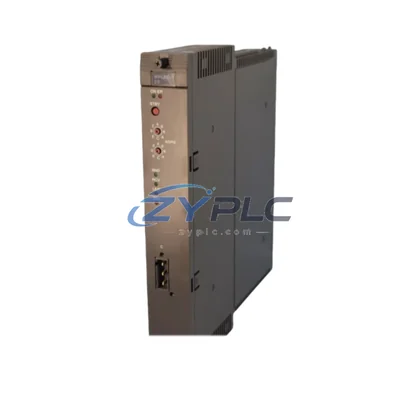
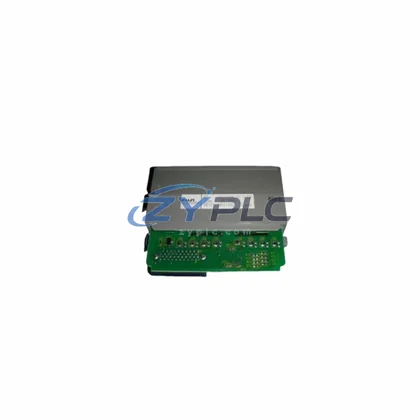
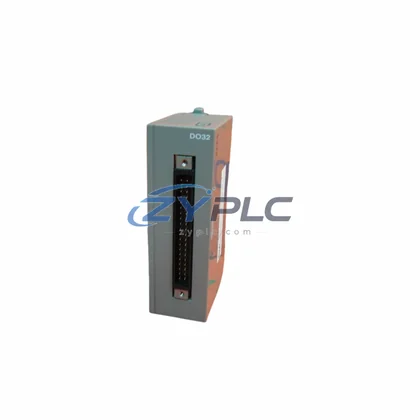
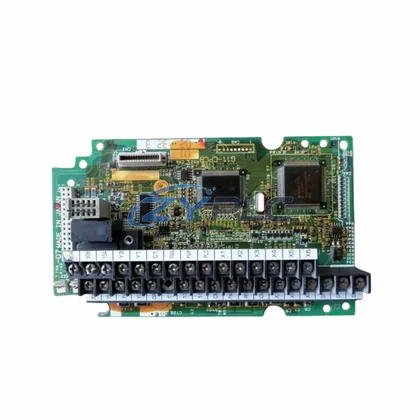
Yokogawa ASS9981DE-02 CPU Module for Centum CS Automation
The Yokogawa ASS9981DE-02 is a high-performance CPU module engineered for the Centum CS Distributed Control System (DCS), delivering precision process control with a strong focus on energy efficiency, equipment utilization, and production line optimization. Designed for demanding industrial environments, this module serves as the computational core of your automation architecture — coordinating real-time data acquisition, control execution, and system feedback to minimize unplanned downtime risk across the entire plant.
In modern manufacturing facilities, unplanned downtime is rarely caused by a single component failure — it accumulates through inefficient motor control, poor production rhythm, delayed fault response, and underutilized equipment cycles. The ASS9981DE-02 addresses these challenges at the control layer, enabling tighter loop execution, faster scan cycles, and more responsive process adjustments that collectively reduce idle energy draw and improve overall system throughput.
Every unit supplied by ZYPLC is sourced from verified inventory, subjected to full functional testing prior to shipment, and backed by a warranty terms confirmed during quotation — ensuring your production line stays operational with minimal risk.
Product Specification Table
| Parameter |
Specification / Value |
| Model / SKU |
ASS9981DE-02 |
| Brand |
Yokogawa |
| Series |
Centum CS DCS |
| Module Type |
CPU Module |
| Origin |
Japan |
| Operating Voltage |
24V DC (typical DCS backplane supply) |
| Power Consumption |
Low-power design optimized for continuous 24/7 operation |
| Scan Cycle Efficiency |
High-speed deterministic scan for real-time process control |
| Compatible Systems |
Yokogawa Centum CS DCS platform |
| Application Environment |
Process industries: oil & gas, chemical, power, pharmaceutical |
| Maintenance Value |
Reduces idle control overhead; supports demand-based motor scheduling |
| Communication Support |
Centum CS internal bus; supports Modbus, HART integration via I/O modules |
| Warranty |
12 Months (ZYPLC) |
| Condition |
Tested, verified functional prior to shipment |
System Compatibility and Application
The ASS9981DE-02 does not operate in isolation — its true maintenance planning value emerges when integrated within a well-structured Centum CS automation architecture. At the field level, Yokogawa AAI141-S00 analog input modules continuously feed process variables — temperature, pressure, flow rate — into the CPU for real-time evaluation. This data stream allows the ASS9981DE-02 to make millisecond-level control decisions that prevent energy-intensive overcorrections in downstream actuators.
On the drive side, the CPU module interfaces with Yokogawa VariFlex variable frequency drives (VFDs) through coordinated I/O signaling, enabling demand-based motor speed regulation. Rather than running motors at fixed full speed, the system dynamically adjusts output frequency based on actual process load — a strategy that can help restore stable operation when a compatible replacement is required. The ASS9981DE-02 executes the PID control algorithms that make this possible with sub-millisecond precision.
For servo-driven positioning systems on high-speed production lines, the CPU coordinates with Yokogawa servo amplifier modules to synchronize motion profiles, reducing mechanical overshoot and the associated unplanned downtime from repeated deceleration and re-acceleration cycles. This directly improves production line rhythm (takt time) and reduces wear on mechanical components.
Power quality monitoring is handled through integration with Yokogawa WT series power analyzers or compatible third-party power meters connected via Modbus RTU or HART-enabled I/O cards such as the Yokogawa AAI543-H00. These instruments feed real-time kWh, power factor, and harmonic distortion data back to the CPU, enabling the control system to flag energy anomalies before they escalate into equipment failures.
At the human-machine interface layer, operators interact with the system through Yokogawa FAST/TOOLS SCADA or dedicated Centum CS HMI stations, where energy dashboards display real-time consumption trends, equipment utilization rates, and alarm histories. The ASS9981DE-02 serves as the data backbone for these displays, ensuring that every operator decision is grounded in accurate, low-latency process data.
For facilities running mixed automation environments, the CPU module supports integration with Yokogawa Stardom FCN/FCJ remote controllers via standard industrial communication protocols, extending centralized condition monitoring to distributed field nodes without requiring a full DCS expansion. Additionally, Yokogawa EJX series differential pressure transmitters connected through HART I/O modules provide flow measurement data that the ASS9981DE-02 uses to optimize fluid transport operating load in pipeline and tank farm applications.
Maintenance and Replacement Notes
In a typical continuous process plant — such as a chemical reactor or refinery unit — the Yokogawa ASS9981DE-02 contributes to energy reduction through several interconnected mechanisms. First, its fast and deterministic scan cycle ensures that process deviations are detected and corrected before they require large, energy-intensive control actions. A well-tuned PID loop running on this CPU will keep a reactor temperature within ±0.5°C, eliminating the unplanned downtime associated with thermal overshoot and recovery.
Second, the module supports predictive maintenance workflows by logging equipment runtime hours, control output saturation events, and alarm frequencies. When a pump’s control output consistently runs near 100% to maintain setpoint, this is an early indicator of impeller wear or pipe fouling — conditions that increase operating load significantly. By flagging these patterns early, maintenance teams can schedule interventions during planned shutdowns rather than responding to emergency failures that cause unplanned downtime and energy-intensive restart sequences.
Third, the ASS9981DE-02 enables production scheduling optimization by providing accurate, real-time equipment utilization data to plant-level MES or ERP systems. Facilities that can identify underutilized equipment windows can consolidate production runs, reduce the number of equipment start-stop cycles per shift, and lower peak demand charges on their electricity bills.
From an inventory and supply chain perspective, ZYPLC maintains ready stock of the ASS9981DE-02 to support rapid deployment for both planned upgrades and emergency replacements. All units undergo pre-shipment functional testing on Centum CS-compatible test benches, and each shipment includes documentation of test results. The warranty terms confirmed during quotation covers manufacturing defects and functional failures under normal operating conditions, providing procurement teams with the confidence to specify this module for critical control applications.
Product Sourcing FAQ
Q1: How does the ASS9981DE-02 contribute to measurable operational stability in a DCS environment?
The ASS9981DE-02 improves energy efficiency primarily through faster, more precise control loop execution. By reducing process variability, it minimizes the frequency and magnitude of corrective control actions — which directly reduces the energy consumed by actuators, motors, and heating/cooling systems responding to those commands. When paired with VFDs and power monitoring instruments, the system can deliver measurable reductions in kWh consumption per unit of production output.
Q2: Is the ASS9981DE-02 compatible with existing Centum CS installations, and can it replace older CPU modules?
Yes. The ASS9981DE-02 is designed for the Centum CS platform and is compatible with standard Centum CS backplane configurations. It can serve as a direct replacement for aging CPU modules in existing installations. We recommend verifying firmware revision compatibility with your system integrator before installation, particularly in systems running legacy Centum CS software versions.
Q3: What is the pre-shipment testing process, and what does the warranty terms confirmed during quotation cover?
Every ASS9981DE-02 unit supplied by ZYPLC is tested for full functional operation prior to shipment, including power-on verification, communication bus integrity checks, and I/O response validation. The warranty terms confirmed during quotation covers defects in materials and workmanship and functional failures under normal operating conditions. It does not cover damage resulting from incorrect installation, overvoltage events, or physical mishandling.
Q4: How quickly can ZYPLC supply the ASS9981DE-02 for an urgent replacement?
ZYPLC maintains RFQ-confirmed sourcing of the ASS9981DE-02 to support urgent delivery requirements. Standard lead times for tested and verified units are typically 3–7 business days for international shipments. For critical production line situations, please contact our sales team directly to confirm current stock availability and expedited shipping options.