Yokogawa ATR8S-00/S2 System-Ready Analog Input for CENTUM Architecture: Control System Architecture and Upstream-Downstream Coordination
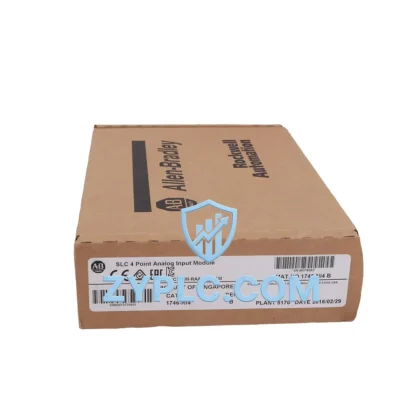
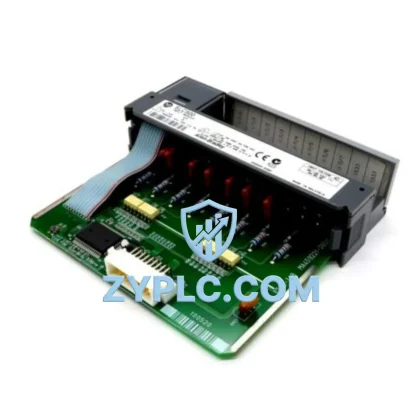
The Yokogawa ATR8S-00/S2 is a high-density analog input module engineered for seamless integration within the CENTUM VP distributed control system (DCS) architecture. Rather than functioning as a standalone component, the ATR8S-00/S2 occupies a critical position in the I/O layer of a multi-tier automation hierarchy — receiving field-level analog signals and converting them with precision into digital process values that flow upward through the control layer to the CPU and operator interface. Understanding this module’s role within the broader system architecture is essential for engineers designing, commissioning, or maintaining process automation infrastructure in industries such as oil and gas, petrochemicals, power generation, water treatment, metallurgy, and advanced manufacturing.
In a fully realized CENTUM VP control system, the ATR8S-00/S2 is mounted on a field control station (FCS) node unit, sharing a common backplane with other I/O modules such as analog output modules, digital input/output modules, and communication interface cards. The backplane provides both power distribution and high-speed internal bus communication, ensuring that signal data from the ATR8S-00/S2 reaches the FCS CPU — typically an FCU (Field Control Unit) processor card — with minimal latency and maximum determinism. This tight integration between the I/O layer and the control layer is what enables the CENTUM VP platform to deliver the sub-100ms scan cycle performance required in critical process control loops.
From a system architecture perspective, the ATR8S-00/S2 supports the signal flow that begins at field instruments — pressure transmitters, temperature sensors, flow meters, and level gauges — and terminates at the historian, advanced process control (APC) engine, or safety instrumented system (SIS) gateway. The module’s multi-channel analog input capability allows engineers to consolidate signal wiring into a single node, reducing cabinet footprint and simplifying cable management in large-scale control rooms. When paired with Yokogawa’s terminal assembly units and marshalling panels, the ATR8S-00/S2 contributes to a clean, maintainable wiring architecture that supports long-term operational reliability.
Architecture Specification Table
| Parameter |
Specification |
| Model |
ATR8S-00/S2 |
| Brand |
Yokogawa |
| Series |
CENTUM VP / CENTUM CS 3000 |
| Module Type |
Analog Input Module |
| System Role |
Field I/O Layer — Analog Signal Acquisition |
| Number of Channels |
8 Channels (typical for ATR8S series) |
| Input Signal Range |
4–20 mA DC / 1–5 V DC (configurable per channel) |
| Resolution |
16-bit A/D conversion |
| Isolation |
Channel-to-channel and channel-to-bus isolation |
| Communication |
Internal FCS backplane bus (Vnet/IP compatible architecture) |
| Power Supply |
Supplied via node unit backplane (redundant power supported) |
| Installation |
Rack-mount, FCS node unit slot |
| Operating Temperature |
0°C to 60°C |
| Humidity |
5% to 95% RH (non-condensing) |
| Certifications |
CE, UL (subject to variant) |
| Origin |
Japan |
| Warranty |
12-Month Warranty (ZYPLC) |
Coordinated Control System Design
The ATR8S-00/S2 achieves its full value when deployed as part of a coordinated CENTUM VP system architecture. At the control layer, the FCU processor card — such as the FCU401 or FCU404 — executes the control strategy and communicates with all I/O modules on the node unit backplane. The ATR8S-00/S2 feeds real-time analog process values directly into PID control blocks, ratio control schemes, and cascade loops running on the FCU, enabling closed-loop control with the determinism required for continuous process industries.
At the power layer, the node unit relies on redundant power supply modules — such as the PW481 or PW482 power supply units — to ensure uninterrupted operation of all installed I/O cards including the ATR8S-00/S2. Redundant power architecture eliminates single points of failure at the cabinet level, a critical requirement in SIL-rated or high-availability process environments. The ATR8S-00/S2 draws its operating power from the backplane bus, meaning power supply sizing must account for the aggregate load of all installed modules.
At the network layer, the CENTUM VP system uses Vnet/IP — Yokogawa’s proprietary high-speed control network — to connect field control stations to the human-machine interface (HMI) stations and engineering workstations. The ATR8S-00/S2’s data, once processed by the FCU, is transmitted over Vnet/IP to the HIS (Human Interface Station) running CENTUM VP’s operator graphics, trend displays, and alarm management. This seamless data path from field sensor through the ATR8S-00/S2 to the HIS operator screen is the backbone of real-time process visibility.
For systems requiring redundancy at the I/O level, the ATR8S-00/S2 can be deployed in conjunction with redundant node unit configurations, where a standby node mirrors the active node’s I/O data. This architecture, combined with redundant ESB (Enhanced Signal Bus) cabling and dual FCU processor cards, delivers the fault-tolerant control infrastructure demanded by refinery, power plant, and chemical plant operators. Additional modules such as ADV151 analog output modules and ADV141 digital input modules share the same node unit chassis, enabling mixed I/O configurations within a single rack.
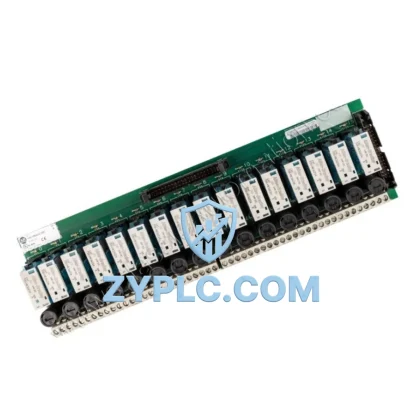
At the field termination layer, the ATR8S-00/S2 interfaces with terminal assembly units and junction boxes that consolidate field wiring from transmitters and sensors. Proper grounding, shielding, and cable segregation at this layer directly affect the signal quality delivered to the ATR8S-00/S2’s input channels. Engineers should also consider the ALR111 or similar relay output modules when designing interlock and alarm circuits that respond to analog process values acquired by the ATR8S-00/S2.
Application in Layered Automation Systems
In petrochemical and refinery applications, the ATR8S-00/S2 is commonly deployed in distillation column control, reactor temperature monitoring, and pipeline pressure management. The module’s high-resolution analog input capability supports the tight process tolerances required in these environments, where a 0.1% deviation in a critical measurement can trigger safety shutdowns or product quality excursions. The CENTUM VP platform’s integration with Yokogawa’s FAST/TOOLS SCADA and Exaquantum historian ensures that data from the ATR8S-00/S2 is archived for regulatory compliance and process optimization analysis.
In power generation facilities — including thermal, hydro, and combined-cycle plants — the ATR8S-00/S2 supports boiler control, turbine monitoring, and auxiliary system supervision. The module’s compatibility with the CENTUM VP redundant control architecture ensures that critical measurements remain available even during planned maintenance or unexpected hardware faults. Power plant operators benefit from the ATR8S-00/S2’s deterministic scan performance, which supports the fast-response control loops required for load-following and frequency regulation.
In water and wastewater treatment plants, the ATR8S-00/S2 acquires analog signals from flow meters, pH sensors, dissolved oxygen probes, and turbidity analyzers distributed across treatment stages. The module’s multi-channel design reduces the number of I/O cards required per node, lowering system cost and simplifying spare parts management. For municipal water authorities operating multiple treatment facilities, standardizing on the ATR8S-00/S2 and the broader CENTUM VP platform creates a consistent maintenance and training environment across sites.
In metallurgical and mining operations, the ATR8S-00/S2 supports furnace temperature control, conveyor load monitoring, and flotation cell level management. The module’s robust design for industrial environments — including wide operating temperature range and high EMI immunity — makes it suitable for the harsh electrical environments found in smelters, concentrators, and mineral processing plants. Integration with Yokogawa’s safety instrumented system (SIS) platforms ensures that analog measurements from the ATR8S-00/S2 can trigger safety functions when process values exceed defined limits.
Architecture Engineering FAQ
Q1: Is the ATR8S-00/S2 compatible with both CENTUM VP and CENTUM CS 3000 systems?
The ATR8S-00/S2 is designed for the CENTUM series architecture and is compatible with CENTUM VP field control station node units. Compatibility with CENTUM CS 3000 depends on the specific node unit generation and backplane configuration. Engineers migrating from CS 3000 to CENTUM VP should verify slot compatibility and firmware revision requirements with Yokogawa’s engineering documentation or contact ZYPLC for pre-sales technical consultation. ZYPLC supplies tested ATR8S-00/S2 modules with a 12-Month Warranty, providing confidence for both new installations and system upgrades.
Q2: Can the ATR8S-00/S2 be installed in a redundant I/O configuration, and what additional components are required?
Yes, the CENTUM VP architecture supports redundant I/O node configurations where a standby node unit mirrors the active node’s I/O data. Implementing redundant I/O requires a redundant node unit chassis, dual ESB bus cables, and a redundant FCU processor pair. The ATR8S-00/S2 modules installed in both the active and standby node units operate in lockstep, ensuring seamless switchover in the event of a hardware fault. ZYPLC can supply matched pairs of ATR8S-00/S2 modules for redundant configurations, all covered under the 12-Month Warranty.
Q3: What is the recommended commissioning procedure for the ATR8S-00/S2, and how does ZYPLC’s warranty support long-term maintenance?
Commissioning the ATR8S-00/S2 involves physical installation into the correct node unit slot, configuration of channel input ranges via the CENTUM VP engineering environment (System View), loop checking against field instruments, and verification of process values at the HIS operator station. Engineers should document as-built channel assignments and calibration records for future maintenance reference. ZYPLC’s 12-Month Warranty covers manufacturing defects and functional failures under normal operating conditions. ZYPLC maintains inventory of ATR8S-00/S2 modules to support rapid replacement during unplanned outages, minimizing process downtime for operating facilities.
© 2026 ZYPLC. All rights reserved.
Original Source: https://zyplc.com
Contact: +86 19859288691 | [email protected]