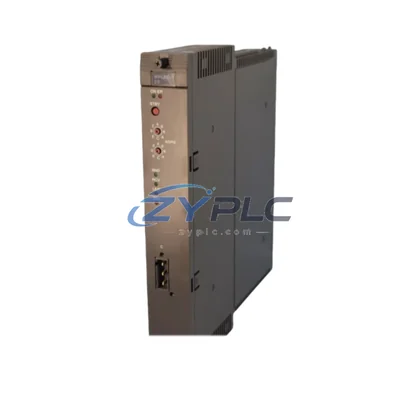
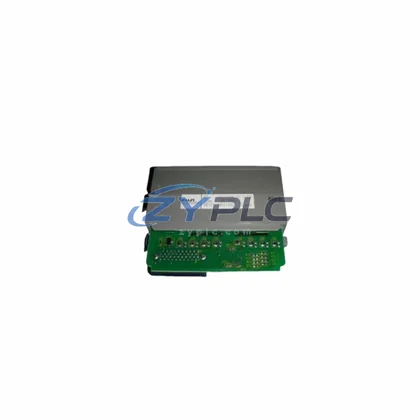
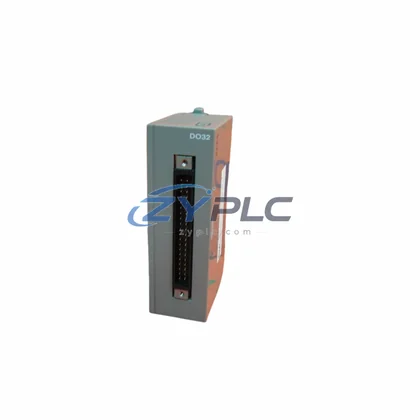
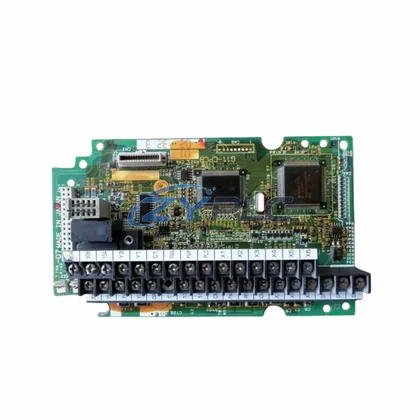
Yokogawa CP134E-16-S1 CPU Module for CS3000 Automation
The Yokogawa CP134E-16-S1 is a high-performance central processing unit module engineered for the CENTUM CS and CS3000 Distributed Control System (DCS) platform. Designed with industrial energy efficiency at its core, this CPU module delivers precise, low-latency process control while minimizing power draw across continuous production environments. For facilities seeking to reduce operational costs without compromising control integrity, the CP134E-16-S1 represents a proven, field-tested solution backed by Yokogawa’s decades of expertise in process automation.
In modern manufacturing and process industries — from petrochemical refining to pharmaceutical batch production — the CPU module is the nerve center of the entire control architecture. The CP134E-16-S1 manages real-time data acquisition, control loop execution, and inter-station communication with deterministic cycle times. By maintaining tight control over process variables, it directly reduces unplanned downtime caused by oscillating setpoints, over-actuation of final control elements, and unplanned equipment cycling. The result is a measurable improvement in both energy efficiency and overall equipment effectiveness (OEE).
Product Specification Table
| Parameter |
Specification / Value |
| SKU |
CP134E-16-S1 |
| Brand |
Yokogawa |
| Series |
CENTUM CS3000 |
| Module Type |
CPU / Central Processor Unit |
| Power Consumption |
Low-power design optimized for 24/7 DCS operation |
| Operating Efficiency |
High-speed deterministic scan cycle; minimizes idle processing overhead |
| Compatible Systems |
CENTUM CS, CENTUM CS3000 DCS platforms |
| Application Environment |
Petrochemical, Power Generation, Pharmaceutical, Pulp & Paper, Water Treatment |
| Value |
Reduces control loop deviation, lowers actuator cycling, cuts auxiliary unplanned downtime |
| Communication Protocol |
Vnet (Yokogawa proprietary high-speed control bus) |
| Origin |
Japan |
| Warranty |
warranty terms confirmed during quotation — tested and verified before shipment |
System Compatibility and Application
The CP134E-16-S1 does not operate in isolation — its maintenance planning value is fully realized when integrated within a well-structured CS3000 control architecture. At the field level, analog input modules such as the AAI143-H00 collect real-time process signals from temperature, pressure, and flow transmitters. These signals feed directly into the CP134E-16-S1’s control algorithms, enabling precise PID regulation that eliminates the energy-wasting effects of process overshoot and undershoot.
On the output side, analog output modules like the AAV542-S handle the conversion of CPU-generated control signals into 4–20 mA commands directed at control valves and variable-speed drives. When paired with Yokogawa’s ADV151-P00 digital output module, the system can also manage discrete actuators — pump starters, solenoid valves, and motor contactors — with millisecond-level precision, ensuring that equipment runs only when process conditions demand it.
For drive-level maintenance planning, the CP134E-16-S1 integrates seamlessly with variable frequency drive (VFD) systems via the station’s communication infrastructure. The SCP451 serial communication module enables Modbus RTU or RS-485 connectivity to third-party drives and power meters, allowing the CPU to receive real-time power consumption feedback and adjust motor speed references dynamically. This closed-loop energy control approach can help restore stable operation when a compatible replacement is required.
The CP345 engineering workstation software provides the programming and configuration environment for the CP134E-16-S1, enabling engineers to implement advanced control strategies — including model predictive control (MPC) and cascade loops — that further reduce operating load by anticipating process disturbances before they cause deviation. Alongside this, the AMM12C alarm management module ensures that energy-related alarms (high power draw, abnormal motor current, thermal excursions) are surfaced promptly, enabling operators to respond before inefficiencies escalate into equipment damage.
For power quality monitoring at the panel level, the AIP827 power monitor module can be deployed within the same control cabinet ecosystem, providing real-time visibility into voltage, current, and power factor. This data, fed back to the CP134E-16-S1 via the Vnet control bus, enables the system to correlate process states with operating load patterns — a foundational capability for energy key performance indicator (KPI) tracking and ISO 50001 compliance reporting.
The ANB10D node interface unit extends the CS3000 architecture to remote I/O stations, reducing the need for long cable runs and the associated signal losses and installation costs. In large-scale plant environments, this distributed I/O approach — coordinated by the CP134E-16-S1 — significantly reduces both capital expenditure and ongoing energy losses in field wiring infrastructure. The PW482 power supply module ensures stable, conditioned DC power delivery to all I/O and communication modules within the station, protecting the CPU’s operational continuity and preventing energy-wasting control interruptions caused by power fluctuations.
Maintenance and Replacement Notes
In a typical continuous process plant, the CP134E-16-S1 contributes to maintenance planning across multiple production stages. During startup sequences, the CPU executes pre-programmed ramp-up routines that bring equipment online gradually, avoiding the high inrush currents and thermal stress associated with hard starts. This not only reduces peak demand charges on the facility’s electricity bill but also extends the service life of motors, drives, and associated mechanical components.
During steady-state operation, the CP134E-16-S1’s fast scan cycle — typically in the range of 100 ms for standard control loops — ensures that process variables are corrected before deviations grow large enough to trigger energy-intensive corrective actions. A well-tuned PID loop managed by this CPU can reduce the standard deviation of a critical process variable by 50% or more compared to a poorly maintained legacy controller, translating directly into reduced raw material waste, lower utility consumption, and improved product quality consistency.
Predictive maintenance integration is another key operational-efficiency dimension. By monitoring control loop performance metrics — such as valve travel accumulation, actuator response time degradation, and sensor drift indicators — the CP134E-16-S1 can flag developing equipment issues before they cause unplanned shutdowns. Unplanned downtime is one of the largest sources of unplanned downtime in process industries, as restart sequences consume disproportionate amounts of energy and generate significant off-spec product that must be reprocessed or discarded.
For facilities operating under maintenance planning mandates or pursuing carbon reduction targets, the CP134E-16-S1 provides the control foundation necessary to implement real-time energy balancing across production lines. By coordinating with upstream and downstream control stations via the Vnet bus, the CPU enables plant-wide load shifting strategies that flatten energy demand profiles and reduce peak tariff exposure — a capability increasingly valued as industrial electricity pricing becomes more dynamic.
All units supplied by ZYPLC undergo full functional testing prior to shipment, including power-on verification, communication bus integrity checks, and I/O channel validation. Each CP134E-16-S1 is covered by a warranty terms confirmed during quotation, ensuring that your production line investment is protected from the moment of installation. With availability subject to RFQ confirmation for shipment arranged after confirmation, lead times are minimized — a critical factor for facilities managing urgent replacement requirements or time-sensitive commissioning schedules.
Product Sourcing FAQ
Q1: How does the CP134E-16-S1 contribute to measurable operational stability on the production line?
The CP134E-16-S1 reduces unplanned downtime by maintaining tight control loop performance, minimizing process deviation, and enabling precise coordination of motors, drives, and actuators. When integrated with VFD systems and power monitoring modules, it supports closed-loop maintenance planning that can help restore stable operation when a compatible replacement is required.
Q2: Is the CP134E-16-S1 compatible with existing CENTUM CS and CS3000 installations?
Yes. The CP134E-16-S1 is designed for direct compatibility with the CENTUM CS and CS3000 DCS platforms. It operates on the Vnet control bus and is compatible with the full range of CS3000 I/O, communication, and power supply modules. No hardware modifications to the existing station chassis are required for a like-for-like replacement.
Q3: What is the recommended replacement procedure, and how is downtime minimized?
For planned replacements, the CP134E-16-S1 can be swapped during a scheduled maintenance window with the station in a safe state. Configuration data is retained in the engineering database managed via CP345 software, allowing rapid restoration of control parameters after module installation. ZYPLC recommends verifying firmware compatibility and performing a full I/O checkout before returning the station to automatic control.
Q4: What does the warranty terms confirmed during quotation cover, and what pre-shipment testing is performed?
Every CP134E-16-S1 supplied by ZYPLC is tested for power-on functionality, Vnet communication integrity, and basic I/O channel operation before dispatch. The warranty terms confirmed during quotation covers manufacturing defects and functional failures under normal operating conditions. For warranty claims or technical support, contact ZYPLC directly via the details below.