Product identification and sourcing context
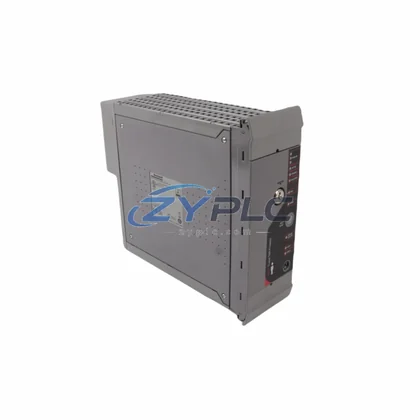
Yokogawa CP333D S3 DCS Processor CENTUM CS3000 is handled as a quote-based CENTUM DCS spare part for DCS maintenance, process automation, and legacy-system replacement projects. ZYPLC checks the exact model suffix, installed Yokogawa platform, required condition, quantity, and destination country before quotation.
| Brand |
Yokogawa |
| Model / SKU |
CP333D S3 |
| Series context |
CENTUM CS3000 |
| Part type |
PLC Systems |
| RFQ basis |
Availability, condition, lead time, and export shipment options are confirmed before quote. |
Where this part is typically used
This item is requested for CENTUM VP / CS3000 process-control maintenance, field-control station support, and installed-base replacement sourcing. Yokogawa CENTUM VP, CENTUM CS3000, ProSafe, field-control unit, ESB bus node, and DCS I/O installations often require exact suffix and cabinet-context checks before a replacement can be sourced.
RFQ information for maintenance teams
- Exact part number, suffix, and Yokogawa platform or cabinet context.
- Installed system such as CENTUM VP, CENTUM CS3000, ProSafe, Vnet/IP, or ESB bus where applicable.
- Quantity, urgency, required condition, and destination country.
- Photos of module labels, terminal bases, bus-node nameplates, or existing spare packaging.
Browse related Yokogawa spare parts, review the CENTUM CS3000 series, or compare similar PLC Systems records. If the exact suffix is not shown, send the model and photos so the RFQ can be checked manually.
Request quote for this model
The Yokogawa CP333D S3 is a high-performance DCS processor module designed for the CENTUM CS3000 distributed control system. In modern manufacturing environments where equipment uptime and replacement lead time directly affect production continuity, the CP333D S3 delivers the processing reliability and control precision needed to restore stable operation, reduce downtime, and maintain production continuity. Whether deployed in chemical processing, oil refining, power generation, or advanced discrete manufacturing, this processor module serves as the computational backbone of an industrial automation system. ZYPLC supports RFQ-based sourcing with pre-shipment checks. Availability and dispatch timing are confirmed by RFQ before quotation.
Product Specification Table
| Parameter |
Specification / Value |
| SKU |
CP333D S3 |
| Brand |
Yokogawa |
| Series |
CENTUM CS3000 |
| Product Type |
DCS Processor Module |
| Origin |
Japan |
| Electrical / System Notes |
Verify exact system requirements against the installed hardware revision |
| Processing Efficiency |
High-speed real-time control with deterministic scan cycle execution |
| Compatible Systems |
Yokogawa CENTUM CS3000 DCS platform |
| Application Environments |
Chemical, petrochemical, power generation, pulp & paper, pharmaceuticals |
| Maintenance Value |
Supports replacement planning and compatibility verification |
| Communication Support |
Vnet/IP, RS-485, Ethernet-based field bus integration |
| Redundancy Support |
Dual-redundant CPU configuration available within CS3000 architecture |
| Warranty |
12 Months — Covered by ZYPLC |
| Availability |
Availability confirmed by RFQ — shipment arranged after confirmation |
System Compatibility and Application
The CP333D S3 does not operate in isolation — its value is fully realized when integrated into a coherent, industrial control architecture. In a typical CENTUM CS3000 deployment, the processor module coordinates with field-level I/O units such as the AAI141-S00 analog input module and ADV151-P00 digital output module to collect real-time process variables and issue precise control commands. This tight integration eliminates polling delays and reduces the number of unnecessary actuator corrections, which directly translates to lower maintenance risk during production.
On the drive side, the CP333D S3 communicates with variable frequency drives — including Yokogawa’s own drive solutions and compatible third-party inverters — to implement speed-referenced motor control. Rather than running motors at fixed full-load speed, the processor enables dynamic speed adjustment based on actual process demand. When paired with a Yokogawa WT series power analyzer or equivalent power monitoring instrument, operators gain real-time visibility into motor load profiles, enabling further tuning of drive parameters to eliminate unplanned downtime during low-demand periods.
For human-machine interaction, the CS3000 platform typically integrates with Yokogawa CENTUM VP HIS (Human Interface Station) workstations, where operators can monitor energy KPIs, adjust setpoints, and review alarm histories. The CP333D S3 feeds process data to these stations with minimal latency, ensuring that maintenance decisions are based on current, accurate information rather than stale readings.
At the field bus level, the processor supports integration with FOUNDATION Fieldbus H1 and HART-compatible instruments, including flow transmitters, pressure sensors, and temperature elements from Yokogawa’s EJA and EJX series. These instruments provide the granular process data that the CP333D S3 uses to execute model-based control strategies such as cascade control, feedforward compensation, and advanced PID tuning — all of which contribute to tighter maintenance planning across the process loop.
In multi-node CS3000 installations, the CP333D S3 communicates over Vnet/IP, Yokogawa’s high-speed control network, enabling coordinated control across multiple field control stations (FCS). This network-level coordination is essential for plant-wide maintenance planning, where load balancing between process units can significantly reduce peak demand charges. The Yokogawa CENTUM CS3000 FCS architecture, anchored by the CP333D S3, supports this distributed yet synchronized control model natively.
For safety-critical applications, the CP333D S3 can be deployed alongside Yokogawa ProSafe-RS safety instrumented system components, ensuring that maintenance planning measures do not compromise process safety integrity. The separation of control and safety logic, while maintaining data exchange between systems, allows engineers to pursue aggressive energy targets without relaxing safety margins.
Maintenance and Replacement Notes
In real production environments, energy losses rarely come from a single source. They accumulate across dozens of control loops, each running slightly off-optimum due to outdated tuning parameters, sensor drift, or inadequate feedback resolution. The CP333D S3 addresses this systemic inefficiency by providing the processing headroom needed to run advanced control algorithms — including model predictive control (MPC) and adaptive PID — that continuously self-correct based on live process feedback.
Consider a continuous chemical reactor where temperature, pressure, and flow must be maintained within tight bands to ensure product quality and minimize raw material waste. A processor with insufficient scan speed or memory capacity will introduce control lag, causing the process to oscillate around setpoints and consume excess heating or cooling energy to compensate. The CP333D S3, with its deterministic real-time execution, eliminates this lag, keeping the process stable and reducing the energy cost of temperature regulation by maintaining tighter control band adherence.
In pump and compressor applications — among the largest energy consumers in process plants — the CP333D S3 enables demand-based flow control. By integrating with variable speed drives and downstream flow meters, the processor calculates the minimum required pump speed to meet current process demand, avoiding the chronic over-pumping that wastes energy in fixed-speed installations. Actual operating results depend on the installed system, load profile, and commissioning parameters.
Predictive maintenance is another dimension of maintenance planning enabled by the CP333D S3. By continuously monitoring process signatures — vibration proxies derived from motor current, pressure fluctuations, and temperature trends — the processor can flag developing equipment faults before they cause unexpected shutdowns. downtime is not only a production loss event; it is also an energy efficiency event, as restart sequences, purge cycles, and re-stabilization periods consume disproportionate energy relative to steady-state operation. Keeping equipment running smoothly through predictive intervention keeps energy consumption predictable and minimized.
From a supply chain perspective, ZYPLC maintains RFQ-based sourcing support of the CP333D S3 to support urgent replacement scenarios. When a processor module fails in a live plant, every hour of downtime represents both lost production and wasted energy from incomplete process cycles. RFQ-confirmed availability and export shipping options help reduce exposure to extended downtime. All units are tested prior to shipment and covered by a warranty and support terms confirmed before quote, giving procurement and maintenance teams confidence in both availability and reliability.
Product Sourcing FAQ
Q1: How does the CP333D S3 contribute to measurable operational stability on the production line?
The CP333D S3 enables tighter control loop execution, reducing process oscillation and the associated unplanned downtime from over-correction. When integrated with variable frequency drives and real-time power monitoring instruments, it supports demand-responsive motor control strategies that can help restore stable operation in variable-load applications when a compatible replacement is required. The processor’s fast scan cycle also reduces the latency between process disturbances and corrective action, keeping energy-intensive equipment operating closer to its optimal efficiency point.
Q2: Is the CP333D S3 compatible with existing CENTUM CS3000 installations, and can it replace older processor revisions?
Yes. The CP333D S3 is designed for the CENTUM CS3000 platform and is compatible with the standard FCS hardware architecture. It can replace earlier CP-series processor modules in most configurations, subject to firmware version alignment and hardware slot compatibility. ZYPLC recommends verifying the existing FCS hardware revision and software version before ordering a replacement. Our technical team can assist with compatibility confirmation prior to purchase.
Q3: What testing and quality verification does ZYPLC perform before shipping the CP333D S3?
Every CP333D S3 unit sold by ZYPLC undergoes a pre-shipment functional inspection that includes power-on verification, communication interface testing, and visual inspection for physical integrity. Units are sourced from verified supply channels and are not refurbished or reconditioned without disclosure. Warranty terms are confirmed during quotation.
Q4: What is the recommended approach for integrating the CP333D S3 into an condition monitoring system?
For comprehensive condition monitoring, the CP333D S3 should be paired with dedicated power measurement instruments — such as Yokogawa WT-series power analyzers or HART-compatible energy transmitters — connected via the CS3000 I/O subsystem. Process energy data can then be trended within the CENTUM CS3000 historian or exported to a plant-level maintenance planning system (EnMS) via OPC or Modbus TCP. This architecture provides the data foundation for site maintenance and reliability programs and supports ongoing optimization through data-driven setpoint adjustment.
Yokogawa CP333D S3 DCS Processor CENTUM CS3000 RFQ and compatibility notes
Yokogawa CP333D S3 is a CENTUM CS3000 processor request where suffix, revision, controller station context, and redundancy role should be confirmed before quote.
How to request a quote for this part
For a reliable quotation, send the complete model number, quantity, required condition, destination country, urgency, and photos of the nameplate or existing module if available. ZYPLC confirms availability and condition through RFQ before quotation, rather than presenting this industrial spare part as a fixed-price online purchase.
Compatibility and suffix verification
Many industrial automation spares vary by suffix, revision, firmware, installed option, voltage class, communication interface, or rack position. The visible base model is not always enough for a safe replacement decision. Please include any suffix, revision label, option-card information, and system context so the request can be checked against the intended installation.
Testing, packing, and export notes
Before dispatch, quoted parts can be reviewed against the requested model details and packed for international shipment. Testing or inspection scope depends on the part type and condition route confirmed during the RFQ process.
Use the Process Control & DCS Spare Parts, related brand page, series page, and category page to move from system context to exact model records.
FAQ
Is this part quoted with fixed online stock status?
No. Availability is confirmed via RFQ because industrial automation parts often require model, suffix, condition, and destination checks.
Can ZYPLC help with obsolete or hard-to-find replacements?
Yes. Send the complete model data and photos so our team can review sourcing routes and compatibility before quotation.