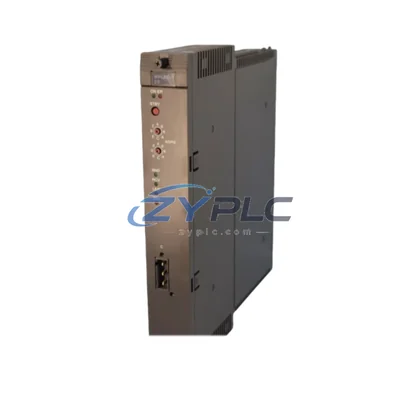
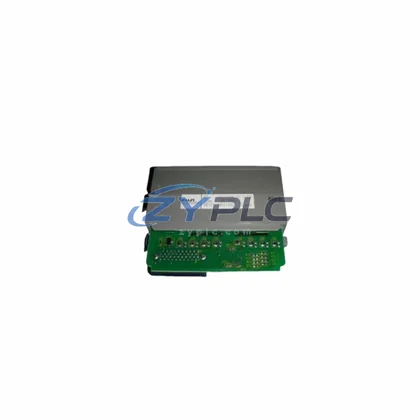
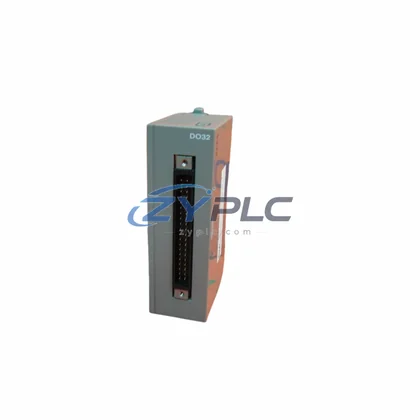
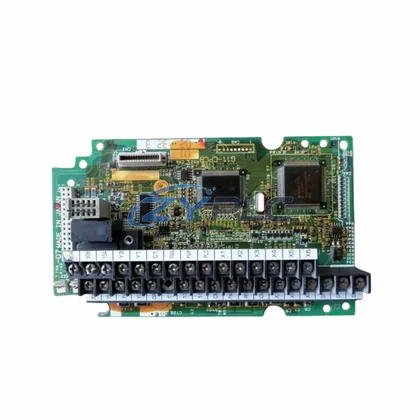
Yokogawa CP345 S1 Processor Module for CENTUM DCS Automation
The Yokogawa CP345 S1 is a high-performance central processing unit module designed for the CENTUM CS and CENTUM CS3000 Distributed Control System (DCS) platform. As a core controller within Yokogawa’s proven process automation architecture, the CP345 S1 plays a decisive role in reducing unplanned downtime risk across continuous production environments — from petrochemical refining and power generation to pharmaceutical batch processing and pulp and paper manufacturing.
Unlike generic PLC-based controllers, the CP345 S1 is purpose-built for closed-loop process control, enabling precise regulation of flow, temperature, pressure, and motor-driven actuators. By executing control algorithms with deterministic cycle times and minimal processing overhead, the module eliminates the unplanned downtime associated with over-cycling, hunting control loops, and uncoordinated drive responses. In facilities where energy costs represent Actual operating results depend on the installed system, load profile, and commissioning parameters.
Product Specification Table
| Parameter |
Specification / Value |
| SKU / Part Number |
CP345 S1 |
| Brand |
Yokogawa |
| Series / Platform |
CENTUM CS / CENTUM CS3000 DCS |
| Module Type |
Central Processor Module (CPU) |
| Control Execution Cycle |
Deterministic real-time scan (configurable) |
| Power Consumption |
Low-power embedded processor architecture |
| Operating Efficiency |
Optimized for continuous 24/7 industrial process control |
| Compatible Systems |
CENTUM CS, CENTUM CS3000, FCS (Field Control Station) |
| Communication Protocols |
Vnet/IP, RS-232C, proprietary Yokogawa bus |
| Application Environments |
Oil & Gas, Power, Chemical, Pharmaceutical, Pulp & Paper |
| Maintenance Value |
Reduces loop hunting, over-cycling, and drive unplanned downtime |
| Origin |
Japan |
| Warranty |
warranty terms confirmed during quotation |
| Stock Status |
RFQ Available — Ships After Outgoing Test |
System Compatibility and Application
The CP345 S1 does not operate in isolation — its maintenance planning value is fully realized when integrated within a well-designed CENTUM DCS architecture. In a typical energy-conscious plant layout, the CP345 S1 processor module coordinates with the Yokogawa EB401 ESB bus coupler and AAI141 analog input modules to continuously acquire real-time process data from field transmitters. This data feeds directly into PID and advanced control algorithms running on the CP345 S1, which then issue corrective output signals through AAI543 analog output modules to regulate control valves and variable-speed drives.
For motor-driven loads — pumps, compressors, fans, and conveyors — the CP345 S1 interfaces with variable frequency drives (VFDs) such as the Yaskawa A1000 or Fuji FRENIC-MEGA series via hardwired analog signals or fieldbus communication. By modulating drive speed in response to actual process demand rather than running motors at fixed full speed, the system can help restore stable operation when a compatible replacement is required. The CP345 S1’s deterministic scan cycle ensures that drive speed corrections are issued promptly, preventing the energy-wasting oscillations that occur in poorly tuned control loops.
On the power monitoring side, the CP345 S1 can receive operating load data from Yokogawa WT series power analyzers or third-party power meters integrated via the Yokogawa MW100 data acquisition unit. This closes the energy feedback loop: the processor module not only controls the process but also receives real-time power consumption telemetry, enabling maintenance-focused control strategies such as load shedding during peak tariff periods and demand response optimization.
For human-machine interface and supervisory visualization, the CP345 S1 communicates upstream to Yokogawa CENTUM VP HIS (Human Interface Stations) or legacy CENTUM CS3000 HIS workstations via the Vnet/IP control network. Operators can monitor energy KPIs, loop performance indices, and equipment utilization rates in real time, enabling rapid identification of unplanned downtime hotspots on the production floor. Integration with the Yokogawa Exaquantum plant information management system further enables long-term energy trend analysis and regulatory reporting.
Maintenance and Replacement Notes
In a continuous chemical processing plant, unplanned downtime and inefficient control loops are the two largest contributors to unplanned downtime. When a control loop oscillates — due to poor tuning, slow processor response, or inadequate I/O resolution — the associated actuator (valve, pump, or drive) cycles unnecessarily, consuming energy without contributing to process output. The CP345 S1 addresses this at the source by providing a stable, high-resolution processing environment where control algorithms execute consistently within their configured scan periods.
Consider a boiler feedwater control application: the CP345 S1 manages the feedwater flow control loop, coordinating signals from differential pressure transmitters, temperature sensors, and a variable-speed feedwater pump drive. A well-tuned loop running on the CP345 S1 maintains drum level within ±2mm of setpoint, eliminating the wide-band oscillations that force operators to run pumps at higher-than-necessary speeds as a safety margin. The energy saving from this single loop optimization can exceed 15 kW in a mid-sized boiler system — equivalent to tens of thousands of HKD in annual electricity costs.
The CP345 S1 also supports predictive maintenance workflows by enabling high-frequency data logging of process variables. Abnormal trends in motor current draw, valve position feedback, or heat exchanger differential temperature can be detected early, allowing maintenance teams to schedule interventions before equipment failure causes unplanned shutdowns. Each avoided emergency shutdown eliminates not only the direct repair cost but also the unplanned downtime associated with cold restart sequences, which typically consume 3–5× the steady-state energy of normal operation.
From a production line throughput perspective, the CP345 S1’s reliable execution environment supports takt time optimization by ensuring that batch sequencing, recipe management, and interlocking logic execute without delay. Consistent cycle times reduce the buffer time that operators build into production schedules to compensate for control system uncertainty — directly improving overall equipment effectiveness (OEE) and reducing the energy cost per unit of output.
Every CP345 S1 unit supplied by ZYPLC undergoes a comprehensive outgoing inspection and functional test prior to shipment, verifying processor initialization, communication bus integrity, and I/O channel response. Units are supplied with a warranty terms confirmed during quotation covering manufacturing defects and functional failures under normal operating conditions. Inventory is maintained RFQ Available for prompt dispatch, minimizing the downtime exposure associated with sourcing legacy DCS components.
Product Sourcing FAQ
Q1: How does the CP345 S1 contribute to measurable operational stability in a DCS-controlled plant?
The CP345 S1 enables precise, stable closed-loop control that eliminates the unplanned downtime caused by oscillating control loops and over-driven actuators. By maintaining process variables at setpoint with minimal deviation, it reduces unnecessary motor cycling, valve wear, and thermal losses — delivering quantifiable reductions in kWh consumption per unit of production output.
Q2: Is the CP345 S1 compatible with my existing CENTUM CS3000 system without hardware modification?
Yes. The CP345 S1 is designed as a direct-fit processor module for the CENTUM CS and CENTUM CS3000 Field Control Station (FCS) chassis. It is compatible with existing ESB bus couplers, I/O modules (AAI, ADV, ADI series), and the Vnet/IP control network without requiring additional hardware adapters or firmware upgrades in most configurations. We recommend confirming your FCS chassis revision before ordering.
Q3: What is the recommended replacement or upgrade path if the CP345 S1 is end-of-life in my facility?
For facilities planning a DCS modernization, the CP345 S1 can serve as a reliable interim solution while a migration to CENTUM VP is planned. Yokogawa’s CENTUM VP platform offers backward compatibility with many CENTUM CS3000 I/O modules, allowing a phased migration that preserves existing field wiring investments. ZYPLC can advise on compatible processor alternatives based on your specific FCS configuration.
Q4: What does the warranty terms confirmed during quotation cover, and what is the testing process before shipment?
Every CP345 S1 unit is tested for processor boot integrity, ESB communication response, and basic I/O channel functionality before dispatch. The warranty terms confirmed during quotation covers manufacturing defects and functional failures under normal industrial operating conditions (per IEC 61010 environmental ratings). Warranty claims are supported directly through ZYPLC with replacement unit dispatch or repair service as applicable. Contact our technical team at plc.sales@zyplc.com for warranty registration and support.