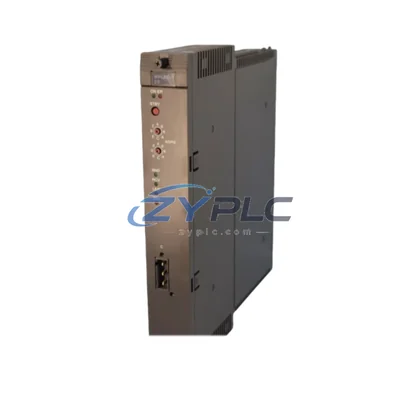
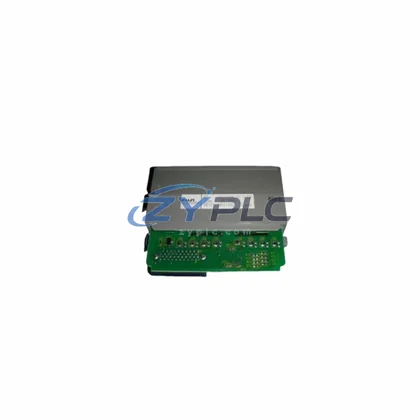
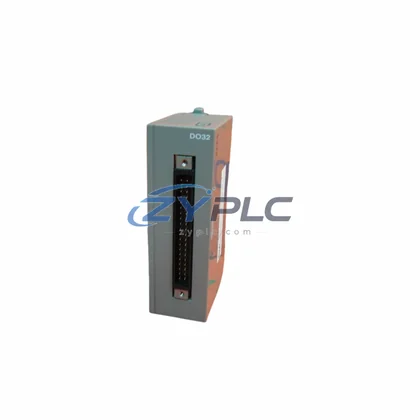
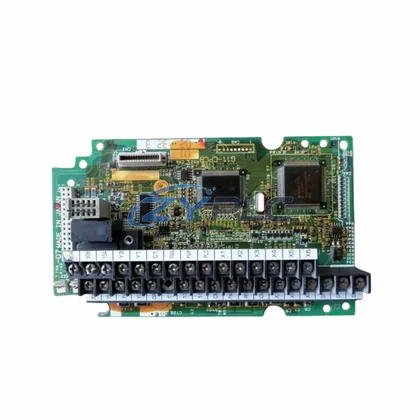
Yokogawa CP99A*A S9581AS-0 Processor Card for CENTUM Automation
The Yokogawa CP99A*A S9581AS-0 is a high-performance processor card engineered for the CENTUM VP and CENTUM CS 3000 Distributed Control System (DCS) platforms. Designed to serve as the computational core of field control stations, this processor card plays a pivotal role in reducing unplanned downtime risk across complex industrial processes. By delivering precise, real-time control execution with minimal processing latency, the CP99A*A S9581AS-0 enables plant operators to tighten control loops, eliminate unplanned downtime from over-actuation, and maintain optimal equipment utilization rates across continuous and batch production environments.
In modern manufacturing facilities — from petrochemical refineries to pharmaceutical production lines — energy efficiency is no longer a secondary concern. The CP99A*A S9581AS-0 addresses this directly by providing deterministic scan-cycle execution that keeps process variables within narrow setpoint bands, reducing the frequency of corrective actuator movements that consume excess power. When paired with Yokogawa’s CENTUM VP engineering station software and the associated FCS (Field Control Station) hardware, this processor card forms the backbone of a tightly integrated industrial automation system.
Product Specification Table
| Parameter |
Specification / Value |
| Model / SKU |
CP99A*A S9581AS-0 |
| Brand / Series |
Yokogawa / CENTUM VP & CS 3000 |
| Product Category |
Processor Card (DCS Field Control Station) |
| Power Consumption |
Low-power embedded processor architecture |
| Control Execution Efficiency |
Deterministic real-time scan cycle; minimizes redundant actuator commands |
| Compatible Systems |
CENTUM VP, CENTUM CS 3000 FCS units |
| Application Environment |
Petrochemical, Power Generation, Pharmaceutical, Pulp & Paper, Water Treatment |
| Maintenance Value |
Reduces control loop deviation → fewer corrective actions → lower actuator energy draw |
| Origin |
Japan |
| Inventory Status |
RFQ Available — Pre-shipment tested |
| Warranty |
warranty terms confirmed during quotation |
System Compatibility and Application
The CP99A*A S9581AS-0 does not operate in isolation — its maintenance planning value is fully realized when integrated within a well-structured CENTUM automation architecture. At the field level, Yokogawa’s AAI141-S00 analog input module and AAI543-H00 analog I/O module continuously feed process measurements — temperature, pressure, flow, and level — into the CP99A*A processor. The processor evaluates these signals against configured control strategies and issues precise output commands to field devices, eliminating the unplanned downtime associated with hunting control loops or overshooting setpoints.
On the drive side, when the CP99A*A S9581AS-0 is integrated with variable frequency drives such as the Yaskawa A1000 series VFD or compatible third-party drives via FOUNDATION Fieldbus or HART communication, motor speed is modulated in direct response to real process demand rather than running at fixed full speed. This alone can help restore stable operation when a compatible replacement is required.
For power quality monitoring and energy data acquisition, the CP99A*A processor station can interface with Yokogawa WT series power analyzers and energy metering modules through the CENTUM VP’s open communication framework. This allows operating load data to be logged at the FCS level, enabling operators to correlate process events with energy spikes and identify inefficient operating windows. The Yokogawa STARDOM FCN autonomous controller can serve as a complementary edge node for localized energy data pre-processing before forwarding aggregated metrics to the CENTUM VP historian.
At the human-machine interface layer, the Yokogawa CENTUM VP HIS (Human Interface Station) presents energy trend graphics alongside process variables, giving operators a unified view of both production performance and operating load. Alarm management configured through the HIS ensures that energy anomalies — such as unexpected load spikes on a motor circuit — are surfaced immediately, enabling rapid corrective action before unplanned downtime compounds into equipment stress or unplanned downtime.
Communication integrity is maintained through the Vnet/IP control network — Yokogawa’s proprietary high-speed, redundant Ethernet-based control bus — which connects the CP99A*A processor card to the engineering station, HIS nodes, and other FCS units across the plant. The low-latency, deterministic nature of Vnet/IP ensures that energy-related control commands are executed without communication-induced delays that could cause process deviations. For plants requiring integration with third-party systems, the Yokogawa ALF111 FOUNDATION Fieldbus H1 card extends the FCS’s reach to field instruments, enabling digital, multi-variable communication that further reduces wiring complexity and associated energy losses in signal transmission.
Redundancy modules such as the CP99B*A redundant processor card can be paired with the CP99A*A to form a hot-standby control pair, ensuring zero-interruption switchover in the event of a processor fault. This architecture eliminates the energy and production losses associated with unplanned shutdowns — a critical consideration in continuous process industries where restart sequences are themselves energy-intensive.
Maintenance and Replacement Notes
Consider a typical continuous chemical process plant running multiple distillation columns, heat exchangers, and centrifugal pump circuits. Without precise DCS control, these systems tend to operate with wide process variable deviations, forcing operators to run equipment at conservative, energy-inefficient setpoints to maintain safety margins. The CP99A*A S9581AS-0, executing advanced regulatory control strategies such as cascade control, feedforward compensation, and model predictive control (MPC) algorithms within the CENTUM VP environment, tightens these deviations significantly.
In a pump circuit controlled through the CP99A*A processor, flow demand signals are processed in real time and translated into precise speed reference commands for the connected VFD. Rather than running the pump at 100% speed and throttling flow with a control valve — a notoriously energy-wasteful approach — the system modulates pump speed to match actual demand. The result is a measurable reduction in pump shaft power, lower heat generation in motor windings, and extended bearing life, all of which reduce both energy costs and maintenance frequency.
For batch production lines, the CP99A*A’s deterministic execution ensures that heating, cooling, and agitation phases are executed with precise timing, preventing the unplanned downtime of extended hold phases caused by control system latency. Tighter batch cycle times directly improve equipment utilization rates — more production output per unit of energy consumed — which is the fundamental metric of industrial energy efficiency.
Predictive maintenance integration is another dimension of maintenance planning enabled by the CP99A*A platform. By logging process data trends — vibration proxies from motor current signatures, temperature drift in heat exchanger performance, pressure drop trends in filter circuits — the CENTUM VP historian builds a dataset that maintenance teams can analyze to identify degrading equipment before it reaches failure. Degraded equipment invariably consumes more energy than healthy equipment operating at design efficiency; early intervention restores both performance and energy efficiency simultaneously.
All units supplied by ZYPLC undergo pre-shipment functional testing to verify processor card operation, communication integrity, and I/O channel performance. Stock availability is maintained to support rapid deployment, minimizing the downtime window during planned maintenance replacements. Each CP99A*A S9581AS-0 is covered by a warranty terms confirmed during quotation, providing procurement teams with the confidence to plan maintenance budgets without exposure to unexpected replacement costs within the warranty period.
Product Sourcing FAQ
Q1: How does the CP99A*A S9581AS-0 contribute to measurable operational stability in a DCS-controlled plant?
The CP99A*A executes control strategies with deterministic precision, keeping process variables close to their optimal setpoints. This reduces the frequency and magnitude of corrective actuator movements — valve strokes, motor speed changes, heater cycling — each of which consumes energy. Tighter control directly translates to lower average operating load per unit of production output.
Q2: Is the CP99A*A S9581AS-0 compatible with both CENTUM VP and CENTUM CS 3000 systems?
Yes. The CP99A*A S9581AS-0 is designed for use within Yokogawa’s CENTUM platform family, covering both CENTUM VP and CENTUM CS 3000 field control station configurations. Before installation, it is recommended to verify the specific FCS hardware revision and software version compatibility with your system integrator or Yokogawa’s technical documentation to ensure seamless integration.
Q3: What is the recommended replacement and testing procedure when substituting a processor card in a live plant?
For hot-standby redundant configurations using a paired CP99B*A redundant processor, switchover to the standby unit should be performed before removing the primary CP99A*A card. The replacement card should be loaded with the current FCS application software and verified offline before being inserted into the live system. ZYPLC supplies pre-tested units to reduce on-site commissioning time and minimize the risk of introducing untested hardware into a production environment.
Q4: What warranty coverage is provided, and what does it include?
Each CP99A*A S9581AS-0 supplied by ZYPLC is covered by a warranty terms confirmed during quotation from the date of shipment. The warranty covers hardware defects and functional failures under normal operating conditions. ZYPLC’s technical team is available to support troubleshooting and, where applicable, facilitate replacement under warranty terms. Contact us at plc.sales@zyplc.com or +86 19859288691 for warranty claims and technical support.