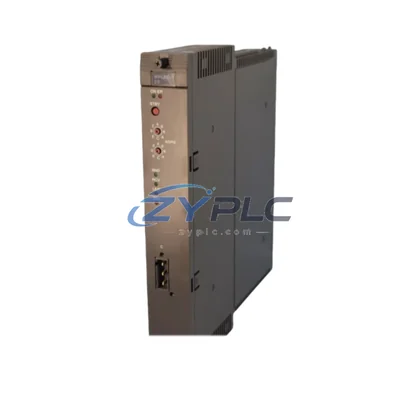
Yokogawa EXT*A Motion Controller | STARDOM: Precision Drive Control for Optimized Production Lines
The Yokogawa EXT*A is a high-performance programmable motion controller module designed for the STARDOM distributed control architecture. Built to address the growing demand for energy-efficient industrial automation, the EXT*A delivers precise multi-axis coordination, real-time feedback processing, and seamless integration with Yokogawa’s broader drive and monitoring ecosystem. For factories seeking to reduce idle operating load, eliminate unnecessary motor run-time, and tighten production cycle timing, the EXT*A represents a foundational upgrade to any motion-intensive line.
Unlike generic motion modules, the EXT*A is engineered with maintenance-focused control logic at its core. It continuously monitors axis load profiles and adjusts command outputs to prevent over-driving motors during low-demand phases — a critical capability in applications such as conveyor synchronization, robotic pick-and-place, precision cutting, and multi-station assembly. When paired with compatible variable frequency drives (VFDs) and servo amplifiers within the STARDOM platform, the EXT*A enables dynamic speed scaling that directly translates to measurable kWh savings per production shift.
Product Specification Table
| Parameter |
Specification / Value |
| SKU |
EXT*A |
| Brand / Series |
Yokogawa / STARDOM |
| Module Type |
Programmable Motion Controller |
| Origin |
Japan |
| Power Consumption |
Low-standby design; load-adaptive output control |
| Drive Efficiency Mode |
Dynamic axis load profiling with real-time speed scaling |
| Compatible Systems |
Yokogawa STARDOM FCN/FCJ, VFD interfaces, servo amplifier networks |
| Communication Protocols |
PROFIBUS, Modbus RTU/TCP, OPC-UA (platform dependent) |
| Application Environments |
Discrete manufacturing, process automation, conveyor systems, robotics |
| Maintenance Value |
Reduces motor over-drive, minimizes idle consumption, tightens cycle timing |
| Inventory Status |
RFQ Available — shipment arranged after confirmation |
| Warranty |
12-Month Quality Warranty |
| Pre-shipment Testing |
Full functional and load test performed before dispatch |
System Compatibility and Application
The EXT*A is most effective when deployed as part of a coordinated maintenance-focused automation stack. In a typical STARDOM-based installation, the EXT*A motion controller interfaces directly with the Yokogawa FCN-100 or FCN-500 autonomous controllers, which handle higher-level process logic and energy scheduling. Axis command signals from the EXT*A are routed to servo amplifiers — such as the Yokogawa UR series servo drives — which regulate motor torque and speed with high resolution, ensuring that mechanical loads are driven only as hard as the process demands.
On the power monitoring side, the EXT*A architecture benefits significantly from integration with Yokogawa WT series power analyzers or compatible third-party power meters connected via Modbus TCP. These instruments feed real-time operating load data back into the STARDOM control loop, allowing the EXT*A to make informed adjustments to axis velocity profiles during peak demand windows. This closed-loop energy feedback is what separates a truly optimized motion system from one that simply moves product from point A to point B.
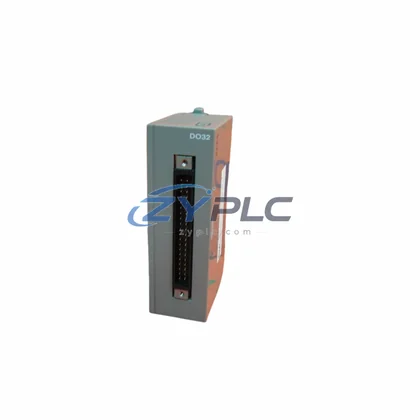
For I/O expansion and field-level signal acquisition, the EXT*A works alongside Yokogawa STARDOM I/O modules — including digital input/output cards and analog signal conditioners — to capture encoder feedback, limit switch states, and torque sensor readings. These inputs allow the motion controller to detect mechanical resistance changes in real time, preventing unnecessary energy expenditure caused by worn tooling, misaligned guides, or product jams before they escalate into costly downtime events.
HMI visibility is equally important in an energy-optimized line. When the EXT*A is paired with a Yokogawa-compatible HMI panel or SCADA interface running on the STARDOM platform, operators gain live dashboards showing per-axis energy draw, cycle efficiency scores, and predictive maintenance alerts. This transparency enables shift supervisors to identify underperforming stations and schedule corrective action during planned maintenance windows rather than reacting to unplanned failures.
Communication flexibility is another strength of the EXT*A. Its compatibility with PROFIBUS DP and Modbus RTU networks means it can be integrated into mixed-vendor environments where legacy PLCs — such as Siemens S7-300 series or Mitsubishi Q-series controllers — still manage portions of the line. This interoperability allows factories to introduce energy-optimized motion control incrementally, without requiring a full system overhaul. Additionally, for plants transitioning to IIoT architectures, the EXT*A’s data outputs can be aggregated by OPC-UA gateways and forwarded to cloud-based maintenance planning platforms for long-term trend analysis and carbon footprint reporting.
Maintenance and Replacement Notes
In practice, the Yokogawa EXT*A delivers operational stability through three primary mechanisms: cycle time compression, idle-state power reduction, and predictive load management.
Cycle time compression is achieved by optimizing the motion profiles of each controlled axis. Rather than using fixed-speed trapezoidal profiles, the EXT*A can execute S-curve acceleration and deceleration sequences that reduce mechanical shock, extend drive and motor service life, and — critically — complete the same motion in fewer milliseconds. Across thousands of cycles per shift, this translates directly into higher throughput per unit of energy consumed.
Idle-state power reduction is managed through the EXT*A’s configurable hold-current reduction feature. When an axis is stationary between cycles — waiting for upstream product flow or a robot handoff — the controller automatically reduces servo hold current to the minimum required to maintain position. This seemingly small adjustment can reduce per-axis standby consumption by Actual operating results depend on the installed system, load profile, and commissioning parameters.
Predictive load management leverages the EXT*A’s real-time torque monitoring to detect gradual increases in mechanical resistance — a reliable early indicator of bearing wear, lubrication loss, or tooling degradation. By flagging these conditions before they cause motor overload trips or unplanned stops, the EXT*A helps maintenance teams schedule interventions during planned downtime, avoiding the unplanned downtime and production loss associated with emergency repairs. Combined with a warranty terms confirmed during quotation and pre-shipment functional testing, the EXT*A is a low-risk, high-return investment for any facility serious about sustainable production efficiency.
Product Sourcing FAQ
Q1: How does the Yokogawa EXT*A reduce operating load compared to a standard motion controller?
The EXT*A uses adaptive axis load profiling and S-curve motion optimization to ensure motors are driven only as hard as the process requires. By eliminating over-drive during low-resistance phases and reducing hold current during idle states, it measurably lowers per-cycle operating load without sacrificing throughput or positioning accuracy.
Q2: Is the EXT*A compatible with non-Yokogawa drives and PLCs?
Yes. The EXT*A supports standard industrial communication protocols including PROFIBUS DP and Modbus RTU/TCP, enabling integration with servo drives, VFDs, and PLCs from other manufacturers. This makes it suitable for hybrid automation environments where full platform standardization is not yet complete.
Q3: What is the recommended replacement or upgrade path for aging STARDOM motion modules?
For facilities running older STARDOM motion cards, the EXT*A is the recommended direct upgrade. It maintains backward compatibility with existing STARDOM backplane configurations while delivering improved processing speed and maintenance planning capabilities. Our technical team can advise on firmware compatibility and I/O mapping prior to installation.
Q4: What does the warranty terms confirmed during quotation cover, and how is pre-shipment testing conducted?
Every EXT*A unit shipped by ZYPLC undergoes a full functional test under simulated load conditions before dispatch. The warranty terms confirmed during quotation covers manufacturing defects and operational failures under normal industrial use conditions. Units are verified for correct communication response, axis command execution, and power rail stability. Replacement or repair is provided at no charge within the warranty period for covered failures.