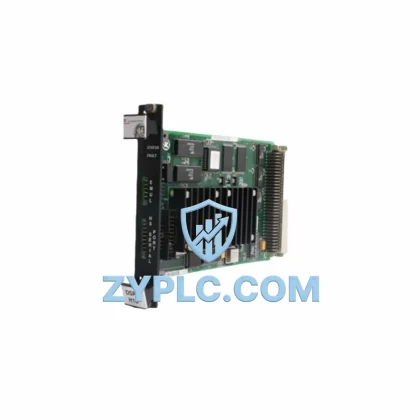
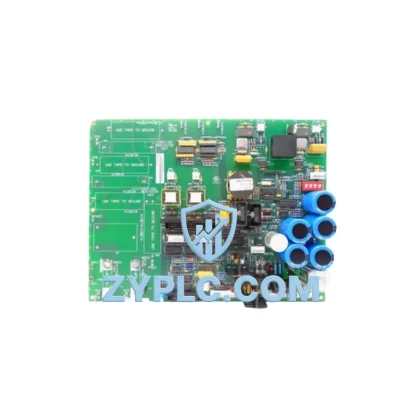
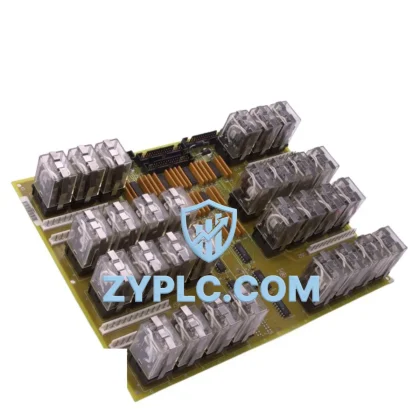
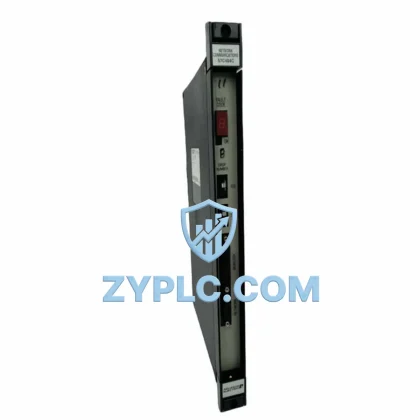
Yokogawa RB401-S4 RIO Bus Module for CENTUM VP
In modern distributed control system (DCS) deployments, every component within the control hierarchy must contribute to system-wide reliability, signal integrity, and long-term maintainability. The Yokogawa RB401-S4 RIO Bus Module occupies a critical position within the CENTUM VP and CS 3000 control architecture, serving as the backbone communication link between the field control station (FCS) and remote I/O (RIO) nodes distributed across the plant floor. Understanding its role requires examining the full system stack — from the central controller through the I/O layer, network infrastructure, power distribution, human-machine interface, and ultimately to the field actuators and sensors it serves.
The RB401-S4 is engineered specifically for Yokogawa’s RIO bus topology, enabling high-speed, deterministic data exchange between the CP461-50 or CP451-50 field control station processors and remote I/O units installed in satellite cabinets. This architecture allows engineers to distribute I/O across large plant areas without sacrificing scan cycle performance or communication reliability. The module supports the proprietary Vnet/IP and RIO bus protocols native to the CENTUM VP platform, ensuring seamless system integration within the existing control network fabric.
Within the control layer, the RB401-S4 interfaces directly with the FCS processor cards, coordinating data acquisition timing and ensuring that analog input modules such as the AAI143-S00 and digital output modules such as the ADV151-P00 deliver consistent, time-stamped process values to the controller. This tight coupling between the bus module and the I/O subsystem eliminates latency-induced errors that can compromise closed-loop control performance in high-throughput manufacturing or continuous process environments.
Product Specification Table
| Parameter |
Specification |
| System Role |
RIO Bus Communication Module — FCS to Remote I/O Link |
| Compatible Platform |
Yokogawa CENTUM VP, CENTUM CS 3000 |
| Communication Protocol |
Yokogawa RIO Bus (proprietary), Vnet/IP compatible architecture |
| Bus Speed |
High-speed deterministic RIO bus, optimized for real-time scan cycles |
| Electrical Interface |
Backplane-mounted; compatible with EB401 and SB401 RIO node enclosures |
| Power Supply Compatibility |
Works with PW482-10 and PW481-50 redundant power supply modules |
| Installation Environment |
Control cabinet / DIN rail enclosure; IP20 rated environment |
| Operating Temperature |
0°C to 55°C (standard industrial range) |
| Redundancy Support |
Dual-bus redundancy architecture supported within CENTUM VP FCS |
| Warranty |
12-Month Warranty — all units tested prior to shipment |
System Compatibility Notes
A complete CENTUM VP system architecture built around the RB401-S4 typically integrates multiple hardware layers that must operate in concert. At the controller level, the CP461-50 field control station processor manages the execution of control strategies and communicates with the RIO bus through the bus module. Redundant processor configurations rely on the RB401-S4 to maintain uninterrupted bus communication during controller switchover events, making the module’s reliability a prerequisite for achieving high-availability system designs.
The I/O layer connected downstream of the RB401-S4 commonly includes the AAI143-S00 analog input module for 4–20 mA process signal acquisition, the ADV151-P00 digital output module for discrete actuator control, and the AMM12C multi-point analog module for temperature and pressure measurement in process-intensive applications. These modules are housed within SB401 RIO node enclosures or EB401 expansion bases, which are physically connected to the RB401-S4 via the RIO bus cable infrastructure.
Network layer components such as the ANB10D-400 Vnet/IP network interface card and the EC401-10 Ethernet communication module provide the upstream connectivity between the FCS and the CENTUM VP engineering workstations and operator stations. The RB401-S4 ensures that field-level data collected through the RIO bus is accurately reflected in the Vnet/IP network packets transmitted to the supervisory layer, maintaining data consistency across the entire control hierarchy.
Power distribution within the RIO node enclosures is managed by the PW482-10 redundant power supply module, which provides dual-feed power to the backplane and all installed I/O cards. The RB401-S4 draws its operating power from this backplane supply, and its low power consumption profile allows engineers to maximize the number of I/O modules per node without exceeding power budget constraints. This is particularly important in high-density I/O applications found in petrochemical complexes, power generation facilities, and large-scale water treatment plants.
At the human-machine interface layer, Yokogawa’s CENTUM VP operator stations and engineering workstations communicate with the FCS through the Vnet/IP network, with the RB401-S4 ensuring that real-time field data is available for display, alarming, and historian logging without communication gaps. The AIP827 interface panel and associated HMI hardware rely on the integrity of the RIO bus link to present accurate process values to plant operators.
Industrial Application Notes
The Yokogawa RB401-S4 finds application across a broad spectrum of process industries where distributed I/O architectures are standard practice. In oil refinery and petrochemical plant environments, the module enables engineers to place RIO nodes adjacent to process units — reactors, distillation columns, heat exchangers — while maintaining the FCS in a centralized control room. This topology reduces field wiring costs, simplifies cable management, and improves signal quality by shortening the distance between sensors and the nearest I/O module.
In power generation facilities, including thermal, hydro, and combined-cycle plants, the RB401-S4 supports the high-availability requirements of turbine control and boiler management systems. Its compatibility with dual-bus redundancy configurations ensures that a single bus module failure does not interrupt the flow of critical process data to the FCS, allowing operators to schedule maintenance without forcing unplanned shutdowns.
Water treatment and wastewater management facilities benefit from the RB401-S4’s ability to support geographically distributed I/O nodes across large treatment campuses. Pump stations, chemical dosing systems, and filtration units can each host a dedicated RIO node connected to the central FCS via the RB401-S4 bus link, enabling centralized monitoring and control without the cost of running individual signal cables back to the control room.
In mining and metallurgical processing applications, where harsh environmental conditions and long cable runs are common, the RB401-S4’s robust backplane design and compatibility with shielded RIO bus cables ensures reliable communication even in electrically noisy environments. Conveyor systems, crusher controls, and flotation cell management systems all benefit from the deterministic scan cycle performance that the RIO bus architecture provides.
Packaging and discrete manufacturing lines that have adopted CENTUM VP for process coordination use the RB401-S4 to integrate high-speed I/O nodes at individual machine stations, enabling the FCS to coordinate production sequencing, quality inspection triggers, and material handling commands across the entire production line from a single control platform.
Product Compatibility FAQ
Q1: Is the RB401-S4 compatible with both CENTUM VP and CENTUM CS 3000 systems?
Yes. The RB401-S4 is designed for use within Yokogawa’s CENTUM VP and CS 3000 DCS platforms. It is compatible with the RIO bus architecture common to both generations, allowing it to be used in system upgrades where CS 3000 hardware is being migrated to CENTUM VP without requiring a complete I/O infrastructure replacement. Engineers should verify the specific FCS processor model and firmware revision to confirm bus module compatibility during system integration planning.
Q2: Can the RB401-S4 support redundant bus configurations for high-availability applications?
Yes. Within the CENTUM VP architecture, the RIO bus supports dual-bus redundancy, and the RB401-S4 is designed to operate within this redundant topology. In a redundant configuration, two RB401-S4 modules are installed — one on the primary bus and one on the secondary bus — ensuring that a single module or cable failure does not interrupt communication between the FCS and the remote I/O nodes. This configuration is strongly recommended for critical process applications in power generation, oil and gas, and chemical processing facilities. All units supplied by ZYPLC are covered by a 12-Month Warranty and are tested prior to shipment to verify bus communication integrity.
Q3: What is the recommended approach for installing and commissioning the RB401-S4 in an existing CENTUM VP system?
Installation of the RB401-S4 should follow Yokogawa’s standard RIO bus commissioning procedure, which includes verifying backplane slot assignment, confirming bus termination resistor placement at the end of each RIO bus segment, and performing a bus communication test from the CENTUM VP engineering workstation before bringing the node online. Engineers should also confirm that the PW482-10 or equivalent power supply module is providing stable backplane voltage before inserting the RB401-S4. For long-term maintenance, ZYPLC recommends maintaining a spare RB401-S4 in inventory to minimize downtime in the event of a module failure. Our 12-Month Warranty covers all units against manufacturing defects, and our technical team is available to support system integration and troubleshooting inquiries.
© 2026 ZYPLC. All rights reserved.
Original Source: https://zyplc.com
Contact: +86 19859288691 | plc.sales@zyplc.com