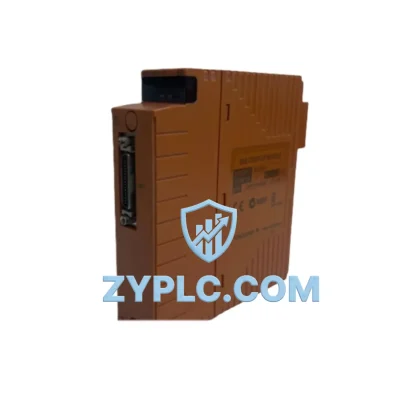
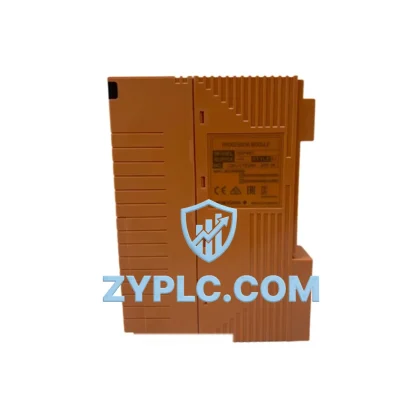
Yokogawa SAI143-S33/PRP S2 Signal Conditioner for AAI Series: system integration Across Control System Layers
The Yokogawa SAI143-S33/PRP S2 is a high-integrity analog input signal conditioner module engineered for deployment within the Yokogawa AAI Series distributed control system (DCS) architecture. Designed to operate within the CENTUM VP and CENTUM CS 3000 control platforms, this module serves as a critical interface node between field instrumentation and the process control layer, ensuring accurate, conditioned signal transmission across the full automation hierarchy. With native PRP (Parallel Redundancy Protocol) support and a robust S2 safety classification, the SAI143-S33/PRP S2 is purpose-built for applications where signal integrity, system continuity, and long-term maintainability are non-negotiable engineering requirements.
In modern industrial automation, no module operates in isolation. The SAI143-S33/PRP S2 is conceived as a system-level component — its value is fully realized when understood within the context of the complete control architecture it supports. From the field junction box through the I/O marshalling cabinet, across the control network to the operator station, every layer of the automation pyramid depends on the reliable signal conditioning that this module provides.
Product Specification Table
| Parameter |
Specification |
| Model |
SAI143-S33/PRP S2 |
| Brand |
Yokogawa |
| Series |
AAI Series (CENTUM VP / CENTUM CS 3000) |
| Module Type |
Analog Input Signal Conditioner |
| System Role |
Field Signal Interface — I/O Layer |
| Input Channels |
16 channels (4–20 mA / 1–5 V analog input) |
| Safety Classification |
S2 (IEC 61508 compliant) |
| Redundancy Protocol |
PRP (Parallel Redundancy Protocol, IEC 62439-3) |
| Communication |
Vnet/IP (Yokogawa proprietary high-speed control network) |
| Power Supply |
24 VDC (supplied via AAI Series field control station backplane) |
| Operating Temperature |
0°C to 55°C |
| Humidity |
10% to 90% RH (non-condensing) |
| Mounting |
AAI Series I/O backplane / field control station rack |
| Isolation |
Channel-to-channel and channel-to-bus isolation |
| Certifications |
CE, UL, ATEX (zone classification per installation) |
| Origin |
Japan |
| Warranty |
12-Month Warranty (ZYPLC) |
System Compatibility Notes
The SAI143-S33/PRP S2 achieves its full operational potential when integrated within a coordinated Yokogawa CENTUM VP or CENTUM CS 3000 control system. At the control layer, the module interfaces directly with the Yokogawa ACF11S Field Control Station or AFV10S Field Control Unit, which hosts the process control logic and communicates upstream via the Vnet/IP high-speed control network. The ACF11S provides the computational backbone that interprets conditioned analog signals from the SAI143-S33/PRP S2 and executes PID control, cascade loops, and interlock logic in real time.
At the I/O layer, the SAI143-S33/PRP S2 is mounted on the AAI Series I/O backplane, sharing the rack with complementary modules such as the SAI143-S00 (standard analog input variant), SAO143-S00 analog output modules, and SDV144-S00 digital I/O modules. This modular backplane architecture allows engineers to configure mixed I/O assemblies tailored to the specific signal types present in each process area — whether handling 4–20 mA transmitter loops from pressure and flow instruments, thermocouple inputs, or discrete valve position feedback signals.
The PRP redundancy built into the SAI143-S33/PRP S2 is a defining architectural feature. Unlike standard ring or star redundancy topologies, PRP operates two independent network paths simultaneously, with zero switchover time in the event of a single path failure. This is particularly critical in applications where even millisecond-level communication interruptions could trigger spurious shutdowns or process upsets. The PRP capability aligns with the redundant Vnet/IP network infrastructure supported by the Yokogawa BCV1D Vnet/IP Bus Converter and ESB Bus architecture, ensuring that the I/O layer maintains continuous communication with the control layer under all foreseeable fault conditions.
At the network layer, the CENTUM VP system connects the field control stations to the Yokogawa HIS (Human Interface Station) operator workstations via the Control Bus (Vnet/IP). The SAI143-S33/PRP S2’s signal data flows through this network to populate real-time process graphics, trend displays, and alarm management systems on the HIS. The Yokogawa FAST/TOOLS SCADA platform can further aggregate this data for plant-wide supervisory control and historian functions.
For power layer integrity, the AAI Series field control stations are typically powered by redundant Yokogawa PW481 or PW482 power supply modules, which provide regulated 24 VDC to the backplane. Redundant power feeds ensure that a single power supply failure does not interrupt module operation — a requirement in SIL-rated and high-availability process control applications. The SAI143-S33/PRP S2’s low power consumption profile makes it compatible with standard AAI Series power budgeting without requiring additional power conditioning hardware.
At the human-machine interface layer, operator interaction with the signals conditioned by the SAI143-S33/PRP S2 occurs through the Yokogawa HIS Operator Station running CENTUM VP’s integrated HMI environment. Alarm rationalization, process variable trending, and loop tuning are all performed through this interface, with the SAI143-S33/PRP S2 serving as the foundational data acquisition point for each associated control loop.
Finally, at the execution layer, the conditioned analog signals processed by the SAI143-S33/PRP S2 drive control outputs to field actuators — including control valves, variable frequency drives, and positioners — through corresponding analog output modules such as the SAO143-S00. The accuracy and stability of the SAI143-S33/PRP S2’s signal conditioning directly determines the quality of closed-loop control at the execution layer, making it a foundational element of overall system performance.
Industrial Application Notes
The Yokogawa SAI143-S33/PRP S2 is deployed across a broad spectrum of process industries where high-channel-density analog input conditioning, redundant communication, and long-term system reliability are essential engineering requirements.
In oil refining and petrochemical facilities, the module handles analog inputs from pressure transmitters, flow meters, and level sensors distributed across distillation columns, heat exchangers, and reactor systems. Its S2 safety classification supports integration into safety-instrumented systems (SIS) where functional safety standards demand documented module integrity levels.
In power generation applications — including thermal, combined-cycle, and nuclear auxiliary systems — the SAI143-S33/PRP S2 provides the analog input infrastructure for boiler control, turbine monitoring, and balance-of-plant automation. The PRP redundancy is particularly valued in these environments, where communication network failures must not propagate to control system availability.
In water and wastewater treatment plants, the module conditions signals from flow transmitters, pH analyzers, dissolved oxygen sensors, and turbidity meters, feeding the CENTUM VP control system with the real-time process data needed for dosing control, filtration management, and effluent compliance monitoring.
In mining and minerals processing operations, the SAI143-S33/PRP S2 supports analog input conditioning for grinding circuit control, flotation cell management, and tailings handling systems, where the harsh electrical environment demands robust signal isolation and noise rejection — both of which are core design features of the AAI Series module family.
In pharmaceutical and fine chemical manufacturing, the module’s channel-to-channel isolation and high measurement accuracy support batch process control applications where cross-contamination of signal paths and measurement drift are critical quality concerns.
Across all these industries, the SAI143-S33/PRP S2 contributes to system consistency by maintaining a uniform I/O architecture across process areas, expansion capability by supporting modular rack extension within the AAI Series backplane system, redundancy through PRP network architecture, and maintenance efficiency through hot-swap capability and standardized module form factor that simplifies spare parts management and field replacement procedures.
Product Compatibility FAQ
Q1: Is the SAI143-S33/PRP S2 compatible with both CENTUM VP and CENTUM CS 3000 control systems?
The SAI143-S33/PRP S2 is designed for the Yokogawa AAI Series I/O platform, which is natively supported within CENTUM VP and is also backward-compatible with CENTUM CS 3000 field control station architectures. When integrating into an existing CS 3000 system, engineers should verify the firmware revision of the field control station and confirm backplane compatibility with the specific AAI Series rack generation in use. ZYPLC’s technical team can assist with compatibility verification prior to procurement.
Q2: How does the PRP redundancy in the SAI143-S33/PRP S2 affect system architecture design and network infrastructure requirements?
PRP (Parallel Redundancy Protocol, IEC 62439-3) requires that the Vnet/IP network infrastructure be configured with two independent, physically separate network paths connecting the field control station to the control network. Both paths carry identical traffic simultaneously, and the receiving node discards duplicate frames. This means the network switches, cabling, and bus converters (such as the Yokogawa BCV1D) must support dual-path PRP topology. The benefit is zero-time failover — unlike RSTP or ring redundancy protocols, PRP does not introduce any switchover delay, making it the preferred choice for high-availability and SIL-rated control applications.
Q3: What does the 12-Month Warranty cover, and what support is available for long-term maintenance planning?
All SAI143-S33/PRP S2 modules supplied by ZYPLC are covered by a 12-Month Warranty against manufacturing defects and functional failures under normal operating conditions. Each unit undergoes functional testing prior to shipment to verify analog input accuracy, channel isolation, and communication integrity. For long-term maintenance planning, ZYPLC maintains inventory of AAI Series modules to support scheduled preventive maintenance, emergency replacement, and system expansion projects. Our technical team can assist with spare parts strategy, module lifecycle assessment, and compatibility guidance for aging CENTUM VP and CS 3000 installations. Contact us at plc.sales@zyplc.com or +86 19859288691 for engineering support.
© 2026 ZYPLC. All rights reserved.
Original Source: https://zyplc.com
Contact: +86 19859288691 | plc.sales@zyplc.com