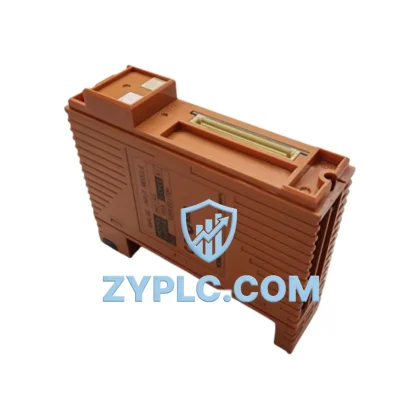
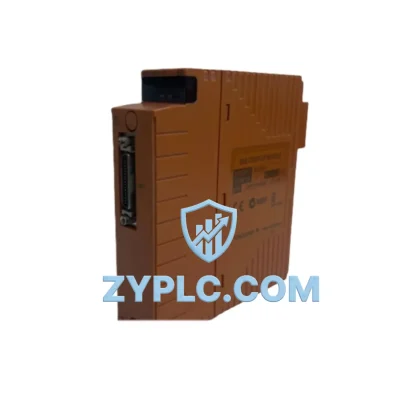
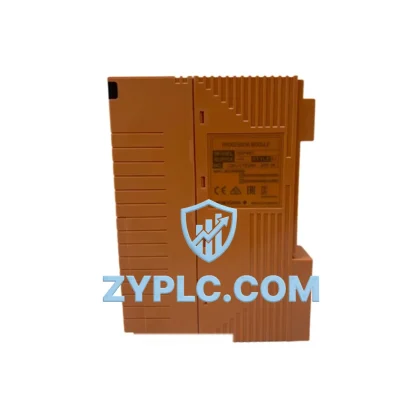
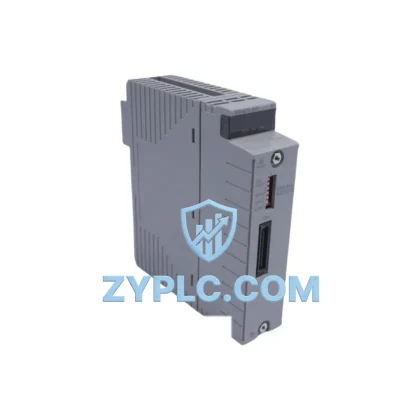
Yokogawa TAHXD16-3PEM Terminal Assembly for CENTUM VP
The Yokogawa TAHXD16-3PEM is a high-density terminal assembly module engineered for seamless integration within the CENTUM VP distributed control system architecture. Designed to serve as a critical interface component at the field I/O layer, this terminal assembly enables reliable signal termination between field instrumentation and the CENTUM VP I/O cards, ensuring consistent data acquisition, signal integrity, and long-term operational stability across demanding industrial environments.
In modern process automation, the terminal assembly is far more than a passive wiring block. The TAHXD16-3PEM plays a structural role in defining how field signals are routed, conditioned, and delivered to the control layer. Its 16-channel configuration supports high-density I/O marshalling, reducing panel footprint while maintaining full signal traceability from the field device to the controller. This makes it an essential component in any CENTUM VP-based control cabinet where space efficiency and signal reliability are both critical engineering requirements.
Within the CENTUM VP system hierarchy, the TAHXD16-3PEM operates at the I/O termination layer, sitting between field junction boxes and the I/O modules mounted on the node unit. It is designed to work in conjunction with Yokogawa’s standard I/O cards such as the AAI143-H00 analog input module and the ADV151-P00 digital input module, providing a standardized and repeatable termination interface that simplifies both initial commissioning and long-term maintenance. The consistent mechanical and electrical interface reduces the risk of wiring errors during installation and accelerates loop checkout procedures during plant startup.
From a system architecture perspective, the TAHXD16-3PEM contributes directly to the system integration of field signals into the CENTUM VP control domain. When paired with the CP461-50 field control station or the SCP451-11 safety control unit in a ProSafe-RS integrated architecture, the terminal assembly ensures that signal paths remain deterministic and fully documented within the engineering database. This level of system integration is essential for plants operating under IEC 61511 functional safety requirements or ISA-88 batch control standards, where signal traceability and loop documentation must be maintained throughout the asset lifecycle.
The TAHXD16-3PEM is also compatible with Yokogawa’s redundant I/O architecture. In applications where process criticality demands continuous availability, the terminal assembly can be deployed in conjunction with redundant I/O modules and the ESB bus coupler to maintain uninterrupted signal acquisition even during module replacement or partial system maintenance. This redundancy capability is particularly valuable in refinery, petrochemical, and power generation applications where unplanned shutdowns carry significant operational and financial consequences.
Power distribution within the control cabinet is supported by the PW482-10 power supply module, which provides stable 24 VDC bus power to the I/O node. The TAHXD16-3PEM’s low-impedance terminal design ensures minimal voltage drop across the termination interface, preserving signal accuracy for both analog and digital field devices. In multi-node architectures, the ANB10D-400 node bus coupler manages inter-node communication, while the NFCP100-S00 field communication module extends the system’s reach to FOUNDATION Fieldbus or HART-enabled field devices, all of which rely on the terminal assembly layer for physical signal entry into the control system.
For human-machine interface integration, the CENTUM VP operator station communicates with the field control station through the Vnet/IP control network, with the AIP827 I/O port module providing additional analog interface capability at the node level. The AAI841-H00 analog output module completes the control loop by delivering 4–20 mA signals back to final control elements such as control valves and variable frequency drives. Throughout this signal chain, the TAHXD16-3PEM serves as the foundational termination point that anchors the entire I/O architecture to the physical process.
From an engineering and maintenance perspective, the TAHXD16-3PEM’s standardized form factor and clearly labeled terminal blocks reduce the time required for loop testing, fault isolation, and module replacement. Maintenance technicians can identify and access individual signal terminations without disturbing adjacent circuits, which is critical in live plant environments where partial shutdowns are costly. The module’s robust construction meets the environmental requirements of IEC 60068 for temperature, humidity, and vibration, making it suitable for installation in both climate-controlled control rooms and field-mounted enclosures in harsh industrial settings.
ZYPLC maintains verified stock of the Yokogawa TAHXD16-3PEM, sourced through authorized supply channels and subject to full functional testing prior to shipment. Each unit is covered by a 12-Month Warranty, providing assurance of product quality and long-term supply reliability for both project procurement and emergency replacement requirements. Our technical team is available to assist with system compatibility verification, cross-referencing, and integration planning for CENTUM VP and ProSafe-RS architectures.
Product Specification Table
| Parameter |
Specification |
| System Role |
Field Signal Termination Assembly — I/O Layer |
| Compatible Platform |
Yokogawa CENTUM VP Distributed Control System |
| Channel Count |
16 Channels |
| Signal Type |
Analog / Digital (per paired I/O card) |
| Electrical Interface |
Screw-type terminal blocks, low-impedance design |
| Bus Compatibility |
ESB (Enhanced Signal Bus) node architecture |
| Communication Capability |
Passive termination; compatible with HART pass-through via paired I/O module |
| Installation Environment |
Control cabinet / marshalling panel; IEC 60068 compliant |
| Operating Temperature |
0°C to 55°C (standard industrial range) |
| Country of Origin |
Japan |
| Warranty |
12-Month Warranty (ZYPLC) |
| system integration |
Supported — full signal traceability within CENTUM VP engineering database |
System Compatibility Notes
The TAHXD16-3PEM is designed to function as part of a coordinated multi-layer control architecture rather than as a standalone component. In a typical CENTUM VP node configuration, the terminal assembly interfaces directly with the AAI143-H00 16-channel analog input module, which digitizes 4–20 mA field signals and transmits process values to the CP461-50 field control station via the ESB bus. The control station executes regulatory and advanced control strategies, with outputs delivered through the AAI841-H00 analog output module to final control elements.
Digital signal termination is handled in parallel through the ADV151-P00 digital input module, which captures discrete status signals from field switches, valve position indicators, and motor running feedbacks. The PW482-10 power supply module provides stable 24 VDC to the node, while the ANB10D-400 node bus coupler manages communication between multiple I/O nodes on the same ESB segment. For plants requiring FOUNDATION Fieldbus or HART device management, the NFCP100-S00 field communication module extends the node’s capability to support intelligent field devices without additional infrastructure.
In safety-integrated architectures, the TAHXD16-3PEM can be deployed alongside the SCP451-11 safety control unit within a ProSafe-RS system, where it provides the same standardized termination interface for safety-instrumented function (SIF) loops. The AIP827 I/O port module supplements the analog interface capacity at the node level, and the ESB bus coupler ensures that redundant I/O configurations maintain signal continuity during planned maintenance windows. This coordinated design approach ensures that every layer of the control system — from field termination to operator display — operates as a unified, validated architecture.
Industrial Application Notes
The Yokogawa TAHXD16-3PEM finds application across a broad range of process industries where CENTUM VP is the established control platform. In petroleum refining, the terminal assembly is used in crude distillation unit (CDU) and fluid catalytic cracking (FCC) control systems, where high channel density and signal reliability are essential for managing complex multi-variable processes. In petrochemical plants, it supports ethylene cracker and polymer reactor control systems, where the integration of analog temperature, pressure, and flow signals into the CENTUM VP database must be both accurate and fully documented for process safety management (PSM) compliance.
In power generation applications, including combined-cycle gas turbine (CCGT) and coal-fired boiler control systems, the TAHXD16-3PEM provides the termination infrastructure for turbine protection, boiler drum level, and combustion control loops. Its compatibility with redundant I/O architectures makes it suitable for high-availability control systems where single-point failures cannot be tolerated. In water and wastewater treatment facilities, the module supports SCADA-integrated CENTUM VP systems managing pump stations, filtration processes, and chemical dosing control, where long cable runs and field-mounted enclosures demand robust termination components.
Mining and metallurgical applications benefit from the TAHXD16-3PEM’s environmental robustness, particularly in smelting, flotation, and materials handling control systems where vibration, temperature variation, and electromagnetic interference are common challenges. In pharmaceutical and fine chemical manufacturing, the module supports batch control systems compliant with ISA-88 and FDA 21 CFR Part 11, where signal traceability and audit trail integrity are regulatory requirements. Across all these industries, the TAHXD16-3PEM delivers consistent performance as the foundational I/O termination component in CENTUM VP-based layered automation architectures.
Product Compatibility FAQ
Q1: Is the TAHXD16-3PEM compatible with both current and legacy CENTUM VP node configurations?
The TAHXD16-3PEM is designed for use within the CENTUM VP I/O node architecture and is compatible with standard ESB-based node configurations. It interfaces with Yokogawa’s current generation of I/O modules including the AAI143-H00 and ADV151-P00 series. For legacy CENTUM CS 3000 systems, compatibility should be verified against the specific node hardware revision and I/O card model in use. ZYPLC’s technical team can assist with cross-referencing and compatibility confirmation prior to procurement.
Q2: Can the TAHXD16-3PEM be installed in a redundant I/O architecture, and what additional components are required?
Yes. The TAHXD16-3PEM supports deployment in redundant I/O configurations when paired with compatible redundant I/O modules and the ESB bus coupler. In a redundant node setup, two I/O modules share a single terminal assembly, with automatic switchover occurring in the event of a module fault. The specific redundancy configuration must be validated against the CENTUM VP system engineering specifications, and ZYPLC can provide guidance on the required bill of materials for redundant node design.
Q3: What does the 12-Month Warranty cover, and what is the process for warranty claims?
All TAHXD16-3PEM units supplied by ZYPLC are covered by a 12-Month Warranty from the date of shipment. The warranty covers manufacturing defects and functional failures under normal operating conditions as defined by Yokogawa’s product specifications. In the event of a warranty claim, customers should contact ZYPLC at plc.sales@zyplc.com or +86 19859288691 with the order reference and a description of the fault. ZYPLC will arrange for unit inspection, repair, or replacement as appropriate, with the objective of minimizing disruption to the customer’s operations.
© 2026 ZYPLC. All rights reserved.
Original Source: https://zyplc.com
Contact: +86 19859288691 | plc.sales@zyplc.com