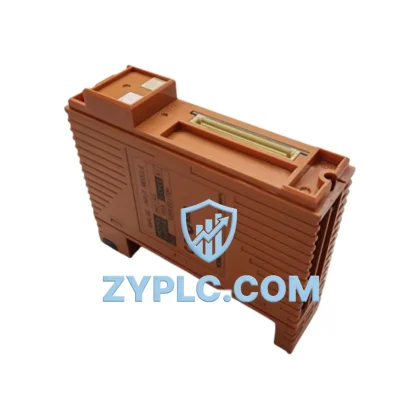
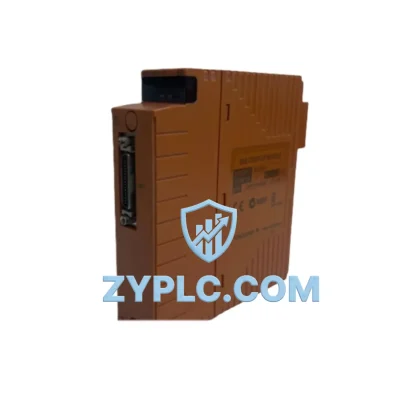
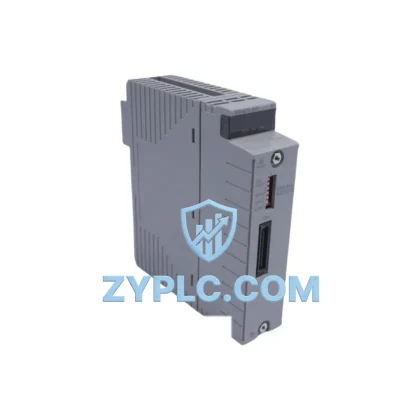
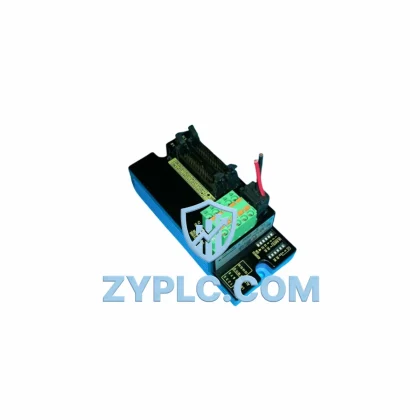
Yokogawa SCP451-51 Signal Conditioner for CENTUM
The Yokogawa SCP451-51 is a precision signal conditioner engineered for seamless integration within the CENTUM VP and CENTUM CS 3000 distributed control system (DCS) architectures. Rather than functioning as a standalone component, the SCP451-51 occupies a critical position in the signal conditioning layer — bridging field-level instrumentation with the I/O subsystem and ultimately the control processor. In large-scale process automation environments, signal integrity is the foundation upon which all higher-level control logic depends. The SCP451-51 ensures that analog signals from transmitters, thermocouples, RTDs, and other field devices are accurately conditioned, isolated, and delivered to the I/O modules without noise, drift, or ground loop interference.
Within a layered automation architecture, the SCP451-51 operates between the field instrument layer and the I/O card layer. It works in conjunction with Yokogawa’s ANB10D and ANT1D analog input modules, which receive the conditioned signals and pass them upstream to the CENTUM VP’s ACF11 or ACF12 field control units. The field control units execute the process control logic — PID loops, cascade control, ratio control — and communicate results to the HMI layer via Vnet/IP, Yokogawa’s proprietary high-speed control network. This architecture ensures deterministic communication latency and system-wide synchronization, which is essential in applications such as refinery distillation column control, boiler drum level management, and reactor temperature regulation.
The SCP451-51 is particularly valuable in redundant control architectures. When paired with dual-redundant field control units and redundant I/O bus configurations, the signal conditioner ensures that even in the event of a primary I/O path failure, the conditioned signal remains available to the backup control path without interruption. This is a fundamental requirement in safety-critical applications governed by IEC 61511 and IEC 61508 functional safety standards. The SCP451-51’s galvanic isolation capability further enhances system reliability by preventing fault propagation between field wiring and the control system backplane.
From a system expansion perspective, the SCP451-51 supports modular deployment. As process plants expand their instrumentation density — adding new measurement points, integrating additional control loops, or extending to remote I/O stations — the SCP451-51 can be added incrementally to existing marshalling cabinets without requiring changes to the upstream I/O card configuration. This modularity reduces engineering hours during plant expansion projects and minimizes the risk of introducing configuration errors into the live control system.
In multi-vendor environments, where Yokogawa CENTUM VP controllers may interface with third-party HART field devices, Profibus PA segments, or Foundation Fieldbus H1 networks, the SCP451-51 provides a consistent signal conditioning baseline that simplifies the integration of diverse instrumentation into a unified control architecture. The conditioned 4–20 mA output is universally compatible with Yokogawa’s standard analog input cards, ensuring that field device diversity does not compromise I/O card compatibility or system commissioning timelines.
For maintenance engineers, the SCP451-51 offers significant long-term operational advantages. Its plug-in terminal block design allows for rapid replacement without disconnecting field wiring, reducing mean time to repair (MTTR) during scheduled maintenance windows or unplanned fault events. Spare part management is simplified by the SCP451-51’s compatibility across multiple CENTUM platform generations, allowing maintenance teams to maintain a single SKU in their critical spare inventory rather than stocking generation-specific variants.
All SCP451-51 units supplied by ZYPLC are covered by a 12-Month Warranty, ensuring that procurement teams and plant engineers can source this component with confidence. ZYPLC maintains verified stock of the SCP451-51 and related CENTUM system components, supporting both project-phase procurement and emergency replacement requirements with fast global shipping.
Product Specification Table
| Parameter |
Specification |
| System Role |
Signal Conditioner — Field-to-I/O Interface Layer |
| Compatible Platform |
Yokogawa CENTUM VP, CENTUM CS 3000 |
| SKU / Model |
SCP451-51 |
| Signal Type |
Analog (4–20 mA), Thermocouple, RTD (series-dependent) |
| Isolation |
Galvanic isolation between field and system side |
| Output |
4–20 mA conditioned analog output |
| Power Supply |
Supplied via CENTUM system bus / marshalling cabinet rail |
| Communication |
Passive analog; compatible with HART pass-through configurations |
| Mounting |
DIN rail / marshalling cabinet terminal block |
| Operating Temperature |
0°C to 55°C (standard industrial environment) |
| Origin |
Japan |
| Warranty |
12-Month Warranty (ZYPLC) |
System Compatibility Notes
The SCP451-51 does not operate in isolation — its value is realized through its coordinated role within a complete CENTUM control system architecture. In a typical CENTUM VP installation, the signal conditioning layer interfaces directly with Yokogawa’s ANB10D 16-channel analog input module and the ANT1D terminal assembly, which together form the I/O subsystem for analog measurement. These I/O modules are housed in Yokogawa’s AFV10D field control unit enclosures, which communicate upstream to the ACF11 or ACF12 field control units via the ER bus.
At the control layer, the ACF11 field control unit executes function block-based control logic and communicates with the CENTUM VP engineering workstation and operator station via Vnet/IP. The operator station — typically running Yokogawa’s HIS (Human Interface Station) software — provides real-time process visualization, alarm management, and trend display. For plants requiring advanced process control, the CENTUM VP architecture supports integration with Yokogawa’s Exaquantum plant information management system, enabling long-term data historian functions and production reporting.
In cabinet-level design, the SCP451-51 is typically installed alongside Yokogawa’s TB820V PROFIBUS DP communication module or the ALR111 HART multiplexer, depending on the field device communication protocol in use. For power distribution within the marshalling cabinet, Yokogawa’s PW482 or PW484 power supply modules provide regulated 24 VDC to the signal conditioning rail. In redundant power configurations, dual PW484 modules with automatic switchover ensure uninterrupted power to the signal conditioning layer even during power supply maintenance.
For plants operating relay-based interlock systems alongside the DCS, the SCP451-51’s isolated output is compatible with Yokogawa’s RY series relay output modules, enabling clean integration between the analog measurement layer and discrete interlock logic without ground loop risk. This architecture is commonly deployed in boiler management systems, compressor control panels, and emergency shutdown (ESD) pre-alarm circuits.
Industrial Application Notes
The Yokogawa SCP451-51 finds application across a broad range of process industries where CENTUM VP or CENTUM CS 3000 platforms are deployed as the primary DCS infrastructure.
In petroleum refining and petrochemical plants, the SCP451-51 is used to condition temperature and pressure signals from heat exchanger trains, distillation columns, and reactor vessels. The galvanic isolation provided by the SCP451-51 is particularly important in these environments, where long cable runs between field instruments and the control room introduce significant common-mode noise and ground potential differences.
In power generation facilities — including coal-fired, gas turbine, and combined-cycle plants — the SCP451-51 supports boiler drum level control, turbine exhaust temperature monitoring, and feedwater flow measurement. The reliability of the signal conditioning layer directly impacts the accuracy of the control system’s response to load changes and startup/shutdown sequences.
In water and wastewater treatment plants, the SCP451-51 conditions signals from flow transmitters, pH analyzers, and dissolved oxygen sensors. These applications typically involve large numbers of measurement points distributed across geographically dispersed pump stations and treatment basins, making the SCP451-51’s modular, DIN-rail-mountable form factor well suited to distributed marshalling cabinet installations.
In mining and minerals processing operations, including flotation circuits, grinding mill control, and tailings management systems, the SCP451-51 provides reliable signal conditioning in environments characterized by high vibration, electrical noise from variable frequency drives (VFDs), and wide ambient temperature ranges. The SCP451-51’s robust isolation design ensures measurement integrity even in these electrically challenging environments.
In pharmaceutical and food and beverage manufacturing, where process validation and data integrity are regulatory requirements, the SCP451-51 supports accurate measurement of critical process parameters — temperature, pressure, flow, and level — within CENTUM VP-based batch control systems compliant with ISA-88 batch process standards.
Product Compatibility FAQ
Q1: Is the SCP451-51 compatible with both CENTUM VP and CENTUM CS 3000 systems?
Yes. The SCP451-51 is designed for use within Yokogawa’s CENTUM platform family, including both CENTUM VP (current generation) and CENTUM CS 3000 (legacy generation). Its terminal block interface and signal conditioning characteristics are consistent across both platforms, making it a suitable spare for plants operating either generation of Yokogawa DCS. For plants in the process of migrating from CS 3000 to CENTUM VP, the SCP451-51 can be retained in the marshalling cabinet without modification, reducing migration project scope and cost.
Q2: Can the SCP451-51 be installed or replaced without shutting down the control system?
The SCP451-51’s plug-in terminal block design is intended to facilitate maintenance without full system shutdown, subject to the plant’s specific safety procedures and live-work policies. In most installations, the field wiring remains connected to the terminal block while the signal conditioner module is replaced, minimizing disruption to the measurement loop. However, ZYPLC recommends that all replacement activities be conducted in accordance with the plant’s management of change (MOC) procedures and the relevant Yokogawa installation and maintenance documentation.
Q3: What warranty and after-sales support does ZYPLC provide for the SCP451-51?
All SCP451-51 units supplied by ZYPLC are covered by a 12-Month Warranty from the date of shipment. During the warranty period, ZYPLC provides replacement or repair support for units found to be defective under normal operating conditions. ZYPLC also maintains ongoing stock of the SCP451-51 and related CENTUM system components to support both planned maintenance procurement and emergency replacement requirements. For technical enquiries, system compatibility questions, or urgent procurement needs, contact ZYPLC directly.
© 2026 ZYPLC. All rights reserved.
Original Source: https://zyplc.com
Contact: +86 19859288691 | plc.sales@zyplc.com