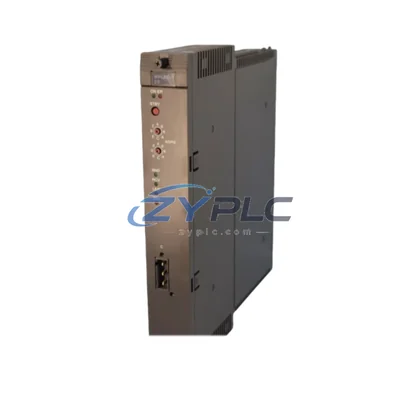
Yokogawa SCP461-E1/S2 Control Processor for CS3000 Automation
The Yokogawa SCP461-E1/S2 is a high-performance Smart Control Processor engineered for the CENTUM CS3000 Distributed Control System (DCS). Designed to meet the rigorous demands of modern industrial automation, this module delivers precise, low-latency process control while actively contributing to plant-wide energy efficiency. Whether deployed in petrochemical refining, power generation, pharmaceutical batch processing, or continuous manufacturing, the SCP461-E1/S2 enables facilities to reduce unplanned downtime risk, tighten control loop performance, and extend equipment service life — all within a proven, field-hardened platform.
At its core, the SCP461-E1/S2 functions as the computational backbone of the CS3000 control domain. It executes control strategies — including PID, cascade, feedforward, and model-based algorithms — with deterministic scan cycle timing. This precision directly translates to reduced process variability, which in turn minimizes unplanned downtime caused by over-actuation, hunting, or setpoint overshoot. In energy-intensive processes such as furnace temperature regulation, compressor surge control, or boiler drum level management, tighter control loops enabled by the SCP461-E1/S2 can yield measurable reductions in fuel and electricity consumption.
Product Specification Table
| Parameter |
Specification / Value |
| Model / SKU |
SCP461-E1/S2 |
| Compatible System |
Yokogawa CENTUM CS / CS3000 DCS |
| Module Type |
Smart Control Processor (SCP) |
| Control Execution |
Deterministic multi-loop PID & advanced control |
| Scan Cycle Performance |
High-speed, configurable scan intervals for real-time response |
| Power Consumption |
Low-power embedded processor architecture |
| Operating Environment |
Industrial: 0–55°C, humidity-resistant, EMI-hardened |
| Communication Protocol |
Vnet/IP (Yokogawa proprietary high-speed control bus) |
| Application Environments |
Petrochemical, Power, Pharma, Pulp & Paper, Food & Beverage |
| Maintenance Value |
Reduces process variability → lower fuel, steam & electricity waste |
| Origin |
Japan |
| Warranty |
warranty terms confirmed during quotation | Tested before shipment |
System Compatibility and Application
The SCP461-E1/S2 does not operate in isolation — its maintenance planning impact is amplified when integrated within a well-architected CS3000 control system. In a typical industrial automation system, the SCP461-E1/S2 works in concert with field-level I/O modules such as the AAI141-S00 analog input module, which collects real-time process measurements including temperature, pressure, and flow rate. These signals feed directly into the SCP’s control algorithms, enabling rapid corrective action before energy-wasting deviations escalate.
On the output side, the SCP461-E1/S2 interfaces with analog output modules like the AAO141-S00 to send precise control signals to final control elements — including variable frequency drives (VFDs) such as the Yaskawa A1000 or Fuji FRENIC-Mega series. By modulating motor speed in response to actual process demand rather than running at fixed speed, these drives dramatically reduce motor load — often by 30–50% in pump and fan applications. The SCP461-E1/S2 provides the closed-loop intelligence that makes demand-responsive drive control possible.
For power quality and operating load monitoring, the SCP461-E1/S2 integrates seamlessly with power monitoring modules and energy meters connected via the CS3000 I/O bus. Devices such as the Yokogawa WT series power analyzers or third-party energy transducers wired through ADV151 digital input modules allow the control system to track real-time kWh consumption per production unit. This data enables the SCP to implement maintenance-focused setpoint scheduling — for example, automatically reducing heating setpoints during low-throughput periods or shifting high-energy operations to off-peak tariff windows.
The SCP461-E1/S2 communicates with the operator interface layer through the CS3000 Vnet/IP control bus, connecting to HIS (Human Interface Stations) running CENTUM CS3000 R3 or later. Operators can monitor energy KPIs, loop performance indices, and equipment utilization rates in real time via the HIS engineering console. When paired with the Exaquantum plant information management system, historical energy trend data can be analyzed to identify chronic inefficiencies and validate the impact of control tuning improvements.
In multi-domain CS3000 installations, the SCP461-E1/S2 works alongside the FCS (Field Control Station) chassis and redundant power supply units such as the PW481 to ensure uninterrupted control execution. Redundant SCP configurations eliminate the energy and production losses associated with unplanned control system downtime. The BCV (Bus Coupler Vnet) module further extends the control network, enabling coordinated maintenance planning across geographically distributed process units within the same plant.
Maintenance and Replacement Notes
In real-world production environments, the SCP461-E1/S2 delivers operational stability through several interconnected mechanisms. First, by maintaining tighter control of process variables — temperature, pressure, flow, and level — the module reduces the frequency and magnitude of corrective actuator movements. Each unnecessary valve stroke or motor speed change consumes energy and accelerates mechanical wear. The SCP461-E1/S2’s fast scan cycle and robust algorithm execution minimize these wasteful corrections, directly lowering both operating load and maintenance frequency.
Second, the SCP461-E1/S2 supports advanced control strategies such as cascade control and ratio control, which are particularly effective in combustion optimization applications. In a fired heater or boiler, for example, cascade control of fuel-to-air ratio — executed by the SCP461-E1/S2 — can reduce excess oxygen levels and improve combustion efficiency by several percentage points. Over a full year of operation, this translates to significant fuel cost savings and reduced CO₂ emissions per unit of production output.
Third, the module’s integration with the CS3000 alarm management and event logging infrastructure enables proactive maintenance scheduling. Abnormal process signatures — such as increasing control loop oscillation, rising valve travel accumulation, or degrading heat exchanger performance — are detected early and flagged for maintenance teams. Addressing these issues before they cause unplanned shutdowns preserves production throughput, avoids the energy-intensive restart sequences associated with emergency stops, and reduces the total cost of ownership of the automation system.
From a supply chain perspective, ZYPLC maintains availability subject to RFQ confirmation of the SCP461-E1/S2 and compatible CS3000 modules, enabling rapid deployment for both planned upgrades and emergency replacements. Every unit undergoes functional testing prior to shipment, and all products are covered by a warranty terms confirmed during quotation. Fast global logistics ensure that production lines are not left idle waiting for critical control hardware.
Product Sourcing FAQ
Q1: How does the SCP461-E1/S2 contribute to measurable operational stability on the production line?
The SCP461-E1/S2 reduces unplanned downtime by executing precise, fast-response control loops that minimize process variability. Tighter control means fewer overcorrections by actuators, drives, and heating elements — each of which consumes energy. When integrated with VFDs and power monitoring devices, the SCP enables demand-responsive operation that can reduce motor and heating operating load by 20–50% depending on the application.
Q2: Is the SCP461-E1/S2 compatible with my existing CS3000 or CENTUM CS system?
Yes. The SCP461-E1/S2 is designed for the Yokogawa CENTUM CS and CS3000 DCS platforms and is compatible with standard FCS chassis, Vnet/IP communication infrastructure, and CS3000 engineering tools. It can be installed as a replacement for existing SCP modules or as part of a system expansion. For mixed-generation installations, compatibility with specific firmware versions should be verified against the CS3000 system configuration documentation.
Q3: What is the recommended replacement or upgrade path for aging SCP modules in a CS3000 system?
For facilities running older CENTUM CS or early CS3000 configurations, upgrading to the SCP461-E1/S2 provides improved processing performance and better support for advanced control strategies. The upgrade process typically involves backing up the existing control database, replacing the SCP module during a planned maintenance window, and restoring the configuration. ZYPLC can supply the SCP461-E1/S2 with short lead times to minimize planned downtime duration.
Q4: What testing and warranty coverage is provided with the SCP461-E1/S2?
Every SCP461-E1/S2 unit supplied by ZYPLC is functionally tested prior to shipment to verify operational integrity. All units are covered by a warranty terms confirmed during quotation from the date of delivery. In the event of a warranty claim, ZYPLC provides responsive technical support and replacement logistics to minimize impact on production operations.