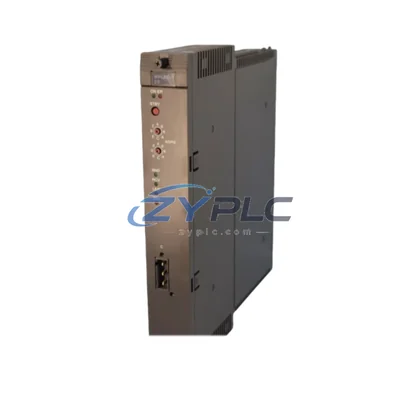
Yokogawa SDV531-S23 S4 Digital Valve Controller for Centum Automation
The Yokogawa SDV531-S23 S4 is a high-performance digital valve controller engineered for precision flow regulation and maintenance-focused process control within the Yokogawa Centum automation ecosystem. Designed for demanding industrial environments — including chemical processing, oil & gas, power generation, and pharmaceutical manufacturing — this controller delivers measurable reductions in valve energy consumption, compressed air usage, and unplanned downtime. Every unit shipped by ZYPLC undergoes full functional testing and is backed by a, ensuring reliable performance from day one.
In modern production lines, valve controllers are often overlooked as maintenance planning targets. Yet poorly calibrated or aging positioners can waste significant amounts of instrument air, cause valve hunting, and introduce process variability that forces upstream and downstream equipment to compensate — increasing overall plant energy draw. The SDV531-S23 S4 addresses this directly through its intelligent digital positioner architecture, which continuously self-calibrates to minimize air consumption while maintaining tight setpoint adherence.
Product Specification Table
| Parameter |
Specification / Value |
| Model |
SDV531-S23 S4 |
| Brand / Series |
Yokogawa / Centum |
| Device Type |
Digital Valve Controller (Smart Positioner) |
| Communication Protocol |
HART / Foundation Fieldbus (FF-H1) |
| Supply Pressure Range |
140 – 700 kPa (20 – 100 psi) |
| Air Consumption (Steady State) |
Optimized low-bleed design (<0.05 Nm³/h typical) |
| Control Signal Input |
4–20 mA DC (HART superimposed) |
| Operating Temperature |
-40°C to +85°C |
| Enclosure Rating |
IP66 / NEMA 4X |
| Compatible Systems |
Yokogawa Centum VP, Centum CS 3000, ProSafe-RS, FAST/TOOLS SCADA |
| Application Environments |
Chemical, Oil & Gas, Power, Pharma, Pulp & Paper |
| Energy Saving Value |
Reduces instrument air waste; minimizes valve hunting; lowers compressor load |
| Diagnostics |
Partial Stroke Test (PST), valve signature analysis, friction & hysteresis monitoring |
| Origin |
Japan |
| Warranty |
12 Months (ZYPLC) |
| Availability |
RFQ Available by RFQ; shipment arranged after outgoing inspection |
System Compatibility and Application
The SDV531-S23 S4 does not operate in isolation — its maintenance planning value is fully realized when integrated into a coordinated Yokogawa Centum control architecture. In a typical industrial-grade plant layout, the Yokogawa Centum VP DCS serves as the central control platform, issuing setpoint commands via the Yokogawa KFCS (Field Control Station) or PFCS (Process Field Control Station) over Foundation Fieldbus segments. The SDV531-S23 S4 receives these commands and executes precise valve positioning, feeding back real-time position data and diagnostic information to the control layer without requiring additional field wiring.
On the drive side, variable-speed pump and compressor systems — often controlled by Yokogawa-compatible variable frequency drives (VFDs) such as those in the Yaskawa A1000 or GA700 series — work in tandem with the valve controller to balance flow demand dynamically. When the SDV531-S23 S4 reports reduced flow demand through its HART diagnostic channel, the upstream VFD can reduce motor speed accordingly, compounding the operational stability across the entire fluid handling loop.
For power quality and energy consumption monitoring, the architecture typically incorporates Yokogawa WT series power analyzers or third-party power meters integrated via Modbus TCP into the Yokogawa FAST/TOOLS SCADA platform. This allows plant engineers to correlate valve position data from the SDV531-S23 S4 with real-time kWh consumption at the motor control center (MCC), enabling data-driven decisions about setpoint optimization and maintenance scheduling.
Safety instrumented systems built around the Yokogawa ProSafe-RS Safety Controller can leverage the SDV531-S23 S4’s Partial Stroke Test (PST) capability to validate emergency shutdown valve (ESD) operability without taking the process offline — a critical feature for SIL 2/3 certified loops. The PST results are logged automatically and can be reviewed through the Yokogawa PRM (Plant Resource Manager) asset management software, which also tracks valve wear trends, packing friction increases, and actuator performance degradation over time.
I/O marshalling and signal conditioning for legacy 4–20 mA loops feeding into the Centum VP system is typically handled through Yokogawa JUXTA VI series signal conditioners or the Yokogawa STARDOM FCN/FCJ remote RTU controllers in distributed field installations. These components ensure that the SDV531-S23 S4’s HART data is correctly parsed and forwarded to the DCS historian, maintaining a complete audit trail of valve performance across production campaigns.
Maintenance and Replacement Notes
Consider a continuous chemical processing plant running three parallel reactor feed lines, each equipped with a control valve managing reactant flow. If the existing positioners are analog pneumatic types with constant air bleed, each valve may consume 0.3–0.5 Nm³/h of instrument air at steady state — air that must be compressed, dried, and distributed at significant electrical cost. Replacing these with the SDV531-S23 S4‘s low-bleed digital design can reduce per-valve air consumption by 60–80%, directly lowering the duty cycle of the instrument air compressor and reducing its electrical draw.
Beyond compressed air savings, the SDV531-S23 S4’s tight positioning accuracy (typically ±0.5% of span) eliminates the valve hunting behavior common in worn or poorly tuned analog positioners. Valve hunting — where the valve oscillates around the setpoint — not only wastes energy through repeated actuator movement but also introduces process variability that forces the DCS to make frequent corrective adjustments, increasing control loop activity and associated computational overhead across the Centum VP Field Control Station.
In batch manufacturing environments, production line cycle time (takt time) is directly affected by how quickly control valves respond to setpoint changes during phase transitions. The SDV531-S23 S4’s digital positioner algorithm optimizes step response, reducing valve travel time during transitions and shortening the settling period between batch phases. This improvement in line takt can translate to additional production cycles per shift without increasing energy input — effectively improving the energy-per-unit-produced metric that modern industrial maintenance planning systems (ISO 50001 compliant) track as a key performance indicator.
Predictive maintenance is another dimension of maintenance planning enabled by the SDV531-S23 S4. By continuously monitoring valve signature data — including actuator thrust, packing friction, and seat leakage indicators — the controller provides early warning of mechanical degradation through the Yokogawa PRM asset management platform. Maintenance teams can schedule interventions during planned shutdowns rather than responding to emergency failures, avoiding the energy-intensive process of emergency restart sequences and the associated off-spec production that consumes additional raw materials and utilities.
All units supplied by ZYPLC are sourced through verified industrial supply channels, verified against manufacturer documentation, and subjected to outgoing functional inspection prior to shipment. Stock availability is maintained to support urgent MRO (Maintenance, Repair & Operations) requirements, and the covers manufacturing defects under normal operating conditions.
Product Sourcing FAQ
Q1: How much energy can the SDV531-S23 S4 save compared to a conventional pneumatic positioner?
The SDV531-S23 S4 uses a low-bleed pneumatic design that typically reduces instrument air consumption by 60–80% versus conventional analog positioners with continuous bleed. In plants with multiple control valves, this reduction in air demand lowers compressor motor load, which is often one of the largest electrical consumers in a utility system. Actual savings depend on operating pressure, valve size, and duty cycle.
Q2: Is the SDV531-S23 S4 compatible with existing Centum CS 3000 and Centum VP systems?
Yes. The SDV531-S23 S4 communicates via HART protocol over standard 4–20 mA wiring, making it fully compatible with Yokogawa Centum CS 3000, Centum VP, and any HART-capable DCS or asset management system including Yokogawa PRM. Foundation Fieldbus variants are also available within the SDV531 series for FF-H1 segment installations.
Q3: What is the recommended replacement or upgrade path from older Yokogawa positioners?
The SDV531-S23 S4 is designed as a direct upgrade for aging YVP series and VP series positioners. Mounting brackets and pneumatic connections are typically compatible with standard actuator yoke configurations. ZYPLC recommends verifying actuator type (rotary vs. linear), supply pressure range, and signal type before quotationing. Our technical team can assist with cross-reference validation.
Q4: What does the cover, and what is the testing process before shipment?
Every SDV531-S23 S4 unit supplied by ZYPLC undergoes outgoing inspection including communication response verification, zero/span calibration check, and enclosure integrity review. The covers manufacturing defects and component failures under normal operating conditions from the date of shipment. Warranty claims are processed directly through ZYPLC — contact plc.sales@zyplc.com or +86 19859288691 for support.