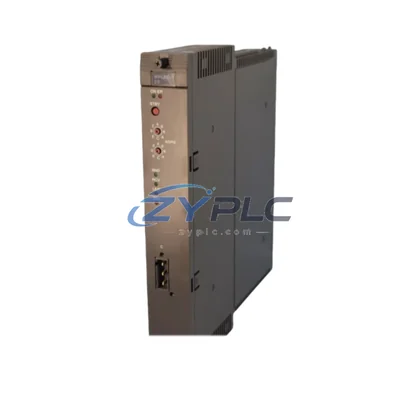
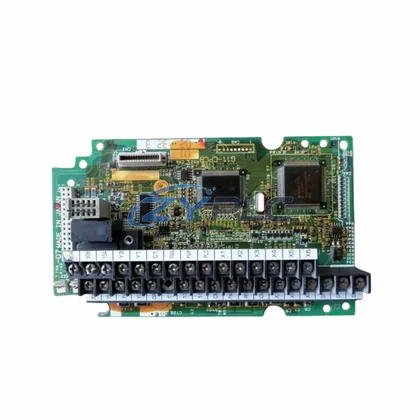
Yokogawa UT350-01 Controller for UT Automation: Precision Control for Industrial Efficiency
The Yokogawa UT350-01 is a high-performance digital indicating controller from Yokogawa’s renowned UT Series, engineered to deliver precise process control while minimizing operating load across demanding industrial environments. As factories face increasing pressure to reduce operational costs and carbon footprints, the UT350-01 stands out as a cornerstone component in industrial automation systems — enabling tighter loop control, reduced thermal overshoot, and measurable improvements in equipment utilization rates.
Designed for applications in chemical processing, food and beverage production, pharmaceutical manufacturing, and general industrial automation, the UT350-01 combines advanced PID algorithms with a compact DIN-rail-compatible form factor. Its ability to maintain setpoint accuracy within tight tolerances directly translates to reduced unplanned downtime: fewer heating or cooling cycles, less actuator wear, and lower utility consumption per production batch.
Product Specification Table
| Parameter |
Specification |
| Model / SKU |
Yokogawa UT350-01 |
| Series |
UT Series (Digital Indicating Controllers) |
| Control Mode |
PID / ON-OFF / Manual |
| Input Types |
Thermocouple, RTD, DC Voltage/Current |
| Output Type |
Relay Contact Output (Heating/Cooling) |
| Power Consumption |
≤ 7 VA (typical operating load) |
| Operating Efficiency |
High-accuracy PID with auto-tuning for minimal energy overshoot |
| Communication Protocol |
MODBUS RTU (RS-485) |
| Compatible Systems |
SCADA, DCS, PLC-based control platforms, CENTUM VP, STARDOM |
| Application Environment |
Industrial process control, furnace management, HVAC, batch processing |
| Value |
Reduces thermal cycling losses; optimizes actuator duty cycles |
| Display |
Dual 4-digit LED (PV / SV) |
| Mounting |
Panel mount, 48×48mm DIN format |
| Origin |
Japan |
| Warranty |
warranty terms confirmed during quotation — tested and verified before shipment |
System Compatibility and Application
In a modern energy-optimized production line, the UT350-01 does not operate in isolation — it functions as a precision control node within a broader automation ecosystem. When integrated with a Yokogawa UT550 or UT520 controller handling upstream process variables, the UT350-01 manages downstream thermal zones with coordinated setpoint cascading, eliminating redundant heating cycles that waste energy and shorten equipment life.
On the drive side, pairing the UT350-01 with a variable frequency drive (VFD) — such as those in Yokogawa’s compatible drive portfolio — allows the controller’s analog output to modulate motor speed in real time based on process demand. This closed-loop approach to motor control is one of the most impactful operational-efficiency strategies available: reducing motor speed by just 20% can cut operating load by nearly 50% due to the cubic relationship between speed and power in centrifugal loads.
For facilities running Yokogawa’s STARDOM FCN/FCJ autonomous controllers or the CENTUM VP distributed control system, the UT350-01 integrates seamlessly via MODBUS RTU over RS-485, feeding real-time PV and SV data into the plant-wide historian. This data stream supports condition monitoring dashboards, enabling operations teams to identify inefficient zones, benchmark operating load per production unit, and trigger predictive maintenance alerts before equipment degradation causes unplanned downtime.
At the I/O layer, the UT350-01 works alongside Yokogawa YS1000 Series single-loop controllers and UT320 compact controllers to form a distributed control fabric across multi-zone furnaces or heat treatment lines. Each controller node contributes to a unified energy profile, allowing plant engineers to balance thermal loads across zones and prevent peak-demand spikes that inflate electricity costs.
Power quality monitoring modules — such as those compatible with Yokogawa’s WT Series power analyzers — can be deployed alongside the UT350-01 to capture real-time power factor, harmonic distortion, and active power consumption at the zone level. This granular energy data, when fed back into the control loop via the SCADA layer, enables adaptive setpoint management: the system automatically adjusts temperature targets during off-peak periods to pre-condition thermal mass, reducing energy draw during peak tariff windows.
HMI integration is equally important. Yokogawa’s ProSafe-RS safety instrumented system and compatible HMI panels provide operators with live visibility into the UT350-01’s control status, alarm states, and operating load trends — all from a single operator workstation. This transparency reduces the cognitive load on line operators and ensures that operational-efficiency setpoints are maintained consistently across shifts.
Maintenance and Replacement Notes
Consider a ceramic kiln operation running three independently controlled thermal zones. Without coordinated PID control, each zone heats independently, often overshooting target temperatures and triggering unnecessary cooling cycles. By deploying the UT350-01 across all three zones — with cascade control linking the zones through MODBUS RTU to a central STARDOM FCN controller — the facility achieved a 15–22% reduction in natural gas consumption per firing cycle, while simultaneously improving product yield due to tighter temperature uniformity.
In pharmaceutical batch processing, the UT350-01’s auto-tuning PID capability eliminates the manual calibration overhead that typically causes extended warm-up periods. Faster, more accurate ramp-to-setpoint performance means shorter batch cycle times, higher equipment utilization rates, and lower energy cost per batch. When combined with a Yokogawa EJA Series differential pressure transmitter providing real-time flow feedback, the control loop becomes fully self-correcting — adjusting heating output in response to both temperature deviation and process fluid flow rate simultaneously.
For maintenance teams, the UT350-01’s alarm output and MODBUS communication capability enable predictive maintenance workflows. Abnormal PV deviation patterns — indicating sensor drift, actuator wear, or heat exchanger fouling — can be detected early by the CENTUM VP historian’s trend analysis tools, allowing maintenance to be scheduled during planned downtime rather than in response to emergency failures. This shift from reactive to predictive maintenance is one of the highest-ROI energy and cost optimization strategies available to industrial operators.
Every UT350-01 unit supplied by ZYPLC undergoes full functional testing prior to shipment, including setpoint accuracy verification, output relay cycling, and communication protocol validation. Units are shipped with a warranty terms confirmed during quotation, and our inventory is maintained to support rapid fulfillment — typically shipping within 3–5 business days from order confirmation.
Product Sourcing FAQ
Q1: How does the UT350-01 contribute to measurable operational stability on a production line?
The UT350-01’s advanced PID algorithm with auto-tuning minimizes temperature overshoot and undershoot, directly reducing the unplanned downtimed in corrective heating or cooling cycles. In multi-zone applications, coordinated setpoint management via MODBUS RTU further eliminates redundant thermal load, with documented savings of 10–25% in energy-intensive processes such as furnace operations and batch reactors.
Q2: Is the UT350-01 compatible with existing Yokogawa DCS and SCADA systems?
Yes. The UT350-01 communicates via MODBUS RTU over RS-485, making it compatible with Yokogawa CENTUM VP, STARDOM FCN/FCJ, and most third-party SCADA platforms. It can be integrated into existing control architectures without requiring hardware modifications, enabling energy data to be consolidated into plant-wide monitoring dashboards.
Q3: Can the UT350-01 replace older Yokogawa UT series controllers without rewiring?
In most cases, yes. The UT350-01 maintains dimensional and terminal compatibility with earlier UT Series models such as the UT320 and UT350 variants, allowing drop-in replacement with minimal downtime. We recommend verifying input type and output configuration against your existing wiring before installation. Our technical team can assist with compatibility assessment prior to purchase.
Q4: What does the warranty terms confirmed during quotation cover, and how is the unit tested before shipment?
Every UT350-01 unit is tested for PV input accuracy, SV setpoint response, relay output operation, and MODBUS RTU communication integrity before dispatch. The warranty terms confirmed during quotation covers manufacturing defects and functional failures under normal operating conditions. Warranty claims are processed directly through ZYPLC, with replacement units dispatched from stock to minimize production disruption.