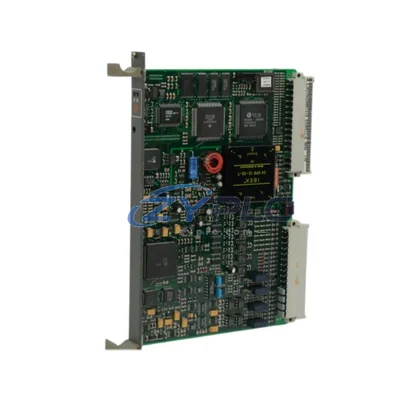
ABB 07KT93 GJR5251300R0171 CPU for Advant OCS: Control System and Upstream–Downstream Coordination
The ABB 07KT93 (part number GJR5251300R0171) is a high-performance CPU module purpose-built for the ABB Advant OCS (Open Control System) platform, operating at the heart of distributed control architectures across manufacturing, power generation, petrochemical processing, water treatment, mining, metallurgy, and continuous process industries. Rather than functioning as a standalone controller, the 07KT93 is engineered to serve as the central processing node within a layered automation hierarchy — coordinating signal acquisition, logic execution, inter-module communication, and supervisory data exchange across every tier of the control system.
Understanding the 07KT93’s role requires viewing it within the full system context: from field-level sensors and actuators, through the I/O and communication layers, up to the HMI and SCADA supervisory level. This document describes how the 07KT93 integrates with upstream and downstream components, how it supports redundancy and scalability, and why it remains a preferred CPU choice for engineers maintaining or expanding legacy Advant OCS installations.
Product Specification Table
| Parameter |
Specification |
| System Role |
Central Processing Unit (CPU) — Advant OCS Control Node |
| Part Number |
GJR5251300R0171 |
| Compatible Platform |
ABB Advant OCS / CS31 Distributed I/O Bus |
| Processor Architecture |
32-bit embedded processor with real-time OS |
| Program Memory |
Expandable via EPROM/Flash memory modules |
| Communication Interfaces |
CS31 serial bus, RS-232/RS-485, optional PROFIBUS DP |
| I/O Expansion |
Supports distributed I/O via CS31 bus (up to 31 slave nodes) |
| Backplane Compatibility |
Advant OCS rack-mount backplane (standard DIN rail or panel mount) |
| Supply Voltage |
24 V DC (via dedicated power supply module) |
| Operating Temperature |
0°C to +55°C |
| Protection Rating |
IP20 (cabinet installation) |
| Country of Origin |
Germany |
| Warranty |
warranty terms confirmed during quotation — covers manufacturing defects and functional failure under normal operating conditions |
System Compatibility Notes
The 07KT93 CPU module does not operate in isolation. Its value is fully realized when integrated within a complete Advant OCS control cabinet, where it coordinates with a carefully selected set of companion modules and subsystems.
At the power layer, the 07KT93 relies on a dedicated ABB Advant power supply module — typically the 07DC91 GJR5251400R0001 or equivalent 24 V DC rail-mount supply — to maintain stable voltage regulation across the backplane. Power quality directly affects CPU clock stability and memory retention, making the power supply selection a critical architectural decision.
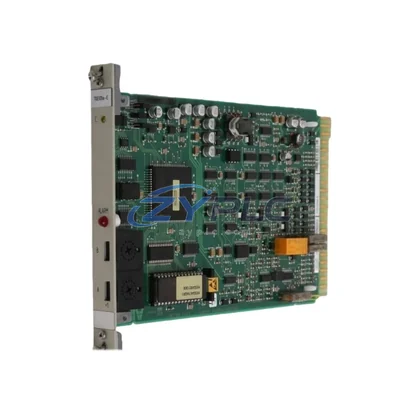
At the I/O layer, the CS31 bus architecture allows the 07KT93 to communicate with distributed I/O slave modules such as the 07AI91 analog input module, 07DI92 digital input module, and 07DO91 digital output module. These modules can be distributed across the control cabinet or mounted remotely at field junction boxes, with the CS31 bus providing deterministic, low-latency data exchange. The 07KT93 acts as the CS31 bus master, polling each slave node in a configurable scan cycle.
At the communication and network layer, the 07KT93 supports integration with higher-level SCADA systems and DCS networks via its serial communication ports. Where PROFIBUS DP connectivity is required, a PROFIBUS DP communication module (such as the 07KP90 GJR5252100R0101) can be added to the rack, enabling the Advant OCS node to participate in plant-wide fieldbus networks alongside drives, valve positioners, and remote I/O clusters from other vendors.
At the HMI layer, the 07KT93 interfaces with operator panels and SCADA workstations running ABB’s Advant Station or third-party HMI software via RS-232/RS-485 serial links or Ethernet gateways. This allows operators to monitor real-time process values, acknowledge alarms, and issue setpoint changes without interrupting the CPU’s scan cycle.
For applications requiring redundancy, the Advant OCS platform supports hot-standby CPU configurations where a secondary 07KT93 unit mirrors the primary’s memory state and assumes control within milliseconds of a primary failure — a configuration commonly deployed in power substation automation, chemical reactor control, and pipeline SCADA systems where unplanned downtime carries significant safety or financial consequences.
Terminal modules such as the ABB 07TE90 terminal base and associated wiring accessories simplify field wiring connections to I/O modules, reducing installation time and enabling module replacement without disturbing field wiring — a key advantage during planned maintenance windows or emergency module swaps.
Industrial Application Notes
Manufacturing and Discrete Production Lines: In automotive assembly, electronics manufacturing, and packaging lines, the 07KT93 manages sequential logic for conveyor control, robotic cell interlocking, and quality inspection triggers. Its deterministic scan cycle ensures that I/O response times remain consistent even as production throughput increases, and its CS31 bus architecture allows I/O nodes to be distributed along the production line without running individual signal cables back to a central cabinet.
Power Generation and Substation Automation: In thermal power plants and grid substations, the 07KT93 handles protection relay coordination, transformer tap-changer control, and breaker status monitoring. Its ability to interface with PROFIBUS DP networks allows it to exchange data with numerical protection relays and energy meters, while its hot-standby redundancy option ensures continuous operation during CPU module replacement or firmware updates.
Petrochemical and Refinery Process Control: In continuous process environments such as crude distillation units, compressor trains, and heat exchanger networks, the 07KT93 executes PID control loops for temperature, pressure, and flow regulation. Its analog I/O modules — connected via the CS31 bus — provide the high-resolution signal acquisition needed for tight process control, while its serial communication links deliver real-time data to DCS historian servers for process optimization analysis.
Water and Wastewater Treatment: Municipal water treatment facilities use the 07KT93 to automate pump sequencing, chemical dosing, and filtration backwash cycles. The module’s robust operating temperature range and IP20-rated cabinet installation make it suitable for the humid, chemically aggressive environments typical of water treatment plant control rooms.
Mining and Metallurgy: In ore processing plants and smelting facilities, the 07KT93 controls conveyor drives, crusher interlocks, and furnace temperature regulation. Its compatibility with variable frequency drives via PROFIBUS DP or analog output modules allows coordinated speed control across multiple drive systems from a single CPU node.
Product Compatibility FAQ
Q1: Is the ABB 07KT93 GJR5251300R0171 compatible with both new Advant OCS installations and existing legacy systems?
Yes. The 07KT93 is fully backward-compatible with existing Advant OCS racks, backplanes, and CS31 bus I/O modules. It can replace an aging CPU in an existing installation without requiring changes to field wiring, I/O module assignments, or application program structure — provided the replacement unit carries the same firmware revision or a compatible upgrade. For new installations, the 07KT93 can be configured from scratch using ABB’s Advant Builder or compatible IEC 61131-3 programming tools, and scaled by adding CS31 slave I/O nodes as the application grows.
Q2: How does the 07KT93 support system redundancy, and what additional components are required?
Hot-standby redundancy with the 07KT93 requires a second CPU module of the same type, a synchronization link between the two units (typically via a dedicated serial or backplane connection), and a redundancy management module or firmware feature that handles state synchronization and automatic switchover. The standby CPU continuously mirrors the primary’s memory image, ensuring bumpless transfer in the event of a primary failure. Engineers should verify the specific redundancy configuration supported by their Advant OCS firmware version and consult the system architecture documentation for backplane slot assignments and synchronization cable routing.
Q3: What does the warranty terms confirmed during quotation cover, and how does ZYPLC support long-term maintenance for the 07KT93?
The warranty terms confirmed during quotation covers manufacturing defects and functional failures under normal operating conditions from the date of shipment. If the module fails within the warranty period due to a covered defect, ZYPLC will provide a replacement unit or repair service at no additional cost. Beyond the warranty period, ZYPLC supports RFQ sourcing for the 07KT93 and compatible Advant OCS components to support long-term maintenance programs — including planned preventive replacement cycles, emergency spare procurement, and multi-unit orders for system-wide standardization. Our technical team can also assist with cross-referencing obsolete part numbers and identifying compatible successor modules where original units are no longer available from the OEM.