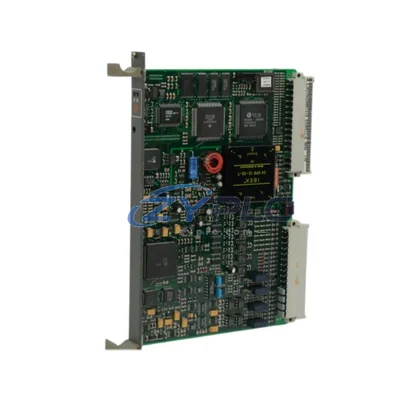
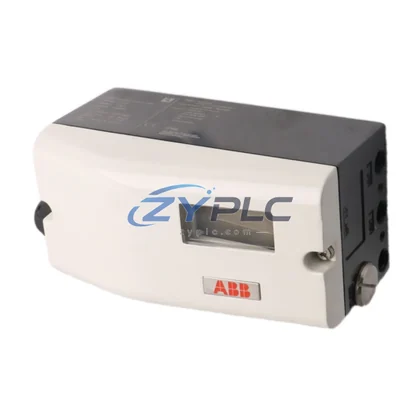
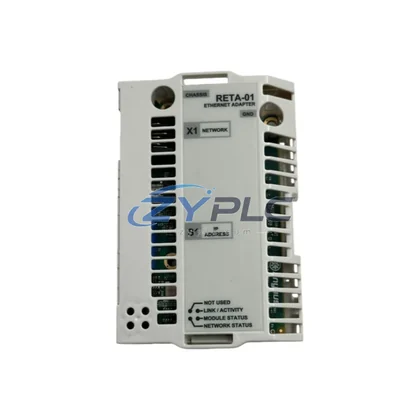
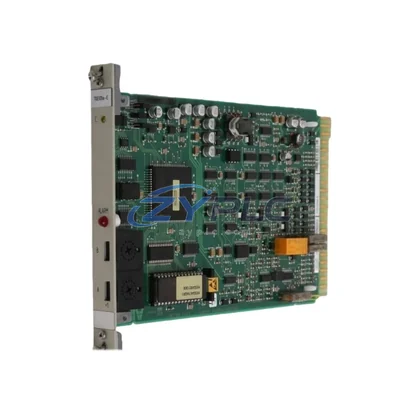
The ABB 1MRK000173-BBR03 is a dedicated binary input module engineered for seamless integration within the ABB Relion 670 series protection and control platform. In modern substation and industrial automation environments, no component operates in isolation — every module must align with the broader control system architecture to ensure signal integrity, operational continuity, and long-term maintainability. The 1MRK000173-BBR03 is purpose-built to fulfill this role, serving as a critical interface between field-level switching signals and the central protection logic of the Relion 670 IED (Intelligent Electronic Device).
Within a layered automation system, binary input modules occupy the I/O layer — the essential bridge between the physical process and the digital control domain. The 1MRK000173-BBR03 captures discrete on/off signals from field devices such as circuit breaker auxiliary contacts, isolator position switches, protection relay trip outputs, and manual control pushbuttons. These signals are then conditioned, filtered, and transmitted to the Relion 670 CPU module for real-time processing, event logging, and SCADA reporting. The module’s design ensures that signal acquisition is both fast and noise-immune, which is critical in high-voltage switchgear environments where electromagnetic interference is a constant challenge.
System architects integrating the 1MRK000173-BBR03 into a Relion 670 bay controller or protection IED benefit from its plug-and-play compatibility with the Relion 670 modular hardware platform. The module slots directly into the Relion 670 chassis backplane, sharing the internal communication bus with the CPU module (such as the 1MRK000173-AAA01 or equivalent processor card), power supply modules (such as the 1MRK000173-PSU series), and other I/O modules including binary output modules and analog input cards. This tight hardware integration eliminates the need for external signal converters or interface relays in most standard applications, reducing panel footprint and wiring complexity.
Product Specification Table
| Parameter |
Specification |
| Part Number |
1MRK000173-BBR03 |
| Brand |
ABB |
| Series |
Relion 670 |
| Module Type |
Binary Input Module |
| System Role |
Field Signal Acquisition — I/O Layer |
| Compatible Platform |
ABB Relion 670 IED / Bay Controller |
| Input Type |
Discrete (Digital) Binary Inputs |
| Communication Interface |
Internal Relion 670 Backplane Bus |
| Protocol Support |
IEC 61850, DNP3, MODBUS (via IED CPU) |
| Installation Environment |
Indoor Substation, Control Panel, MCC |
| Operating Temperature |
-25°C to +55°C (standard substation range) |
| Country of Origin |
Sweden |
| Warranty |
warranty terms confirmed during quotation — Covered from date of shipment |
| system integration |
Yes — Relion 670 platform native compatibility |
System Compatibility Notes
The 1MRK000173-BBR03 does not function as a standalone device — its value is realized through coordinated operation with the full suite of Relion 670 platform components. In a typical bay protection and control application, the module works in concert with the Relion 670 CPU processing card, which executes protection algorithms and manages IEC 61850 GOOSE messaging across the station bus. The binary inputs captured by the 1MRK000173-BBR03 feed directly into the CPU’s logic engine, enabling interlocking schemes, auto-reclosing sequences, and busbar protection coordination.
On the power supply side, the Relion 670 PSU module provides stable DC power to the entire IED chassis, ensuring that binary input signal sampling remains uninterrupted even during auxiliary power fluctuations — a common occurrence in substation environments during fault events. For applications requiring redundancy, dual PSU configurations are supported, and the 1MRK000173-BBR03 continues to operate transparently during PSU switchover.
Binary output modules within the same Relion 670 chassis complement the 1MRK000173-BBR03 by executing trip commands, alarm outputs, and control signals back to the field. Together, the binary input and binary output modules form the complete digital I/O layer of the IED, with the CPU module orchestrating the logic between them. Analog input modules (for current and voltage measurement) complete the signal acquisition picture, allowing the Relion 670 IED to perform both measurement-based protection (overcurrent, distance, differential) and status-based logic (interlocking, sequencing).
At the network layer, the Relion 670 platform’s built-in IEC 61850 communication capability — managed by the CPU module — allows binary input states captured by the 1MRK000173-BBR03 to be published as GOOSE messages to peer IEDs across the station LAN. This enables high-speed, peer-to-peer protection tripping without relying on hardwired pilot cables, significantly reducing installation cost and improving response time in busbar and transformer protection schemes. For legacy SCADA integration, DNP3 or MODBUS TCP communication modules within the Relion 670 platform transmit binary input status to remote control centers.
Human-machine interface (HMI) integration is achieved through the Relion 670’s front panel display and keypad, as well as through ABB’s PCM600 engineering tool, which provides full configuration, testing, and diagnostic access to all modules including the 1MRK000173-BBR03. Terminal block modules and marshalling panels within the control cabinet provide the physical wiring interface between field cables and the IED’s binary input terminals, completing the signal chain from field device to protection logic.
Industrial Application Notes
The 1MRK000173-BBR03 finds application across a wide range of industries where reliable binary signal acquisition is essential to safe and efficient operation.
In electrical power transmission and distribution, the module is deployed in 110kV to 500kV substation bay controllers, capturing circuit breaker and disconnector position signals for busbar protection, auto-reclosing, and interlocking schemes. Its fast input response time ensures that protection sequences are initiated within the required operating windows defined by grid codes and utility standards.
In petrochemical and refinery plants, the Relion 670 platform with the 1MRK000173-BBR03 is used in motor protection and feeder protection panels, where binary inputs from motor contactors, thermal overload relays, and emergency stop circuits must be reliably captured and processed. The module’s noise immunity is particularly valuable in environments with large variable-frequency drives and high-current motor loads.
In water treatment and pumping stations, the module supports pump control and protection IEDs, capturing run/stop feedback signals, valve position indicators, and level switch outputs. Integration with SCADA systems via IEC 61850 or DNP3 allows remote monitoring and control of distributed pumping infrastructure.
In mining and metallurgical processing, where high-power drives, arc furnaces, and conveyor systems generate significant electrical noise, the 1MRK000173-BBR03’s robust input filtering ensures reliable signal acquisition from field devices operating in harsh electromagnetic environments. The module supports the protection of high-value assets including large motors, transformers, and power distribution switchgear.
In packaging and manufacturing production lines, the Relion 670 platform is used in machine protection and power quality monitoring applications, where the 1MRK000173-BBR03 captures production line status signals, safety relay outputs, and equipment fault indicators for integration into plant-wide automation and maintenance planning systems.
Product Compatibility FAQ
Q1: Is the 1MRK000173-BBR03 compatible with all Relion 670 series IED variants?
The 1MRK000173-BBR03 is designed for the ABB Relion 670 modular hardware platform and is compatible with Relion 670 series IEDs including the REL670, REB670, RET670, RED670, and REF670 variants, subject to the specific hardware configuration and firmware version of the target IED. It is recommended to verify compatibility against the IED’s hardware configuration document (HCD) and the Relion 670 product revision history before installation. ZYPLC’s technical team can assist with compatibility verification prior to order confirmation.
Q2: What are the installation and commissioning requirements for the 1MRK000173-BBR03 in an existing Relion 670 system?
Installation requires the IED to be de-energized and the chassis to be safely isolated before module insertion. The 1MRK000173-BBR03 is a hot-swap-capable module on supported Relion 670 configurations, but this must be confirmed against the specific IED firmware and hardware revision. After physical installation, the module must be configured using ABB’s PCM600 engineering tool, where binary input assignments, filtering times, and signal inversion settings are defined. Commissioning should include functional testing of each binary input channel using a secondary injection test set or field device simulation to verify correct signal mapping and IED response.
Q3: What does the warranty terms confirmed during quotation cover, and what support is available for long-term maintenance?
All 1MRK000173-BBR03 modules supplied by ZYPLC are covered by a warranty terms confirmed during quotation from the date of shipment, covering manufacturing defects and functional failures under normal operating conditions. In the event of a warranty claim, ZYPLC provides replacement or repair support with minimal lead time to minimize system downtime. For long-term maintenance, ZYPLC supports RFQ sourcing for Relion 670 platform modules to support spare parts programs, planned maintenance shutdowns, and emergency replacements. Our technical team is available to advise on preventive maintenance schedules, firmware compatibility, and end-of-life replacement planning for aging Relion 670 installations.