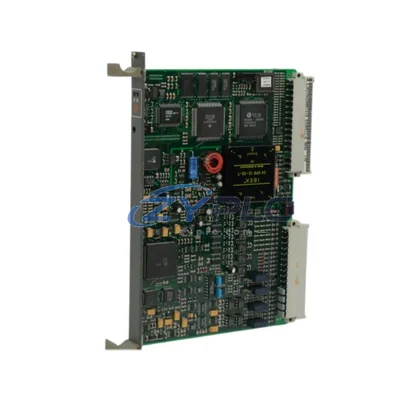
ABB 216DB61 HESG324063R100 I/O Module for DSQC: Compatibility and Replacement Notes
In modern industrial automation, the reliability of a control system depends not on any single component, but on the seamless coordination of every layer within the architecture. The ABB 216DB61 HESG324063R100 is a dedicated Robot I/O Module engineered for integration within ABB’s DSQC (Digital Signal Quality Control) platform, serving as a critical signal interface node between the robot controller, field devices, and the broader distributed control infrastructure. Its role spans the I/O layer, the control layer, and the communication layer simultaneously — making it a foundational element in any DSQC-based system design.
When deploying the ABB IRC5 robot controller as the central processing unit, the 216DB61 HESG324063R100 functions as the primary digital I/O expansion interface, enabling the controller to receive and transmit discrete signals from end-effectors, safety interlocks, conveyor encoders, and peripheral actuators. This direct coupling between the IRC5 controller and the I/O module ensures deterministic signal latency, which is essential in high-speed pick-and-place, welding, and assembly applications where cycle time tolerances are measured in milliseconds.
The module’s architecture is designed for system integration — meaning it does not operate as a standalone device but as a node within a coordinated signal chain. Upstream, it interfaces with the DSQC 652 digital I/O board and the DSQC 661 axis computer, receiving configuration parameters and real-time control commands. Downstream, it drives field-level devices including pneumatic valve terminals, servo drive enable signals, and safety relay modules. This bidirectional signal management ensures that the robot cell maintains operational coherence even during dynamic load changes or emergency stop sequences.
From a network and communication perspective, the 216DB61 HESG324063R100 supports integration within ABB’s internal backplane bus architecture, coordinating with the DSQC 668 fieldbus adapter to extend I/O capacity across DeviceNet, PROFIBUS-DP, or EtherNet/IP networks depending on the system configuration. This flexibility allows engineers to deploy the module in both legacy DSQC installations and modernized hybrid architectures where multiple communication protocols coexist within the same control cabinet.
Power layer coordination is equally important. The module is designed to operate in conjunction with the DSQC 609 power supply unit, which provides regulated 24VDC to the I/O backplane. Proper power sequencing between the DSQC 609 and the 216DB61 ensures that all I/O channels initialize in a defined state at system startup, preventing spurious output signals that could trigger unintended actuator movement during the boot sequence. Engineers commissioning new robot cells should verify power rail stability before enabling I/O channel mapping in RobotStudio or the FlexPendant teach pendant interface.
At the human-machine interface layer, the 216DB61 HESG324063R100 status signals are typically surfaced through the ABB FlexPendant or integrated SCADA visualization platforms. Diagnostic LEDs on the module provide real-time channel status, while fault codes are propagated to the IRC5 event log for systematic troubleshooting. This transparency reduces mean time to repair (MTTR) in production environments where unplanned downtime carries significant cost implications.
For system architects designing redundant robot cells, the 216DB61 can be deployed in parallel I/O configurations where a secondary module mirrors the primary channel assignments. Combined with the DSQC 663 safety module, this redundancy architecture satisfies PLd/SIL2 safety requirements for collaborative and semi-collaborative robot installations. The ability to hot-swap the module in certain DSQC configurations further enhances system availability, allowing maintenance teams to replace faulty units without a full cell shutdown.
Long-term maintenance planning benefits significantly from standardizing on the 216DB61 HESG324063R100 across multiple robot cells within the same facility. Spare parts inventory is simplified, technician training requirements are reduced, and firmware compatibility across the DSQC platform remains consistent. ZYPLC maintains availability subject to RFQ confirmation of this module with full functional testing completed prior to shipment, supported by a warranty terms confirmed during quotation covering all electrical and mechanical defects under normal operating conditions.
Product Specification Table
| Parameter |
Specification |
| System Role |
Robot I/O Expansion Module — DSQC Platform |
| Part Number |
216DB61 / HESG324063R100 |
| Brand |
ABB |
| Series |
DSQC (Digital Signal Quality Control) |
| Compatible Controller |
ABB IRC5, S4C+ |
| I/O Type |
Digital Input / Digital Output |
| Operating Voltage |
24VDC (via DSQC 609 Power Supply) |
| Communication Interface |
ABB Internal Backplane Bus; Fieldbus via DSQC 668 Adapter |
| Supported Protocols |
DeviceNet, PROFIBUS-DP, EtherNet/IP (adapter-dependent) |
| Installation Environment |
Control Cabinet, DIN Rail or Backplane Mount |
| Operating Temperature |
0°C to +55°C |
| Origin |
Sweden |
| Warranty |
warranty terms confirmed during quotation — All electrical and mechanical defects covered |
System Compatibility Notes
The 216DB61 HESG324063R100 achieves its full performance potential when deployed within a complete DSQC system architecture. A typical coordinated robot cell built around this module includes the following components working in concert:
The ABB IRC5 Robot Controller serves as the central processing and motion control unit, issuing real-time commands to the 216DB61 via the internal backplane. The DSQC 652 Digital I/O Board provides additional discrete channel capacity, expanding the total I/O count available to the IRC5 for complex multi-device coordination. The DSQC 661 Axis Computer manages servo axis interpolation and communicates motion state data to the I/O layer, ensuring that output signals are synchronized with robot trajectory execution.
The DSQC 609 Power Supply Unit delivers regulated 24VDC to the backplane, maintaining voltage stability across all connected modules including the 216DB61. The DSQC 668 Fieldbus Adapter bridges the internal backplane to external field networks, enabling the I/O module’s channel data to be shared with upstream PLCs or DCS platforms via PROFIBUS-DP or EtherNet/IP. The DSQC 663 Safety Module monitors emergency stop circuits and safety gate inputs, with its output states directly influencing the enable logic of the 216DB61’s output channels.
At the field level, the ABB FlexPendant Teach Pendant provides the operator interface for I/O diagnostics, manual output forcing during commissioning, and real-time channel monitoring. Terminal block assemblies and Phoenix Contact or Weidmüller signal conditioning modules are commonly installed adjacent to the 216DB61 in the control cabinet, providing surge protection and signal isolation for field wiring. Together, these components form a tightly integrated architecture where the 216DB61 HESG324063R100 acts as the critical signal gateway between the robot controller and the physical process.
Industrial Application Notes
The ABB 216DB61 HESG324063R100 is deployed across a wide range of industrial sectors where robot-integrated automation is essential to production efficiency and process reliability.
In automotive manufacturing, the module supports spot welding and body assembly robot cells where precise I/O synchronization between the IRC5 controller, welding timers, and conveyor indexing systems is mandatory. In electronics and semiconductor packaging, it enables high-speed pick-and-place operations where sub-millisecond I/O response times directly impact throughput and yield rates.
In power generation and electrical equipment manufacturing, the 216DB61 is integrated into transformer winding and switchgear assembly lines, where its reliable digital output channels control pneumatic clamping fixtures and torque tool enable signals. In petrochemical and process industries, robot cells equipped with this module handle drum filling, valve assembly, and hazardous material handling tasks, with the DSQC 663 safety module providing the required functional safety layer.
In food and beverage packaging, the module coordinates robot gripper actuation, conveyor belt control, and vision system trigger signals within high-hygiene environments. In metal fabrication and welding, it manages arc-on signals, wire feed enable outputs, and torch positioning feedback within MIG/TIG welding robot cells. Across all these applications, the 216DB61 HESG324063R100’s role as a system-integrated I/O node — rather than a standalone device — is what delivers consistent, maintainable, and scalable automation performance.
Product Compatibility FAQ
Q1: Is the ABB 216DB61 HESG324063R100 compatible with both IRC5 and S4C+ robot controllers?
The 216DB61 HESG324063R100 is primarily designed for the DSQC platform, which spans both the S4C+ and IRC5 controller generations. However, backplane connector configurations and firmware versions may differ between controller generations. Engineers should verify the specific DSQC system version and backplane slot assignment in the robot controller’s hardware documentation before installation. ZYPLC’s technical team can assist with compatibility confirmation based on your controller serial number and DSQC system revision.
Q2: Can this module be installed or replaced without a full robot cell shutdown?
In certain DSQC configurations, the 216DB61 supports hot-swap replacement when the system is in a safe, non-operational state with I/O channels disabled. A full power-down of the IRC5 controller is generally recommended for first-time installation to ensure correct backplane initialization and channel mapping. For replacement in production environments, consult the ABB DSQC hardware manual for your specific controller version and follow the lockout/tagout procedure before module removal. After reinstallation, re-validate all I/O channel assignments via RobotStudio or the FlexPendant before resuming production.
Q3: What does the warranty terms confirmed during quotation cover, and what is the support process?
ZYPLC’s warranty terms confirmed during quotation covers all electrical and mechanical defects in the ABB 216DB61 HESG324063R100 under normal operating conditions, including channel failure, backplane connector damage, and firmware-related hardware faults. The warranty does not cover damage resulting from incorrect installation, overvoltage events, or unauthorized modification. To initiate a warranty claim, contact ZYPLC at plc.sales@zyplc.com or +86 19859288691 with your order reference and a description of the fault. Replacement or repair will be processed within the agreed service timeline.