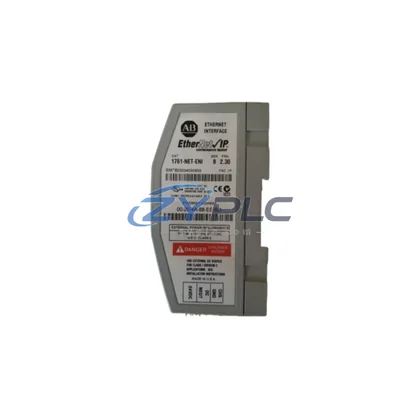
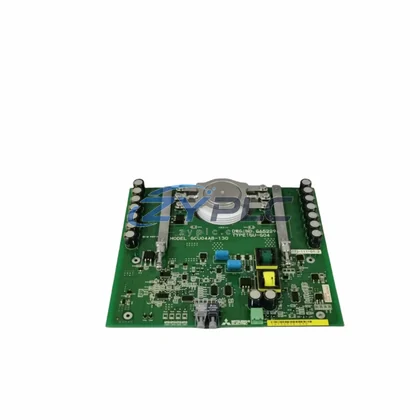
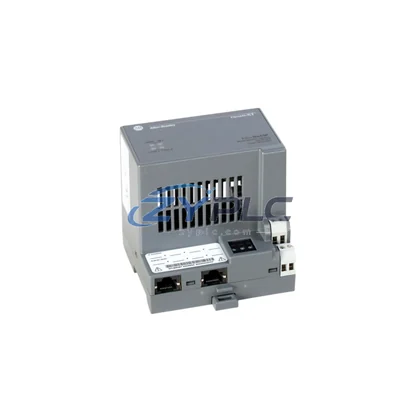
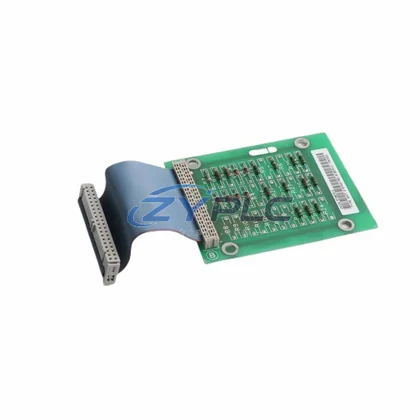
ABB 3BHE006373R0101 XVC769 AE101 Interface for AC800PEC
The ABB 3BHE006373R0101 XVC769 AE101 is a precision-engineered interface board designed to operate at the heart of the AC800PEC excitation control platform — one of ABB’s most robust and widely deployed architectures in power generation and industrial drive applications. Rather than functioning as a standalone component, this interface board serves as a critical signal bridge within a layered automation system, enabling seamless communication between the control layer, I/O layer, and power electronics layer. Its role in maintaining system coherence, signal integrity, and real-time responsiveness makes it indispensable in high-availability environments where downtime carries significant operational and financial consequences.
In a complete AC800PEC-based control system, the 3BHE006373R0101 XVC769 AE101 interfaces directly with the main processor module and coordinates with excitation I/O boards, feedback signal conditioners, and gate pulse distribution units. The board is engineered to handle the precise timing and synchronization demands of excitation control, where microsecond-level accuracy directly affects generator stability and grid compliance. Its integration into the AC800PEC rack architecture ensures that signal routing between the CPU and downstream power conversion stages remains deterministic and noise-immune — a requirement that cannot be compromised in utility-scale or industrial power systems.
From a system architecture perspective, this interface board occupies the interface layer between the digital control domain and the analog/power electronics domain. It receives setpoint commands from the AC800PEC processor, conditions and distributes those signals to thyristor firing circuits or IGBT gate drivers, and simultaneously feeds back real-time measurements — including field current, terminal voltage, and reactive power — to the control loop. This bidirectional signal flow is what enables the AC800PEC platform to maintain closed-loop excitation control with the precision required by IEEE and IEC grid codes.
Product Specification Table
| Parameter |
Specification |
| Part Number |
3BHE006373R0101 |
| Module Designation |
XVC769 AE101 |
| Brand |
ABB |
| Series / Platform |
AC800PEC Excitation Control System |
| System Role |
Interface Board — Control-to-Power Electronics Signal Bridge |
| Product Type |
Interface Board / Signal Conditioning Module |
| Communication Capability |
Internal rack bus; compatible with AC800PEC backplane communication protocol |
| Electrical Interface |
Low-voltage signal I/O; isolated analog and digital channels |
| Installation Environment |
Control cabinet / excitation panel; DIN rail or rack-mount compatible |
| Operating Temperature |
0°C to +55°C (standard industrial range) |
| Origin |
Germany (ABB manufacturing) |
| Warranty |
warranty terms confirmed during quotation — covers functional defects under normal operating conditions |
| Condition |
New / Refurbished — tested and verified prior to shipment |
System Compatibility Notes
The 3BHE006373R0101 XVC769 AE101 does not operate in isolation — its value is fully realized when integrated into a complete AC800PEC control architecture. In a typical excitation system deployment, this interface board works in close coordination with the AC800PEC CPU module (such as the PPD113 or PPD512 processor), which executes the excitation control algorithm and issues real-time setpoint commands. The interface board translates these digital commands into conditioned analog signals suitable for downstream power electronics.
On the I/O layer, the board interfaces with XVC768 and XVC770 series I/O modules, which handle analog measurement inputs including PT100 temperature sensors, current transformers, and voltage transducers. These measurements are fed back through the interface board to the CPU for closed-loop regulation. The SDCS-CON-4 control board and SDCS-PIN-48 power interface board — common in ABB DCS800 and ACS800 drive platforms that share architectural DNA with the AC800PEC — represent the kind of layered signal management this interface board is designed to complement.
At the power electronics layer, the XVC769 AE101 coordinates gate pulse signals to thyristor firing boards (such as the SDCS-FEX-2 or equivalent excitation bridge firing units), ensuring that field current regulation remains synchronized with the generator’s rotor position and terminal voltage. This synchronization is critical in multi-machine bus systems where reactive power sharing between parallel generators must be tightly controlled.
For redundancy-critical applications, the AC800PEC platform supports hot-standby CPU redundancy, and the interface board is designed to remain operational during CPU switchover events without introducing signal transients to the excitation bridge. This characteristic makes it suitable for deployment in nuclear auxiliary power systems, combined-cycle gas turbine (CCGT) plants, and large hydro generation facilities where excitation continuity is a grid stability requirement.
The network and communication layer of the AC800PEC system typically includes PROFIBUS DP gateways, Modbus TCP communication modules, and ABB’s proprietary DDCS (Distributed Drive Control System) fiber-optic communication links. The interface board’s backplane connectivity ensures it participates in the system’s real-time data exchange without introducing latency that could destabilize the control loop. Integration with ABB’s Advant OCS or Symphony Plus DCS platforms via OPC-UA or PROFIBUS further extends the system’s supervisory capabilities.
At the HMI layer, operators interact with the excitation system through ABB Panel 800 operator terminals or CP600 HMI panels, which display real-time excitation parameters — field current, AVR mode status, reactive power output — sourced from the CPU via the interface board’s signal chain. This end-to-end data visibility is essential for both routine operation and fault diagnosis.
Industrial Application Notes
Power Generation: In thermal, hydro, and gas turbine power plants, the 3BHE006373R0101 XVC769 AE101 is deployed within the automatic voltage regulator (AVR) cabinet to manage field excitation of synchronous generators. Its ability to maintain precise field current control under varying load conditions directly supports grid voltage stability and reactive power compensation — functions mandated by national grid codes in China, Europe, and Southeast Asia.
Petrochemical and Refinery Applications: Large synchronous motors driving compressors and pumps in petrochemical facilities rely on excitation control systems to maintain power factor and prevent voltage collapse during motor starting. The AC800PEC platform with this interface board provides the deterministic control response required in SIL-rated process environments, where control system failures can trigger emergency shutdowns with significant production impact.
Mining and Metallurgy: In mining hoists, ball mill drives, and smelting furnace power supplies, excitation control boards like the XVC769 AE101 manage the field current of wound-rotor motors and synchronous drives. The harsh electromagnetic environment of these facilities demands the board’s isolated signal channels and robust backplane communication to prevent noise-induced control errors.
Water Treatment and Pumping Stations: Municipal water authorities operating large synchronous pump motors use AC800PEC-based excitation systems to optimize reactive power consumption and reduce electricity tariff penalties. The interface board’s role in maintaining AVR stability across varying pump load profiles is critical to both operational efficiency and equipment longevity.
Packaging and Process Manufacturing: In high-speed packaging lines and continuous process plants, coordinated drive systems require excitation control modules that can respond to rapid load changes without introducing voltage transients. The 3BHE006373R0101 XVC769 AE101 supports these dynamic requirements through its low-latency signal path and compatibility with the AC800PEC’s fast control cycle times.
Product Compatibility FAQ
Q1: Is the 3BHE006373R0101 XVC769 AE101 compatible with all AC800PEC system configurations, and can it be used as a direct replacement in existing installations?
A: The XVC769 AE101 interface board is designed specifically for the AC800PEC excitation control platform and is compatible with standard AC800PEC rack configurations using the XVC769 series backplane. As a direct replacement, it maintains pin-compatible connectivity with the existing backplane and CPU modules, allowing in-situ replacement without rewiring. However, firmware version alignment between the interface board and the CPU module should be verified prior to installation — particularly in systems running ABB’s UNITROL 6000 or UNITROL 1000 excitation software — to ensure system integration and avoid parameter mismatch faults during commissioning.
Q2: What does the warranty terms confirmed during quotation cover, and what are the conditions for warranty claims on this interface board?
A: The warranty terms confirmed during quotation covers functional defects in the interface board arising from manufacturing faults or component failure under normal operating conditions as specified in the AC800PEC system documentation. The warranty period begins from the date of shipment. To initiate a warranty claim, the board must be returned with documentation of the fault condition, installation environment, and operating parameters at the time of failure. Physical damage resulting from incorrect installation, overvoltage events, or operation outside the specified temperature and humidity range is excluded from warranty coverage. Our technical team provides pre-shipment functional testing and burn-in verification to minimize field failure rates.
Q3: How should the 3BHE006373R0101 XVC769 AE101 be commissioned in a redundant AC800PEC architecture, and what maintenance schedule is recommended for long-term reliability?
A: In redundant AC800PEC configurations, the interface board should be installed in the primary excitation rack with the standby CPU configured for bumpless transfer. During commissioning, signal calibration should be performed with the generator at no-load to establish baseline field current and voltage feedback references. The AVR control loop should then be tuned incrementally under load using the AC800PEC’s built-in step response tools. For long-term maintenance, a biannual inspection of backplane connector integrity, signal cable shielding continuity, and cooling airflow through the excitation cabinet is recommended. Boards operating in high-humidity or high-vibration environments should be inspected annually for conformal coating integrity and connector oxidation. Maintaining a spare XVC769 AE101 in inventory is strongly recommended for facilities where excitation system downtime directly impacts generation capacity or process continuity.