Mitsubishi GU-G04 GCU04AB Industrial Network Interface for MELDAS Systems: Precision Data Link for Smart Factory Connectivity
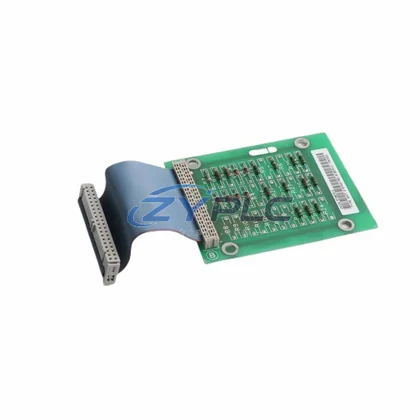
The Mitsubishi GU-G04 GCU04AB (SKU: GU-G04 GCU04AB-130 80173-111-01-2) is a high-performance thyristor control board engineered for the MELDAS CNC platform — one of Mitsubishi Electric’s most trusted servo and spindle control architectures in precision manufacturing. Designed to serve as the critical communication and power regulation interface between CNC controllers, servo drives, and field-level devices, this board plays a foundational role in maintaining real-time data integrity across the entire machine control network. Whether deployed in a standalone machining center or integrated into a multi-axis SCADA-monitored production line, the GU-G04 GCU04AB delivers the signal stability and protocol compatibility that modern smart factories demand.
In industrial environments where milliseconds matter, the GU-G04 GCU04AB acts as the nerve center of the MELDAS control loop. It manages thyristor firing sequences that regulate spindle motor power, while simultaneously maintaining synchronization with the CNC controller’s internal communication bus. This dual role — power regulation and data communication — makes it indispensable in high-throughput machining operations where any signal interruption translates directly into production loss.
Compatibility & Integration Notes
| Parameter |
Specification |
| SKU |
GU-G04 GCU04AB-130 80173-111-01-2 |
| Brand |
Mitsubishi Electric |
| Series |
MELDAS CNC Control Platform |
| Product Type |
Thyristor Control Board / CNC Communication Interface |
| Protocol Support |
MELDAS Proprietary CNC Bus, Serial Communication Interface |
| Interface Type |
Internal CNC Backplane / Servo Drive Communication Port |
| Transmission Capability |
Real-time spindle feedback, thyristor gate signal, encoder data relay |
| Network Compatibility |
MELDAS 500/600/700 Series CNC Controllers |
| System Application |
CNC Machining Centers, Turning Centers, Multi-axis Servo Systems |
| Origin |
Japan |
| Warranty |
warranty terms confirmed during quotation | Verified Pre-shipment Testing |
Connected Automation Data Flow
Understanding the GU-G04 GCU04AB’s role requires tracing the full data flow from field device to supervisory system. At the machine level, spindle encoders and current sensors feed real-time feedback signals into the MELDAS CNC controller — typically a Mitsubishi M64S, M70, or M700 series unit. The GU-G04 GCU04AB receives firing commands from the controller’s servo amplifier communication bus and translates them into precise thyristor gate pulses that regulate AC power delivery to the spindle motor.
This signal chain extends upward through the factory network. The MELDAS controller communicates with Mitsubishi MR-J4 or MR-J5 servo amplifiers via SSCNET III/H fiber optic bus, ensuring deterministic, noise-immune data transmission across multi-axis configurations. At the I/O level, Mitsubishi QX40 or QX80 remote I/O modules relay discrete signals — limit switches, tool sensors, coolant flow indicators — back to the PLC layer, where a Mitsubishi MELSEC Q-series or iQ-R series PLC aggregates process data and forwards it to the plant SCADA system.
HMI visibility is provided through Mitsubishi GT2000 series GOT terminals, which display real-time spindle load, alarm status, and axis position data pulled directly from the MELDAS controller. For plants running Mitsubishi MX MESInterface or a third-party SCADA platform such as Wonderware or iFIX, the CNC data is bridged via an MC Protocol gateway or OPC-UA server, enabling seamless integration into MES and ERP layers. Edge computing nodes — such as Mitsubishi MELIPC industrial PCs — can further process this data stream for predictive maintenance analytics, feeding anomaly detection algorithms that flag thyristor degradation before it causes unplanned downtime.
In multi-machine environments, managed industrial Ethernet switches with PROFINET or EtherNet/IP support aggregate data from multiple MELDAS cells into a unified plant backbone, where the GU-G04 GCU04AB’s health status is continuously monitored alongside spindle current trends, temperature readings, and cycle time metrics. This end-to-end connectivity — from thyristor gate to cloud dashboard — is what transforms a conventional machining center into a fully transparent Industry 4.0 node.
Solving Data Isolation in Industrial Sites
One of the most persistent challenges in legacy CNC environments is protocol fragmentation. Older MELDAS installations often run proprietary serial communication schemes that cannot natively interface with modern Ethernet-based SCADA or MES platforms. The GU-G04 GCU04AB, as the core control board within the MELDAS architecture, is the starting point for any protocol modernization initiative. By ensuring this board is fully functional and correctly interfaced, engineers can deploy MC Protocol converters or OPC-UA gateways downstream to bridge the MELDAS data stream into standard industrial network topologies.
Data isolation — where spindle performance data remains trapped inside the CNC controller and never reaches the plant floor dashboard — is directly addressed by maintaining a healthy GU-G04 GCU04AB. A degraded or failed thyristor board introduces communication errors that corrupt the feedback loop, making it impossible for upstream systems to receive accurate spindle load or alarm data. Replacing or restoring this board restores the integrity of the entire data chain, enabling remote diagnostics, alarm forwarding, and production transparency.
For plants pursuing production line digitization, the GU-G04 GCU04AB also supports system expansion. As machining cells are added to the network, each new MELDAS controller requires a verified thyristor control board to participate in the plant-wide data fabric. Stocking verified, warranty-backed units ensures that expansion projects are not delayed by component sourcing bottlenecks. Our pre-shipment testing protocol validates each GU-G04 GCU04AB against Mitsubishi’s original performance specifications before dispatch, and every unit ships with a warranty terms confirmed during quotation covering both functional performance and communication integrity.
Industrial Connectivity FAQ
Q1: What communication protocols does the GU-G04 GCU04AB support, and is it compatible with modern SCADA systems?
The GU-G04 GCU04AB operates within the MELDAS proprietary CNC communication bus, which interfaces natively with Mitsubishi MELDAS 500, 600, and 700 series controllers. For SCADA integration, the MELDAS controller can be connected to standard industrial networks via MC Protocol, SLMP, or OPC-UA gateways, allowing the thyristor board’s operational data to flow into Wonderware, iFIX, or Mitsubishi MX MESInterface platforms without modification to the board itself.
Q2: How does the GU-G04 GCU04AB affect network stability and communication latency in multi-axis CNC systems?
A fully functional GU-G04 GCU04AB ensures that thyristor firing commands are executed with microsecond-level precision, eliminating the communication jitter that can cause servo synchronization errors in multi-axis configurations. Degraded thyristor boards introduce noise into the feedback loop, which manifests as increased communication latency and intermittent alarm triggers. Replacing a faulty board with a verified unit restores deterministic communication performance across the SSCNET III/H servo bus.
Q3: Can the GU-G04 GCU04AB be used in system expansion projects, and what is the lead time for availability subject to RFQ confirmation?
Yes. The GU-G04 GCU04AB is suitable for both direct replacement and new system expansion within MELDAS-based machining environments. We maintain verified inventory with pre-shipment testing completed, and standard orders ship via DHL or FedEx within 3-5 business days. For large-quantity expansion projects, please contact our sales team for dedicated stock allocation and project pricing.
Q4: What does the warranty terms confirmed during quotation cover, and how is pre-shipment testing conducted?
Every GU-G04 GCU04AB unit undergoes functional verification against Mitsubishi’s original performance parameters before dispatch, including thyristor gate signal integrity, communication bus response, and thermal performance under load simulation. The warranty terms confirmed during quotation covers all functional defects arising from normal industrial operation, including communication failures, thyristor misfiring, and board-level component degradation. Warranty claims are processed with priority turnaround to minimize production downtime.