ABB 3BHE024747R0101 GDC801A101: Industrial Data Link and Smart Factory Connectivity for GDC801 Drive Systems
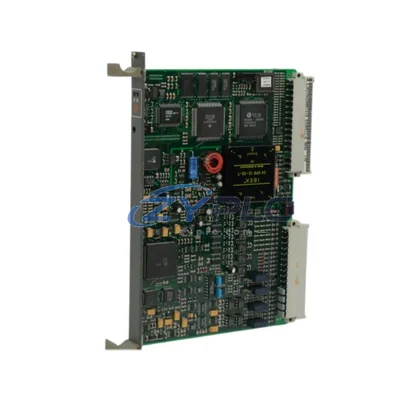
The ABB 3BHE024747R0101 GDC801A101 is a high-performance gate drive control board engineered for ABB’s GDC801 series medium-voltage drive platforms, including the ACS800 and ACS2000 drive families. Designed to serve as the critical communication and control interface between power electronics and upper-level automation systems, this PC board enables seamless data exchange across the full industrial network stack — from field-level signal acquisition through protocol conversion, real-time network transmission, SCADA integration, and remote diagnostics.
In modern smart factory environments, the integrity of the data link between drive hardware and supervisory systems is non-negotiable. The GDC801A101 board sits at the heart of this link, managing gate firing signals, fault detection, and status feedback while simultaneously interfacing with the drive’s communication backbone. Whether deployed in a standalone drive cabinet or integrated into a distributed automation architecture, this board ensures that every data point — from motor current and voltage feedback to thermal alarms and trip events — is accurately captured, processed, and transmitted upstream without latency or data loss.
Compatibility & Integration Notes
| Parameter |
Specification |
| SKU |
3BHE024747R0101 GDC801A101 |
| Brand |
ABB |
| Series |
GDC801 |
| Product Type |
Gate Drive Control Board (PC Board) |
| Compatible Drive Platforms |
ACS800, ACS2000, ACS880 (via adapter), Medium Voltage Drives |
| Communication Protocols Supported |
DDCS (Distributed Drive Control System), PROFIBUS-DP, Modbus RTU, EtherNet/IP (via RDNA/RETA modules) |
| Interface Types |
Fiber Optic (DDCS), RS-485, Industrial Ethernet (via communication adapter) |
| Network Compatibility |
ABB DriveAP, ABB Drives Connect, DCS800 control platform, PROFIBUS network segments |
| System Applications |
SCADA integration, DCS/PLC control loops, HMI drive monitoring, remote I/O feedback, predictive maintenance |
| Origin |
Sweden (SE) |
| Warranty |
Warranty and support terms confirmed before quote |
| Availability |
Verified Availability confirmed by RFQ | shipment timing confirmed after RFQ |
Connected Automation Data Flow
The ABB 3BHE024747R0101 GDC801A101 operates as the nerve center of the drive’s internal communication architecture. In a typical ACS800 installation, the data flow begins at the sensor and transducer layer — current transformers, PT100 temperature sensors, and encoder feedback modules feed real-time signals into the drive’s I/O interface. The GDC801A101 board processes these signals and coordinates gate firing sequences for the IGBT power modules, while simultaneously packaging status data for transmission over the DDCS fiber optic link to the upper control layer.
At the PLC level, an ABB AC500 PLC or ABB Freelance DCS controller receives drive status data via the PROFIBUS-DP network, enabled by the ABB RPBA-01 PROFIBUS Adapter mounted on the drive’s communication slot. This adapter bridges the drive’s internal DDCS protocol to the plant-wide PROFIBUS segment, allowing the PLC to issue speed references, torque commands, and start/stop signals while reading back actual values, fault codes, and energy consumption data in real time.
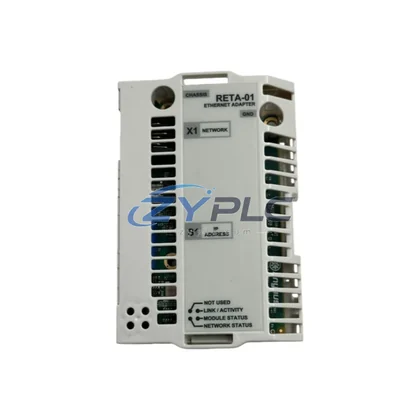
For facilities running EtherNet/IP or Modbus TCP networks, the ABB RETA-01 Ethernet Adapter or ABB RDNA-01 DeviceNet Adapter can be paired with the GDC801A101 board to extend connectivity to Ethernet-based SCADA platforms such as ABB System 800xA, Wonderware InTouch, or Ignition SCADA. The HMI layer — typically an ABB CP600 Panel or third-party Weintek/Siemens HMI — subscribes to drive data tags published over the Ethernet network, enabling operators to monitor motor speed, output frequency, DC bus voltage, and fault history from a centralized touchscreen interface.
In multi-drive installations, the GDC801A101 board supports master-follower configurations via the DDCS link, where a master drive coordinates speed synchronization across multiple ACS800 follower drives on the same production line. This architecture is common in paper mills, steel rolling lines, and conveyor systems where precise speed ratio control is critical. The ABB NDBU-95 DDCS Branch Unit serves as the fiber optic hub in these topologies, distributing the DDCS signal from the master controller to up to eight follower drives simultaneously.
Edge-level data aggregation is handled by ABB Edge Computing Gateways or third-party devices such as the Moxa MGate MB3000 series, which collect Modbus RTU data from multiple drives and publish it to cloud-based analytics platforms via MQTT or OPC-UA. This enables predictive maintenance algorithms to analyze vibration trends, thermal profiles, and energy consumption patterns across the entire drive fleet, triggering maintenance alerts before failures occur.
Solving Data Isolation in Industrial Sites
One of the most persistent challenges in industrial automation is the fragmentation of communication protocols across different generations of equipment. A plant may simultaneously operate legacy Modbus RTU devices, mid-generation PROFIBUS networks, and modern EtherNet/IP infrastructure — creating data silos that prevent unified monitoring and control. The ABB 3BHE024747R0101 GDC801A101 addresses this challenge by serving as a protocol-agnostic control core that supports multiple communication adapters, allowing the same drive hardware to participate in virtually any network architecture.
Remote monitoring is another area where this board delivers significant value. By enabling continuous DDCS communication between the drive and the control room, operators can access real-time fault diagnostics, parameter logs, and performance trends without physically accessing the drive cabinet. This is particularly valuable in hazardous environments such as offshore platforms, chemical plants, and mining operations where drive cabinets may be located in restricted areas. Remote parameter adjustment via the PROFIBUS or Ethernet link eliminates the need for on-site service visits for routine tuning tasks.
Production line transparency is achieved through the board’s ability to feed structured data into SCADA historian databases. Every drive event — start, stop, fault, speed change, energy spike — is timestamped and logged, creating a complete audit trail for quality management and OEE (Overall Equipment Effectiveness) analysis. This data transparency enables production managers to identify bottlenecks, optimize energy consumption, and reduce downtime through data-driven maintenance scheduling.
System scalability is built into the GDC801A101’s architecture. As production capacity expands, additional drives equipped with compatible GDC801-series boards can be added to the DDCS network without reconfiguring the existing communication infrastructure. The modular adapter system ensures that new drives can be integrated into the existing PROFIBUS, EtherNet/IP, or Modbus network segments with minimal engineering effort, protecting the plant’s investment in its automation infrastructure.
Every ABB 3BHE024747R0101 GDC801A101 unit supplied by ZYPLC undergoes pre-shipment functional testing to verify communication integrity, gate signal output, and fault detection response. Units are shipped with full warranty and support terms confirmed before quote coverage, ensuring that any manufacturing defects or premature failures are addressed at no additional cost to the customer.
Industrial Connectivity FAQ
Q1: What communication protocols does the ABB 3BHE024747R0101 GDC801A101 support, and how does it integrate with existing SCADA systems?
The GDC801A101 board natively supports ABB’s DDCS fiber optic protocol for internal drive communication. External protocol support — including PROFIBUS-DP, Modbus RTU, EtherNet/IP, and DeviceNet — is achieved through ABB’s range of plug-in communication adapters (RPBA-01, RMBA-01, RETA-01, RDNA-01). This modular approach allows the drive to integrate with virtually any SCADA or DCS platform without hardware redesign.
Q2: How does the board ensure network stability and minimize communication latency in high-speed drive applications?
The DDCS fiber optic link provides electrically isolated, noise-immune communication at cycle times as fast as 2ms, making it suitable for high-dynamic applications such as winders, extruders, and servo-class positioning systems. The fiber optic medium eliminates ground loop interference and EMI-induced data corruption that commonly affect copper-based fieldbus networks in drive environments.
Q3: Can the GDC801A101 board be used in multi-drive master-follower configurations, and what network topology is required?
Yes. The GDC801A101 supports ABB’s master-follower functionality via the DDCS link, enabling precise speed and torque synchronization across multiple drives. The recommended topology uses the ABB NDBU-95 DDCS Branch Unit as a fiber optic hub, supporting up to eight follower drives per branch unit. This configuration is widely used in coordinated multi-motor applications such as rolling mills, winding lines, and multi-pump systems.
Q4: What warranty and pre-shipment testing does ZYPLC provide for the ABB 3BHE024747R0101 GDC801A101?
Warranty terms are confirmed during quotation. Prior to dispatch, each board undergoes functional verification testing including communication link integrity checks, gate signal output validation, and fault detection response testing. Units are packaged in anti-static ESD-safe materials and shipped via DHL or FedEx with full tracking. Expedited shipping options are available for urgent requirements.