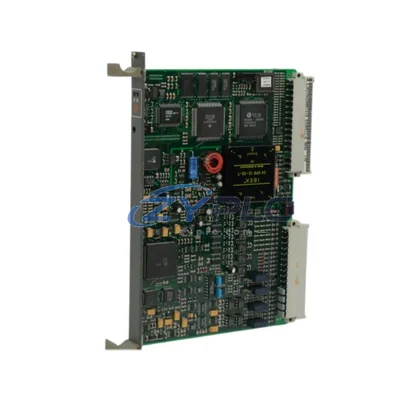
ABB 3BHE026284R0102 UAD215 Analog I/O for Symphony Plus: Compatibility and Replacement Notes
The ABB 3BHE026284R0102 UAD215 is a high-performance analog input/output module engineered specifically for deployment within the ABB Symphony Plus distributed control system (DCS) architecture. Rather than functioning as a standalone component, the UAD215 is designed to operate as an integral node within a layered automation hierarchy — coordinating signal acquisition, process feedback, and command output across the control layer, I/O layer, network layer, power layer, HMI layer, and actuator layer simultaneously. Its role in maintaining system consistency, expanding I/O capacity, supporting redundancy configurations, and reducing long-term maintenance overhead makes it a critical asset in any Symphony Plus-based control environment.
In modern industrial automation, the reliability of an analog I/O module directly determines the accuracy of process control loops. The UAD215 module interfaces with field instruments — including transmitters, positioners, and sensors — and delivers conditioned analog signals to the Symphony Plus controller platform. This tight integration with the broader control architecture ensures that signal integrity is preserved from the field device all the way through to the operator workstation, enabling precise closed-loop control across complex process environments.
Product Specification Table
| Parameter |
Specification |
| Part Number |
3BHE026284R0102 |
| Module Designation |
UAD215 |
| Brand |
ABB |
| Series |
Symphony Plus (S+) |
| System Role |
Analog Input/Output Module for DCS I/O Layer |
| Module Type |
DCS Analog I/O Module |
| Signal Type |
Analog Input / Analog Output (4–20 mA, ±10 V typical) |
| Communication Interface |
Symphony Plus internal backplane bus |
| Installation Method |
Rack-mounted, Symphony Plus I/O rack compatible |
| Operating Temperature |
0°C to +60°C (standard industrial range) |
| Power Supply |
Supplied via Symphony Plus rack backplane |
| Country of Origin |
Germany |
| Redundancy Support |
Compatible with Symphony Plus redundant I/O configurations |
| Warranty |
Warranty and condition confirmed before quote |
| Availability |
Availability confirmed by RFQ — shipment arranged after confirmation |
System Compatibility Notes
The ABB 3BHE026284R0102 UAD215 module does not operate in isolation. Its value is fully realized when considered within the complete Symphony Plus control system architecture, where it works in concert with a range of coordinated components across every system layer.
At the controller layer, the UAD215 interfaces directly with Symphony Plus process controllers such as the AC800M or the Symphony Plus-native PM891 controller module, which orchestrate all process logic and closed-loop control algorithms. The analog signals acquired by the UAD215 are passed to these controllers via the Symphony Plus backplane, enabling real-time PID regulation, cascade control, and feedforward strategies without introducing latency or signal degradation.
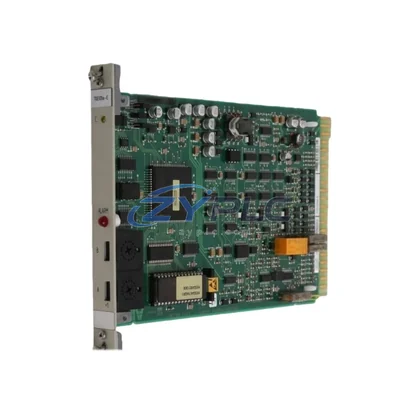
Within the I/O layer, the UAD215 is typically installed alongside complementary modules such as the UAI216 analog input module and the UAO215 analog output module, forming a complete signal conditioning and distribution subsystem. Digital I/O modules such as the UDI216 and UDO216 are often co-located in the same I/O rack, allowing the system designer to consolidate both analog and digital field signals within a single rack assembly, reducing cabinet footprint and simplifying field wiring.
The network layer of a Symphony Plus system typically incorporates CI854 or CI858 communication interface modules, which bridge the Symphony Plus controller network with PROFIBUS DP or FOUNDATION Fieldbus field device networks. The UAD215 complements these communication gateways by handling hardwired analog signals from legacy field instruments that are not yet migrated to digital fieldbus protocols — ensuring backward compatibility while the broader system evolves toward fully digital architectures.
Power integrity is maintained through dedicated Symphony Plus rack power supply units such as the SD821 or SD822 power supply modules, which deliver regulated DC power to the I/O rack backplane. The UAD215 draws its operating power from this backplane, and its low power consumption profile ensures that multiple modules can be populated within a single rack without exceeding the power budget of the supply unit.
At the human-machine interface layer, operator workstations running ABB System 800xA or Symphony Plus Operations provide real-time visualization of the analog process values acquired by the UAD215. Trend displays, alarm management, and process graphics are all driven by the data streams that originate at the UAD215 module level, making the module’s signal accuracy directly visible to plant operators and process engineers.
Finally, at the actuator layer, the analog output channels of the UAD215 drive field devices such as control valves, variable frequency drives (VFDs), and electro-pneumatic positioners. The precision and stability of the UAD215’s output signal directly determines the positioning accuracy of these final control elements, which in turn governs the quality of the overall process control response.
Industrial Application Notes
The ABB 3BHE026284R0102 UAD215 module is deployed across a wide range of industrial sectors where Symphony Plus DCS platforms are the control backbone of choice.
In power generation and utilities, the UAD215 is used to monitor and control critical process variables such as steam pressure, feedwater flow, turbine speed feedback, and boiler drum level. Its high-resolution analog input channels ensure that small deviations in process conditions are detected and corrected before they escalate into process upsets or equipment trips.
In oil, gas, and petrochemical processing, the UAD215 supports continuous process control in distillation columns, heat exchangers, compressor trains, and pipeline pressure regulation systems. Its compatibility with HART-enabled field instruments allows plant engineers to perform remote device diagnostics without interrupting the primary 4–20 mA control signal.
In water and wastewater treatment, the UAD215 is used to regulate dosing pump outputs, monitor flow rates and pH levels, and control aeration blower speeds. The module’s stable analog output performance ensures that chemical dosing remains within tight tolerances, protecting both process quality and environmental compliance.
In mining and metallurgical processing, the UAD215 supports control of ore slurry flow, flotation cell level, crusher load feedback, and smelter temperature regulation. The module’s robust design and wide operating temperature range make it suitable for the demanding environmental conditions typical of mineral processing facilities.
In pharmaceutical and food manufacturing, the UAD215 is used in batch process control applications where analog signal accuracy is critical for maintaining product quality and regulatory compliance. Its integration within the Symphony Plus DCS ensures full audit trail capability and batch record integrity.
Product Compatibility FAQ
Q1: Is the ABB 3BHE026284R0102 UAD215 compatible with existing Symphony Plus I/O racks, and can it be added to an operational system without a full shutdown?
A: Yes. The UAD215 is designed for installation within standard Symphony Plus I/O racks and is compatible with the existing Symphony Plus backplane architecture. In many configurations, Symphony Plus supports hot-swap module replacement, allowing the UAD215 to be inserted or replaced while the rack remains energized, subject to the specific rack type and system configuration. Engineers should verify the hot-swap capability of their specific rack assembly and follow ABB’s module insertion procedures to avoid signal disruption during the exchange.
Q2: How does the UAD215 support redundant I/O configurations in high-availability Symphony Plus architectures?
A: The Symphony Plus architecture supports redundant I/O configurations in which paired I/O modules operate in a primary/backup relationship. The UAD215 can be configured as part of a redundant I/O pair, where the backup module continuously monitors the primary module’s health and assumes control of field signal processing in the event of a primary module failure. This redundancy configuration eliminates the I/O module as a single point of failure in the control system, which is essential for applications in power generation, oil and gas, and other safety-critical industries. Redundancy configuration is managed through the Symphony Plus engineering environment and does not require hardware modification of the module itself.
Q3: What does the Warranty and condition confirmed before quote cover for the ABB 3BHE026284R0102 UAD215, and what support is available for long-term maintenance planning?
A: Every ABB 3BHE026284R0102 UAD215 module supplied by ZYPLC is covered by a Warranty and condition confirmed before quote against manufacturing defects and functional failures under normal operating conditions. During the warranty period, ZYPLC provides replacement or repair support for modules that fail to perform to specification. For long-term maintenance planning, ZYPLC supports RFQ-based sourcing of Symphony Plus I/O modules including the UAD215, enabling customers to establish strategic spare parts holdings that protect against extended lead times from the original manufacturer. Our technical team can assist with compatibility verification, system architecture review, and module commissioning guidance to ensure that replacement modules are integrated correctly into the existing control system.