ABB 3HAC030162-001 I/O for IRC5: Control System Integration and Upstream–Downstream Coordination
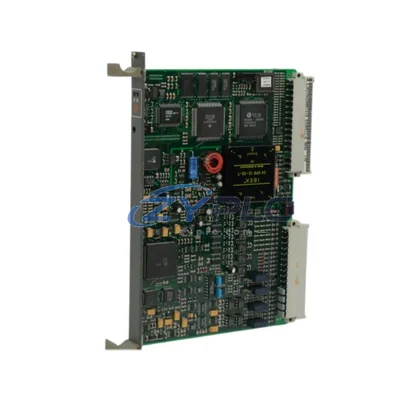
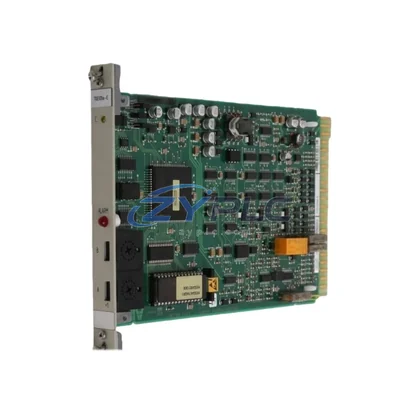
The ABB 3HAC030162-001, commercially designated as the DSQC 400, is a distributed I/O module engineered for seamless integration within the ABB IRC5 robot controller architecture. Rather than functioning as a standalone component, this module is designed to operate as a coordinated node within a layered automation system — bridging the control layer, I/O layer, and field device layer in a unified, deterministic signal environment. Its role in the IRC5 cabinet ecosystem makes it a critical element for engineers designing high-availability robotic cells, flexible manufacturing lines, and process-critical automation platforms.
In modern industrial automation, the reliability of a robotic system is not determined by any single component but by the coherence of the entire control architecture. The DSQC 400 3HAC030162-001 contributes to this coherence by providing stable, high-density digital I/O capacity that integrates directly with the IRC5 main computer — typically the DSQC 639 or DSQC 652 — through the internal DeviceNet backbone. This ensures that signal latency is minimized, scan cycles remain consistent, and the controller’s execution environment remains deterministic across all operating modes.
From a system architecture perspective, the 3HAC030162-001 occupies the I/O layer of the IRC5 cabinet, receiving commands from the main CPU module and translating them into discrete output signals for actuators, solenoids, safety relays, and end-of-arm tooling. Simultaneously, it captures digital feedback from field sensors, proximity switches, and interlock circuits, feeding this data back to the controller for real-time process evaluation. This bidirectional signal flow is fundamental to closed-loop robotic control and is what distinguishes a properly architected system from a loosely assembled one.
Product Specification Table
| Parameter |
Specification |
| Part Number |
3HAC030162-001 |
| Commercial Designation |
DSQC 400 |
| Brand |
ABB Robotics |
| Compatible Controller |
IRC5 (Single Cabinet, Dual Cabinet, Panel Mounted) |
| System Role |
Distributed Digital I/O Module — I/O Layer |
| Communication Interface |
DeviceNet (internal IRC5 backbone) |
| Digital Inputs |
16 x 24VDC digital inputs |
| Digital Outputs |
16 x 24VDC digital outputs (source type) |
| Supply Voltage |
24VDC (supplied via IRC5 internal power distribution) |
| Power Consumption |
Approx. 10W (typical load) |
| Mounting |
DIN rail / IRC5 cabinet internal mounting |
| Operating Temperature |
0°C to +55°C |
| Protection Class |
IP20 (cabinet-mounted) |
| Country of Origin |
Sweden |
| system integration |
Fully compatible with IRC5 RobotWare 5.x / 6.x environments |
| Warranty |
warranty terms confirmed during quotation (ZYPLC) |
System Compatibility Notes
The DSQC 400 3HAC030162-001 does not operate in isolation — its value is realized through its coordinated role within the broader IRC5 control platform. A complete IRC5-based robotic cell typically integrates the following components alongside the 3HAC030162-001:
At the controller core, the DSQC 639 (3HAC025097-001) main computer board serves as the central processing unit, executing RobotWare motion programs and managing all I/O communication via the internal DeviceNet bus. The DSQC 400 connects to this bus as a slave node, receiving output commands and returning input status in each scan cycle. For systems requiring expanded I/O capacity, additional DSQC 652 (3HAC025784-001) digital I/O boards can be added to the same DeviceNet segment, allowing the architecture to scale without modifying the control logic.
Power distribution within the IRC5 cabinet is managed by the DSQC 661 (3HAC026253-001) power supply unit, which provides regulated 24VDC to all internal modules including the 3HAC030162-001. Stable power delivery is essential for I/O module reliability, particularly in high-cycle applications where voltage transients can cause spurious input triggers or output dropouts. The DSQC 661 is designed to maintain output regulation even under dynamic load conditions typical of multi-axis robotic operation.
For applications requiring fieldbus connectivity to external PLCs or SCADA systems, the DSQC 658 (3HAC030923-001) Profibus adapter or the DSQC 688 (3HAC026254-001) EtherNet/IP module can be integrated into the IRC5 architecture. These communication gateways allow the IRC5 controller — and by extension the I/O data managed by the 3HAC030162-001 — to be exposed to supervisory control systems, enabling coordinated multi-robot or multi-machine production sequences.
At the human-machine interface layer, the FlexPendant (3HAC028357-001) provides operators with real-time visibility into I/O states, program execution status, and alarm conditions. Engineers can monitor the digital input and output states of the DSQC 400 directly from the FlexPendant I/O panel, simplifying commissioning and fault diagnosis without requiring external diagnostic tools.
For safety-critical applications, the IRC5 architecture supports integration with the DSQC 643 (3HAC024488-001) safety board, which manages emergency stop circuits, safeguard inputs, and enabling device signals. The interaction between the safety layer and the standard I/O layer — including the 3HAC030162-001 — must be carefully mapped during system design to ensure that safety-rated signals are never routed through standard I/O modules, maintaining SIL/PLd compliance.
Industrial Application Notes
The ABB 3HAC030162-001 finds application across a wide range of industrial sectors where the IRC5 platform is deployed as the primary robot controller.
In automotive manufacturing, IRC5-controlled robots perform spot welding, seam sealing, and body assembly operations. The DSQC 400 manages the discrete I/O signals associated with weld gun actuation, clamp confirmation, part-present detection, and conveyor interlock — all of which must be processed within the robot’s motion cycle without introducing latency that could affect weld quality or throughput.
In electronics and semiconductor assembly, where cycle times are measured in milliseconds and positional repeatability is critical, the deterministic I/O scanning of the DSQC 400 ensures that pick-and-place sequences, vision system triggers, and vacuum gripper controls are executed with the precision required for sub-millimeter component placement.
In food and beverage packaging lines, the 3HAC030162-001 supports high-speed palletizing and case-packing applications where robots must coordinate with upstream conveyors, downstream wrapping machines, and line management PLCs. The module’s ability to handle 16 simultaneous digital inputs allows complex interlock logic to be implemented directly within the IRC5 environment, reducing the need for external relay panels.
In metal fabrication and press tending applications, the DSQC 400 manages press cycle signals, part ejection confirmation, and safety gate interlocks, enabling the IRC5 robot to operate in synchronized mode with hydraulic or mechanical presses — a demanding application that requires both fast I/O response and robust signal integrity.
For process industries including petrochemical, water treatment, and power generation facilities where ABB robots are used for inspection, valve operation, or sample handling, the 3HAC030162-001 provides the field-level I/O interface that connects the robot’s control logic to process instrumentation and field devices, supporting long-term, low-maintenance operation in environments where unplanned downtime carries significant operational cost.
Product Compatibility FAQ
Q1: Is the DSQC 400 3HAC030162-001 compatible with all IRC5 controller variants, and can it be used alongside other DSQC I/O modules on the same DeviceNet segment?
Yes. The 3HAC030162-001 is compatible with all IRC5 variants including the standard single-cabinet controller, the dual-cabinet controller for high-power robots, and the panel-mounted IRC5 used in compact cell designs. It communicates via the IRC5 internal DeviceNet backbone and can coexist with other DSQC I/O modules — such as the DSQC 652 analog I/O board or additional DSQC 400 units — on the same segment, provided that each module is assigned a unique DeviceNet node address. Node address configuration is performed via the onboard rotary switches and must be completed before installation to avoid address conflicts that could cause communication faults.
Q2: What is the recommended procedure for replacing a DSQC 400 in a live production environment, and how does the warranty terms confirmed during quotation support maintenance planning?
Module replacement should be performed with the IRC5 controller in a safe, powered-down state following the lockout/tagout procedure defined in the site’s maintenance protocol. After physical replacement, the new module must be configured with the same DeviceNet node address as the original unit. If the IRC5 system configuration has been backed up using RobotWare’s backup function, the I/O configuration will be restored automatically upon system restart without requiring manual re-mapping of signals. The warranty terms confirmed during quotation provided by ZYPLC covers the replacement unit against manufacturing defects and functional failures, giving maintenance teams a defined warranty period within which defective units can be exchanged — supporting predictive maintenance planning and reducing the financial risk associated with spare parts procurement.
Q3: How should the 3HAC030162-001 be integrated into a redundant or high-availability IRC5 architecture, and what are the key considerations for long-term system reliability?
While the IRC5 platform does not natively support hot-standby I/O redundancy at the module level in standard configurations, high-availability designs can be achieved through architectural measures including maintaining a validated spare DSQC 400 unit in the control cabinet or on-site spare parts inventory, implementing software-based I/O diagnostics within the RobotWare RAPID program to detect module communication faults before they cause production stops, and designing the I/O signal map with sufficient margin to allow graceful degradation if a subset of I/O points becomes unavailable. For long-term reliability, it is recommended to inspect module connector integrity and DeviceNet cable termination resistors during scheduled maintenance intervals, as connector oxidation and impedance mismatches are the most common causes of intermittent I/O communication faults in mature IRC5 installations. ZYPLC supports RFQ sourcing for the 3HAC030162-001 to support rapid spare parts fulfillment, minimizing mean time to repair for facilities that depend on IRC5-based automation.