ABB 3HAC14549-3 Rectifier for IRC5 Automation: Precision Power Control for Efficient Production Lines
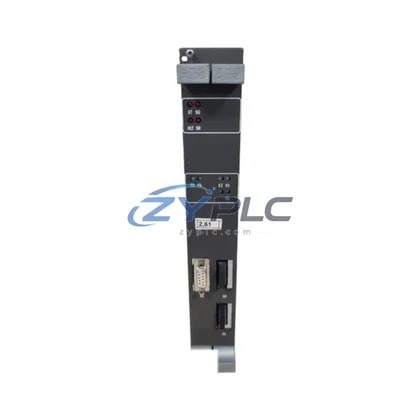
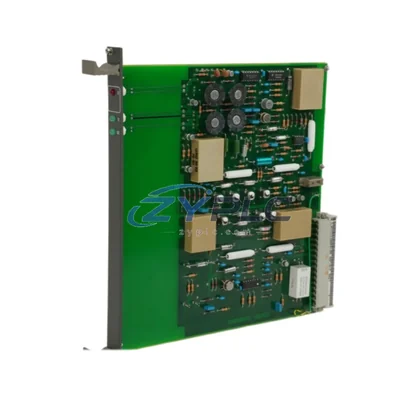
The ABB 3HAC14549-3 is a high-efficiency rectifier module engineered specifically for the ABB IRC5 robot controller platform. As the core power conversion component within the IRC5 drive system, it transforms AC mains supply into stable DC bus voltage that feeds the axis drive units responsible for all robot motion. In energy-intensive manufacturing environments — automotive body shops, electronics assembly lines, metal fabrication cells — the quality and efficiency of this rectification stage directly determines how much electrical energy is converted into productive mechanical work versus lost as heat. The 3HAC14549-3 is designed to minimize that loss, delivering tightly regulated DC output that keeps downstream drive modules operating within their optimal efficiency bands.
Product Specification Table
| Parameter |
Specification |
| SKU / Part Number |
3HAC14549-3 |
| Brand |
ABB |
| Series |
IRC5 |
| Product Type |
Rectifier Module |
| Power Conversion Stage |
AC-to-DC Rectification |
| Compatible Controller |
ABB IRC5 Single / Dual Cabinet |
| Compatible Drive Units |
IRC5 Axis Drive Modules (e.g. 3HAC024144-001, 3HAC17484-1) |
| Operating Environment |
Industrial Automation, Robotics, Welding, Assembly |
| Efficiency Benefit |
Stable DC bus reduces drive derating, lowers thermal losses |
| Maintenance Value |
Reduces reactive power demand; supports regenerative braking energy reuse |
| Origin |
Sweden (ABB Robotics) |
| Warranty |
warranty terms confirmed during quotation |
| Stock Status |
RFQ Available — Ships After Outgoing Test |
System Compatibility and Application
Within the ABB IRC5 control architecture, the 3HAC14549-3 rectifier module sits at the very front of the power chain. Mains AC power enters the IRC5 cabinet, passes through the main contactor and EMC filter stage, and is then converted by this rectifier into the DC bus voltage that all axis drive units share. The stability of this DC bus is critical: voltage ripple or sag at this stage propagates directly into torque ripple at the motor shaft, degrading both positioning accuracy and energy efficiency.
The axis drive modules — such as the ABB 3HAC024144-001 drive unit and the 3HAC17484-1 capacitor module — depend on a clean, well-regulated DC bus to execute the IGBT switching sequences that control motor current. When the rectifier delivers consistent voltage, the drive units can operate at higher modulation indices, reducing switching losses and improving overall system efficiency. In a six-axis robot running continuous welding or palletizing cycles, this translates to measurable reductions in kWh consumption per production shift.
The IRC5 controller’s DSQC661 main computer board and DSQC662 fieldbus adapter coordinate motion commands with real-time feedback from resolver or encoder signals. The accuracy of this closed-loop control depends on stable power delivery from the rectifier stage. Voltage instability at the DC bus forces the drive control algorithms to apply corrective current pulses, increasing I²R losses in the motor windings and shortening insulation life. By maintaining a clean DC bus, the 3HAC14549-3 directly supports the energy efficiency of the entire servo loop.
For facilities running multiple IRC5 cells, integrating a ABB CP600 HMI panel or a DSQC1000 FlexPendant interface allows operators to monitor drive status and energy consumption trends in real time. When paired with an ABB PowerMonitor or a third-party power quality analyzer connected via the IRC5’s DeviceNet or PROFINET fieldbus interface, plant engineers can log DC bus voltage, input current harmonics, and power factor data — creating the data foundation for ISO 50001 maintenance planning compliance.
The IRC5 platform also supports regenerative energy feedback through compatible drive configurations. When robot axes decelerate, kinetic energy is returned to the DC bus. A properly functioning 3HAC14549-3 rectifier, working in conjunction with the 3HAC026253-001 bleeder resistor module, ensures that regenerated energy is either reused within the bus or safely dissipated — preventing overvoltage faults that would otherwise trigger emergency stops and interrupt production rhythm.
Maintenance and Replacement Notes
In automotive stamping and welding lines where ABB IRB 6700 or IRB 7600 robots operate on 24/7 schedules, unplanned downtime caused by rectifier failure can cost tens of thousands of dollars per hour in lost production. The ABB 3HAC14549-3 is a direct OEM replacement that restores the IRC5 drive system to factory specification, eliminating the efficiency degradation that occurs when aging rectifier components allow DC bus voltage to drift outside tolerance.
A failing rectifier module typically manifests as intermittent drive fault codes — often appearing as overcurrent or undervoltage alarms on the IRC5 FlexPendant. These faults force the controller into protective shutdown, interrupting the production cycle and requiring manual restart. Each restart cycle consumes additional energy as motors re-accelerate from standstill. Replacing a degraded rectifier with a tested 3HAC14549-3 unit eliminates these fault-driven restarts, restoring smooth production rhythm and reducing the energy penalty of repeated acceleration cycles.
From a predictive maintenance perspective, monitoring DC bus voltage stability over time — using the IRC5’s built-in diagnostics or an external power quality logger — allows maintenance teams to identify rectifier degradation before it causes a production stop. ZYPLC recommends establishing a baseline DC bus voltage profile during commissioning and scheduling rectifier inspection at 20,000-hour intervals or whenever bus voltage ripple exceeds 2% of nominal. Proactive replacement of the 3HAC14549-3 at end-of-life, rather than waiting for failure, reduces total unplanned downtime and avoids the higher cost of emergency procurement.
Every 3HAC14549-3 unit shipped by ZYPLC undergoes a full outgoing functional test under load conditions before dispatch. This test verifies output voltage regulation, ripple performance, and thermal behavior — ensuring that the module will perform to ABB specification from the first power-on in your facility. Combined with our warranty terms confirmed during quotation, this testing protocol gives maintenance engineers confidence that the replacement module will not introduce new failure modes into a production-critical robot cell.
Product Sourcing FAQ
Q1: How does replacing the 3HAC14549-3 rectifier module reduce energy consumption in an IRC5 robot cell?
A degraded rectifier allows DC bus voltage to sag and ripple, forcing axis drive modules to draw higher peak currents to maintain torque output. Higher peak currents increase I²R losses in both the drive IGBT modules and the motor windings. Replacing the rectifier with a new 3HAC14549-3 restores stable DC bus voltage, allowing the drives to operate at lower peak currents and reducing overall system power consumption — typically by 3–8% in continuous-duty applications.
Q2: Is the ABB 3HAC14549-3 compatible with all IRC5 cabinet variants?
The 3HAC14549-3 is designed for the ABB IRC5 controller platform, including the IRC5 Single Cabinet and IRC5 Dual Cabinet configurations used with IRB 1600, IRB 2600, IRB 4600, IRB 6640, and IRB 6700 series robots. Compatibility should be verified against your specific cabinet revision and drive configuration. ZYPLC’s technical team can assist with cross-referencing your cabinet serial number to confirm fitment before purchase.
Q3: What is the recommended replacement interval, and how does timely replacement affect production line efficiency?
ABB recommends inspecting rectifier module performance at major service intervals (typically every 20,000 operating hours). In high-duty-cycle applications such as automotive welding or continuous palletizing, earlier inspection may be warranted. Timely replacement prevents the progressive efficiency losses associated with component aging — including increased bus ripple, higher drive fault frequency, and reduced regenerative braking effectiveness — all of which increase energy consumption and reduce production throughput.
Q4: What does the warranty terms confirmed during quotation cover, and what testing is performed before shipment?
ZYPLC’s warranty terms confirmed during quotation covers manufacturing defects and functional failures under normal operating conditions. Prior to shipment, every 3HAC14549-3 unit undergoes a full outgoing functional test that verifies DC output voltage regulation, ripple performance, and thermal characteristics under load. This test protocol ensures the module meets ABB OEM performance specifications and will integrate seamlessly into your IRC5 drive system without requiring additional commissioning adjustments.