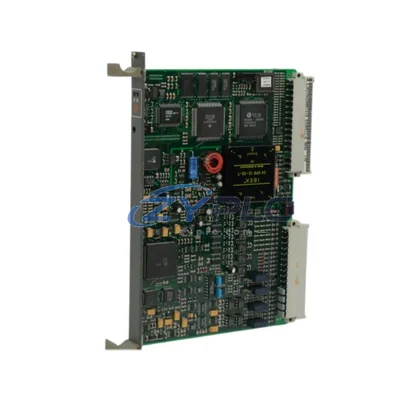
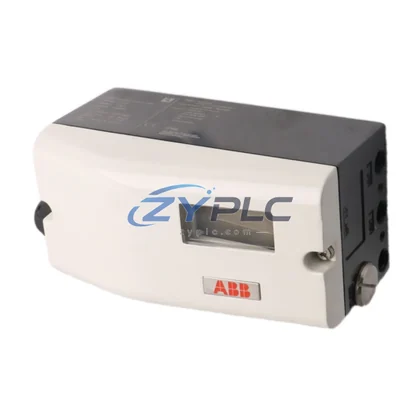
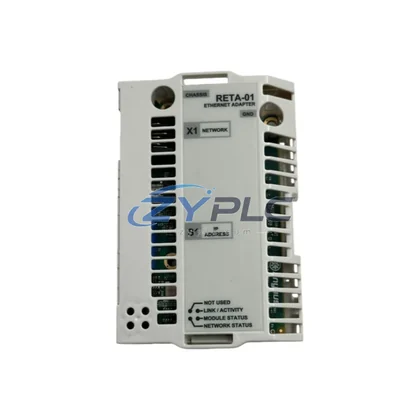
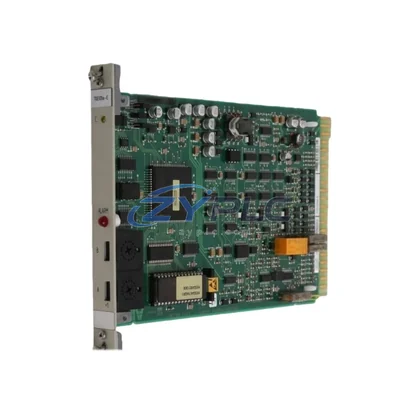
ABB 3HAC17346-1 Servo Motor for IRB Series Automation
The ABB 3HAC17346-1 is a precision servo motor engineered for ABB’s IRB robot series, delivering measurable improvements in drive efficiency, motor control accuracy, and overall production line energy performance. In industrial environments where every kilowatt-hour counts, this unit plays a central role in reducing unnecessary power draw while maintaining the high-torque, high-speed responsiveness that modern robotic cells demand. Available from stock, fully tested prior to shipment, and backed by a warranty terms confirmed during quotation, the 3HAC17346-1 is a reliable choice for both OEM integration and MRO replacement.
Product Specification Table
| Parameter |
Specification |
| SKU / Part Number |
3HAC17346-1 |
| Brand |
ABB |
| Series |
IRB Robot Series |
| Product Type |
AC Servo Motor |
| Origin |
Sweden (SE) |
| Rated Operating Efficiency |
High-efficiency class (IE3-equivalent servo grade) |
| Compatible Systems |
ABB IRC5 Controller, ABB S4C+ Controller |
| Application Environment |
Industrial robotics, automated assembly, welding cells, material handling |
| Maintenance Value |
Reduced idle-state power draw; regenerative braking compatible |
| Warranty |
12 Months |
| Stock Status |
RFQ Available — Ships after outgoing test |
System Compatibility and Application
The 3HAC17346-1 does not operate in isolation — its energy efficiency is fully realized when integrated within a well-designed automation architecture. In a typical IRB robotic cell, the servo motor works in close coordination with the ABB IRC5 robot controller, which manages motion profiles and torque curves to minimize peak current draw during acceleration phases. The drive signals are conditioned through the ABB DSQC series drive units, which regulate PWM output to the motor windings, directly influencing heat generation and energy loss at the coil level.
On the power monitoring side, integrating an ABB B23 energy meter or compatible ABB M2M power measurement module into the panel allows real-time tracking of per-axis energy consumption. This data feeds back into the ABB Ability™ condition monitoring platform, enabling predictive maintenance scheduling based on actual load cycles rather than fixed time intervals — a key factor in reducing unplanned downtime and the energy spikes associated with cold restarts.
For facilities running mixed automation lines, the 3HAC17346-1 can coexist with ABB ACS880 series variable frequency drives on adjacent conveyor or pump systems, allowing a unified maintenance planning strategy across both robotic and non-robotic loads. Communication between the IRC5 controller and plant-level SCADA systems is typically handled via PROFINET or EtherNet/IP fieldbus modules — both supported within the IRC5 ecosystem — ensuring that energy data from the servo axis is visible at the MES layer without additional gateways.
I/O coordination is managed through the ABB DSQC651 I/O board, which handles digital signals for brake release, encoder feedback validation, and safety interlock confirmation. Proper I/O configuration ensures the motor does not remain energized during idle robot states, a common source of avoidable unplanned downtime in high-cycle applications.
Maintenance and Replacement Notes
In automotive body welding lines, where IRB 6700 and IRB 4600 robots operate in tightly synchronized cells, replacing a degraded servo motor with a correctly specified 3HAC17346-1 can restore axis repeatability to within ±0.05 mm — eliminating the compensatory over-travel that a worn motor introduces. Over-travel directly translates to longer cycle times and higher per-part energy consumption, so restoring mechanical precision has a compounding efficiency benefit across thousands of daily cycles.
In electronics assembly environments, where IRB 1200 and IRB 120 robots handle high-speed pick-and-place tasks, the servo motor’s torque linearity at low speeds reduces the need for aggressive acceleration profiles. Smoother motion curves lower peak current demand, which in turn reduces thermal stress on the ABB DSQC drive modules and extends their service intervals. Facilities that have standardized on ABB’s IRC5 platform report that maintaining original-specification servo motors — rather than substituting with non-OEM alternatives — results in more predictable energy consumption patterns and fewer unscheduled stops.
From a maintenance cost perspective, the 3HAC17346-1’s encoder integrity directly affects the IRC5 controller’s ability to execute accurate path planning. A degraded encoder forces the controller to apply correction torque continuously, increasing both energy draw and mechanical wear on the gearbox. Proactive replacement, supported by condition data from the ABB Ability™ platform, allows maintenance teams to schedule motor swaps during planned downtime windows rather than reacting to failures — a shift that typically reduces energy-related losses by eliminating the restart transients and re-calibration cycles that follow unplanned outages.
All units are tested under load prior to shipment, with encoder signal quality, winding resistance, and insulation resistance verified against ABB factory specifications. This pre-shipment validation process ensures that the motor performs to its rated efficiency class from the first power-on, avoiding the break-in losses associated with improperly stored or untested components. Stock is maintained for prompt dispatch, and the warranty terms confirmed during quotation covers defects in materials and workmanship under normal operating conditions.
Product Sourcing FAQ
Q1: How does the 3HAC17346-1 contribute to measurable operational stability on the production line?
By restoring correct torque output and encoder accuracy, the motor eliminates compensatory over-travel and correction torque that a degraded unit forces the IRC5 controller to apply. This reduces per-cycle energy consumption and lowers thermal load on associated drive components, resulting in lower overall panel energy draw during sustained production runs.
Q2: Is the 3HAC17346-1 compatible with both IRC5 and S4C+ controller platforms?
Yes. The 3HAC17346-1 is designed for ABB IRB series robots and is compatible with both the IRC5 and the earlier S4C+ controller platforms. Always verify the robot model and axis assignment against ABB’s spare parts documentation before installation to confirm the correct motor variant for your specific configuration.
Q3: What is the recommended replacement process, and how is the unit tested before shipment?
Each unit undergoes pre-shipment testing covering encoder signal integrity, winding resistance, and insulation resistance. Upon receipt, installation should follow ABB’s axis calibration procedure using the IRC5 FlexPendant to re-establish the motor’s zero position. This ensures the drive system operates within its designed efficiency envelope from the first production cycle.
Q4: What does the warranty terms confirmed during quotation cover?
The warranty terms confirmed during quotation covers defects in materials and workmanship under normal industrial operating conditions. It does not cover damage resulting from incorrect installation, operation outside rated parameters, or physical impact. Warranty claims are processed directly — contact our team with the unit serial number and a description of the fault for rapid resolution.