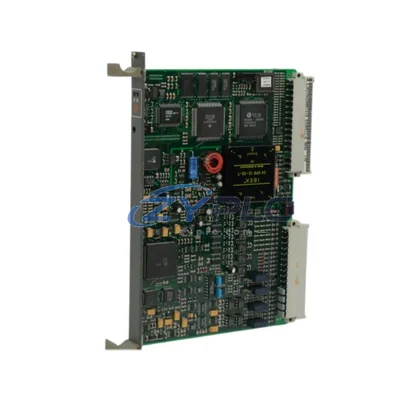
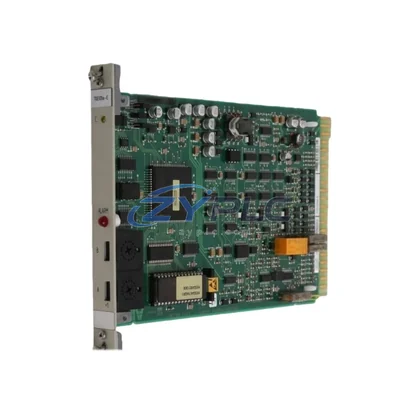
ABB 5366268-AB/2 DCS I/O Module for MOD 300: Compatibility and Replacement Notes
In modern distributed control system (DCS) deployments, every module must be evaluated not as a standalone component but as a functional node within a layered automation architecture. The ABB 5366268-AB/2 DCS I/O Module is engineered precisely for this role — serving as a reliable signal interface within ABB’s Advant OCS MOD 300 platform, coordinating seamlessly across the control layer, I/O layer, network layer, power layer, human-machine interface layer, and execution layer to deliver consistent, scalable, and maintainable process automation.
The MOD 300 system architecture is built around modular expansion and deterministic signal handling. The 5366268-AB/2 occupies a critical position in this hierarchy: it receives field-level process signals from sensors, transmitters, and actuators, conditions those signals, and passes structured data upward to the CPU and supervisory layers. This bidirectional signal flow is the backbone of real-time process control, and the integrity of that flow depends entirely on the quality and compatibility of each I/O module installed in the rack.
Product Specification Table
| Parameter |
Specification |
| System Role |
DCS Field I/O Interface Module — MOD 300 Architecture |
| Compatible Platform |
ABB Advant OCS MOD 300 |
| Module Type |
Distributed I/O Module |
| Signal Compatibility |
Analog / Digital process signals (platform-defined) |
| Backplane Interface |
MOD 300 rack-mount backplane bus |
| Communication Capability |
Advant Fieldbus / internal rack communication |
| Installation Environment |
Industrial control cabinet, DIN-rail or rack-mount |
| Origin |
Sweden (ABB AB) |
| Condition |
Tested, verified functional |
| Warranty |
warranty terms confirmed during quotation — full replacement or repair coverage |
System Compatibility Notes
The 5366268-AB/2 does not operate in isolation. Within a complete MOD 300 control cabinet, it works in close coordination with the ABB DSPC 172 or DSPC 110 processor modules, which serve as the central CPU units managing scan cycles, logic execution, and data aggregation. Power distribution to the rack is typically handled by the ABB DSPU 110 or DSTD 108 power supply units, ensuring stable voltage rails across all installed modules including the 5366268-AB/2.
On the network and communication layer, the MOD 300 system relies on the ABB DSSB 172 or DSCS 140 communication modules to bridge field data to supervisory SCADA or DCS operator stations. These modules share the same backplane infrastructure as the 5366268-AB/2, meaning that rack slot allocation, bus loading, and communication timing must all be considered during system engineering. Improper slot assignment can introduce latency or bus conflicts that degrade overall system responsiveness.
For I/O expansion, the 5366268-AB/2 is commonly paired with additional ABB DSAI 130 analog input modules and DSDO 115 digital output modules to build out a complete field interface layer. Terminal modules such as the ABB DSTC 190 or DSTC 120 provide the physical wiring interface between field cables and the backplane-mounted I/O modules, simplifying installation and enabling hot-swap maintenance without disturbing field wiring. In redundant architecture configurations, a secondary 5366268-AB/2 may be installed in a mirrored slot, with the ABB DSSR 122 redundancy switch module managing automatic failover to maintain uninterrupted process control.
At the human-machine interface layer, operator workstations running ABB’s Advant Station 500 series or compatible OPC-connected SCADA platforms receive real-time process values sourced directly from the I/O data collected by the 5366268-AB/2. This end-to-end data path — from field sensor through I/O module, across the backplane bus, through the CPU, and up to the HMI — must be engineered with consistent module revisions and firmware compatibility to avoid data integrity issues during long-term operation.
Industrial Application Notes
The ABB 5366268-AB/2 finds application across a broad range of process industries where the MOD 300 platform has been deployed. In power generation facilities, it interfaces with turbine control loops, boiler instrumentation, and generator protection systems, where signal accuracy and module reliability directly affect plant safety and output efficiency. In petrochemical and refinery environments, the module handles analog signals from pressure transmitters, flow meters, and temperature sensors distributed across hazardous process areas, with the MOD 300 architecture providing the deterministic scan rates required for tight process control.
Water treatment and municipal utility plants rely on MOD 300 systems for long-term, low-maintenance operation. The 5366268-AB/2 supports these installations by providing a stable I/O interface that can remain in service for extended periods without recalibration or replacement, reducing lifecycle costs. In mining and metallurgical operations, where vibration, dust, and temperature extremes challenge electronic components, the industrial-grade construction of ABB MOD 300 modules ensures continued operation within defined environmental limits.
Packaging lines and discrete manufacturing facilities that have integrated MOD 300 systems for process coordination also benefit from the modular expandability of the 5366268-AB/2. As production lines evolve and new instrumentation is added, additional I/O modules can be inserted into available rack slots without requiring changes to the existing control program structure, preserving engineering investment and minimizing commissioning time.
Product Compatibility FAQ
Q1: Is the ABB 5366268-AB/2 compatible with all MOD 300 rack configurations, and are there slot restrictions?
The 5366268-AB/2 is designed for the ABB Advant OCS MOD 300 backplane architecture. Slot placement should follow ABB’s system engineering guidelines for the specific rack type in use, as certain slots may be reserved for CPU, power, or communication modules. Always verify rack revision and backplane bus compatibility before installation to ensure correct module addressing and bus loading.
Q2: Can the 5366268-AB/2 be used in a redundant I/O architecture, and what additional components are required?
Yes, redundant I/O configurations are supported within the MOD 300 platform. Implementing redundancy typically requires a matched secondary 5366268-AB/2 module, a compatible redundancy switch module such as the ABB DSSR 122, and appropriate system configuration within the Advant engineering tool. Both modules must share the same hardware revision and firmware level to ensure seamless failover without process interruption.
Q3: What does the warranty terms confirmed during quotation cover, and how does system integration support long-term maintenance?
Every ABB 5366268-AB/2 supplied by ZYPLC is covered by a warranty terms confirmed during quotation that includes full repair or replacement for verified hardware defects under normal operating conditions. system integration support means our technical team can assist with system-level compatibility verification, rack configuration review, and installation guidance — ensuring the module is correctly matched to your existing MOD 300 architecture before deployment, reducing commissioning risk and long-term maintenance overhead.