ABB AFPS-61C Power Supply for Advant OCS
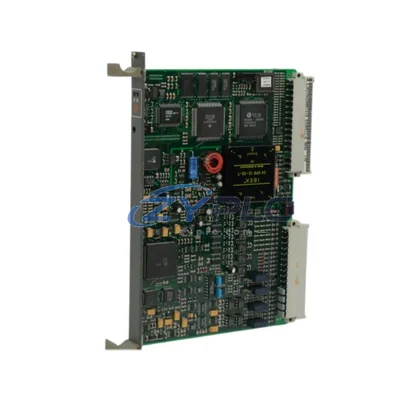
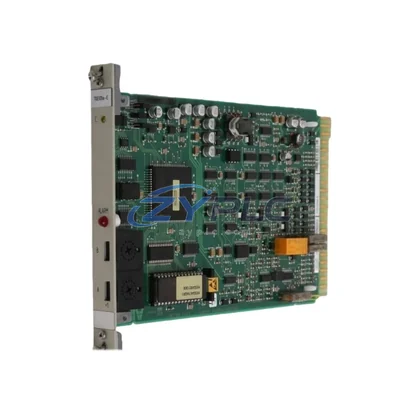
The ABB AFPS-61C is a dedicated power supply module engineered for deployment within the ABB Advant OCS (Open Control System) distributed control architecture. Rather than functioning as a standalone component, the AFPS-61C is designed from the ground up to serve as the foundational power layer of a multi-tier industrial automation system — delivering regulated, stable DC power to CPU modules, I/O expansion racks, and communication interfaces across the full control hierarchy. In complex process environments where uptime is non-negotiable, the AFPS-61C provides the electrical backbone that enables every upstream and downstream module to operate within its rated parameters.
Within the Advant OCS platform, the AFPS-61C integrates directly into the system rack alongside the ABB DSPC172 or DSPC110 processor modules, supplying conditioned power to the backplane bus and ensuring that signal integrity is maintained across all connected I/O modules. Its architecture supports the modular expansion philosophy of the Advant OCS system, where additional I/O racks — populated with modules such as the DSDP170 digital output module, DSAI130 analog input module, or DSDI110 digital input module — can be added without disrupting the power distribution topology. This scalability is critical in industries such as petrochemical processing, power generation, and water treatment, where control systems must grow alongside operational demands.
From a system architecture perspective, the AFPS-61C occupies the power layer that underpins the control layer, the I/O layer, and the communication layer simultaneously. The ABB Advant OCS platform relies on a deterministic communication backbone — typically implemented via the MasterBus 300 or PROFIBUS DP protocol — and the AFPS-61C ensures that communication gateway modules such as the DSCL110 or DSCS141 receive uninterrupted power, preventing packet loss or bus timeout faults that could cascade into process shutdowns. In redundant system configurations, dual AFPS-61C units can be deployed in parallel to eliminate the power supply as a single point of failure, a design approach strongly recommended for safety-critical applications in oil and gas, nuclear auxiliary systems, and high-availability manufacturing lines.
The human-machine interface layer also depends on stable power delivery from the AFPS-61C. Operator workstations and panel-mounted HMI terminals connected to the Advant OCS network require consistent bus voltage to maintain real-time data refresh rates and alarm response times. Any voltage sag or ripple introduced at the power supply level propagates through the backplane and can manifest as erratic HMI behavior, false alarms, or communication dropouts — all of which the AFPS-61C is specifically rated to prevent. Similarly, at the execution layer, variable frequency drives, servo controllers, and relay output modules that receive commands from the Advant OCS CPU depend on the I/O modules being powered correctly; the AFPS-61C ensures that the signal chain from the controller to the actuator remains electrically coherent.
For engineering teams responsible for long-term maintenance and lifecycle management of Advant OCS installations, the AFPS-61C represents a critical spare part that must be available on-site or through a reliable sourcing channel. Its compatibility with the ABB Advant OCS rack system means it can be replaced without reconfiguring the CPU or I/O modules, minimizing mean time to repair (MTTR) during unplanned outages. ZYPLC maintains availability subject to RFQ confirmation of the AFPS-61C and offers a warranty terms confirmed during quotation on all units, with pre-shipment functional testing to confirm output voltage stability, inrush current limiting, and thermal protection circuit integrity. Global logistics support ensures that replacement units can reach operational sites in Asia, Europe, the Middle East, and the Americas within lead times compatible with industrial maintenance schedules.
Product Specification Table
| Parameter |
Specification |
| System Role |
Rack Power Supply Module — Advant OCS Control System |
| Compatible Platform |
ABB Advant OCS (Open Control System) |
| Module Type |
DC Power Supply / Backplane Power Unit |
| Manufacturer |
ABB (ASEA Brown Boveri), Germany |
| SKU / Part Number |
AFPS-61C |
| Output Voltage |
24 VDC (regulated, backplane bus) |
| Input Voltage Range |
85–264 VAC, 47–63 Hz (universal input) |
| Protection Features |
Overcurrent, Overvoltage, Short-circuit, Thermal shutdown |
| Communication Layer Support |
MasterBus 300, PROFIBUS DP (via powered gateway modules) |
| Installation Environment |
Industrial control cabinet, DIN rail / rack-mount compatible |
| Operating Temperature |
0°C to +55°C |
| Redundancy Support |
Yes — parallel redundant configuration supported |
| Warranty |
warranty terms confirmed during quotation (ZYPLC availability subject to RFQ confirmation, pre-shipment tested) |
System Compatibility Notes
The AFPS-61C does not operate in isolation — its value is realized through its role as the power foundation for a coordinated suite of Advant OCS modules. In a typical system architecture, the AFPS-61C supplies the rack backplane that hosts the ABB DSPC172 CPU module, which executes the control program and manages all I/O polling cycles. Adjacent to the CPU, the ABB DSMB175 memory board retains the application program and configuration data, requiring stable 24 VDC supply to prevent data corruption during power cycling events.
On the I/O side, the AFPS-61C powers racks populated with modules such as the ABB DSAI130 analog input module for 4–20 mA process signal acquisition, the ABB DSDI110 digital input module for discrete field device status monitoring, and the ABB DSDP170 digital output module for relay-driven actuator control. Each of these modules draws regulated power from the backplane bus, and any deviation in supply voltage directly affects signal accuracy and output switching reliability.
At the communication layer, the ABB DSCL110 communication link module and ABB DSCS141 serial communication module depend on the AFPS-61C to maintain continuous bus power, ensuring that the MasterBus 300 network remains synchronized across all controller nodes. In larger installations, the ABB DSBC172 bus connection module extends the I/O bus to remote racks, and the AFPS-61C in each remote rack must be matched in specification to maintain uniform power distribution across the distributed architecture. Terminal modules and marshalling panels connected downstream of the I/O modules complete the signal chain, with the AFPS-61C ensuring that the entire electrical hierarchy from the CPU to the field terminal remains within design tolerances.
Industrial Application Notes
The ABB AFPS-61C finds application across a broad spectrum of process industries where the Advant OCS platform has been deployed as the primary distributed control system. In petrochemical and refinery environments, the AFPS-61C powers control racks managing reactor temperature loops, pressure control valves, and emergency shutdown sequences — applications where power supply failure is not an acceptable failure mode. Redundant AFPS-61C configurations are standard practice in these facilities, with automatic switchover ensuring zero-interruption power delivery to the control system.
In power generation and grid management applications, the Advant OCS system — powered by the AFPS-61C — manages turbine control, excitation systems, and switchgear automation. The module’s ability to accept a wide AC input voltage range makes it suitable for substations and generating stations where input power quality may vary. Water and wastewater treatment plants rely on the Advant OCS for pump sequencing, chemical dosing control, and SCADA integration, with the AFPS-61C providing the stable power foundation required for 24/7 continuous operation.
In mining and metallurgical processing, where control systems are exposed to vibration, dust, and wide ambient temperature ranges, the AFPS-61C’s robust thermal protection and wide operating temperature range make it a reliable choice for powering conveyor control, crusher automation, and smelting process management systems. Packaging and discrete manufacturing lines using the Advant OCS for machine sequencing and production counting also benefit from the AFPS-61C’s fast transient response, which prevents voltage dips during high-inrush motor start events from affecting the CPU or I/O modules.
Product Compatibility FAQ
Q1: Is the AFPS-61C compatible with all Advant OCS rack configurations, and can it be used in both master and expansion racks?
The AFPS-61C is designed for use within the ABB Advant OCS rack system and is compatible with both master controller racks and I/O expansion racks that share the same backplane bus standard. When deploying in expansion racks connected via the DSBC172 bus connection module, it is essential to verify that the AFPS-61C output voltage and current rating matches the total load of the modules installed in that rack. ZYPLC’s technical team can assist with load calculation and rack configuration validation prior to shipment.
Q2: How does the warranty terms confirmed during quotation apply, and what does pre-shipment testing cover?
All AFPS-61C units supplied by ZYPLC carry a warranty terms confirmed during quotation from the date of shipment. Pre-shipment testing includes output voltage regulation verification under load, inrush current limiting function check, overvoltage and overcurrent protection circuit validation, and thermal shutdown threshold confirmation. Units that do not pass all test parameters are quarantined and not shipped. Warranty claims are processed through ZYPLC’s after-sales team at plc.sales@zyplc.com, with replacement or repair turnaround coordinated to minimize site downtime.
Q3: What is the recommended maintenance interval for the AFPS-61C in continuous-operation industrial environments, and how should it be replaced without disrupting the control system?
In continuous-operation environments such as chemical plants or power stations, a proactive replacement interval of 8–10 years is recommended for power supply modules, or earlier if output voltage ripple measurements during scheduled maintenance indicate degradation. In systems with redundant AFPS-61C configurations, hot-swap replacement is possible by transferring the load to the redundant unit before removing the degraded module — a procedure that requires no CPU restart or I/O module reconfiguration. In non-redundant systems, a planned maintenance window with a pre-staged replacement unit is the recommended approach. ZYPLC maintains ready stock to support both planned and emergency replacement scenarios.