ABB AINT-14C Industrial Network Interface for MC Series Systems: Bridging the Industrial Data Link
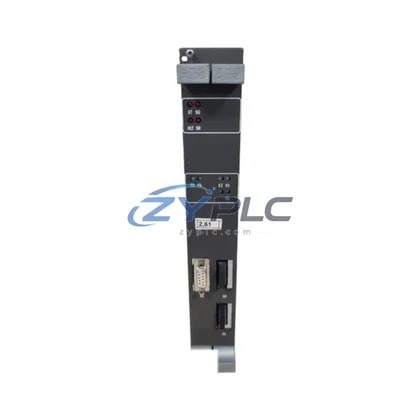
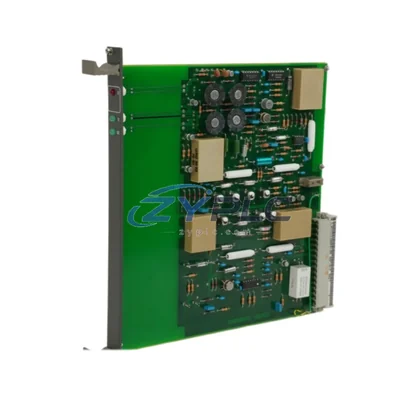
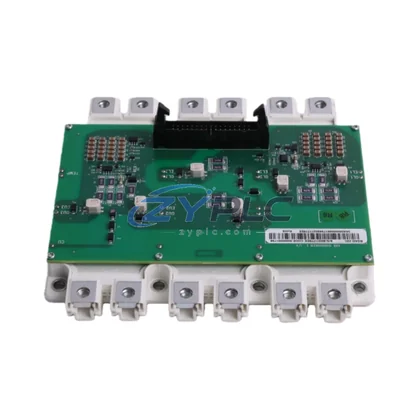
The ABB AINT-14C is a high-performance industrial network interface board engineered for ABB’s MC Series variable frequency drive platform. Designed to serve as the critical analog-to-digital gateway within smart factory automation architectures, the AINT-14C enables seamless signal acquisition, protocol conversion, and real-time data transmission across the full industrial connectivity hierarchy — from field-level sensors and actuators through PLC controllers, remote I/O modules, HMI panels, SCADA platforms, and enterprise MES systems.
In today’s connected manufacturing environment, data continuity between field devices and supervisory systems is not optional — it is the foundation of operational transparency, predictive maintenance, and production efficiency. The AINT-14C addresses this requirement directly, providing a stable, conditioned analog signal path that integrates natively with the MC Series drive’s internal communication stack and extends outward to every layer of the plant network.
Compatibility & Integration Notes
| Parameter |
Specification |
| SKU |
AINT-14C |
| Brand |
ABB |
| Series Compatibility |
MC Series Variable Frequency Drives |
| Interface Type |
Analog I/O Network Interface Board |
| Signal Protocol |
Analog (0–10 V / 4–20 mA), Protocol Gateway via Drive Adapter |
| Communication Role |
Signal Conditioning, Protocol Conversion, Industrial Gateway |
| Network Compatibility |
PROFIBUS DP, PROFINET, Modbus RTU, Modbus TCP, EtherNet/IP (via drive adapter) |
| System Application |
SCADA, DCS, HMI, PLC Control Loops, Remote I/O, Edge Gateway |
| Transmission Capability |
Real-time analog acquisition, cyclic data exchange, alarm forwarding |
| Origin |
Germany |
| Warranty |
warranty terms confirmed during quotation |
| Stock Status |
RFQ Available — shipment arranged after confirmation |
Connected Automation Data Flow
The AINT-14C’s role in the industrial data chain begins at the field device layer. Pressure transmitters, flow meters, temperature sensors, and position encoders deliver 4–20 mA or 0–10 V analog signals directly into the AINT-14C’s input channels. The board conditions, scales, and forwards these values to the ABB MC Series drive’s internal processor, which executes real-time speed, torque, and process control algorithms based on the live signal data. This tight integration between analog acquisition and drive control eliminates the signal degradation and latency that characterize legacy hardwired architectures.
At the fieldbus layer, the MC Series drive — equipped with the AINT-14C — communicates upstream via a dedicated protocol adapter. The ABB FPBA-01 PROFIBUS DP Adapter translates the drive’s internal data into PROFIBUS frames consumable by a ABB AC500 PLC or a Siemens S7-300/S7-400 controller acting as the network master. Alternatively, the ABB FENA-21 Ethernet Adapter enables PROFINET or Modbus TCP connectivity, allowing the drive to participate in high-speed Ethernet-based control networks alongside modern ABB AC500-eCo PLCs and third-party Ethernet masters.
Remote I/O expansion is handled through modules such as the ABB CI854 PROFIBUS Interface, which aggregates signals from distributed field cabinets and routes them back through the same fieldbus backbone. This architecture allows a single PLC master to supervise dozens of drive nodes and remote I/O stations simultaneously, with all analog values — including those sourced from the AINT-14C — available as process variables in the controller’s data table.
At the HMI layer, ABB CP600 Series operator panels display live drive status, analog input values, fault codes, and trend data sourced directly from the AINT-14C’s signal chain. Operators on the production floor receive immediate, accurate feedback on process conditions without navigating complex menu structures or relying on manual data entry. For plants running SCADA platforms — including Wonderware InTouch, Ignition, or ABB’s own System 800xA — drive data flows upward through an OPC-UA or Modbus TCP gateway, often implemented via the ABB FMBT-21 Modbus/TCP Adapter, into the historian and visualization layer where it is timestamped, trended, and made available for KPI dashboards and compliance reporting.
Edge gateways deployed at the cell controller level aggregate data from multiple MC Series drives — each equipped with an AINT-14C — and push consolidated datasets to cloud-based MES or ERP systems, completing the digital thread from analog sensor to enterprise decision layer. Adjacent drive platforms such as the ABB ACS880 Series, equipped with their own analog interface option boards, can share the same fieldbus segment, enabling a unified SCADA view across heterogeneous drive populations within a single plant.
Solving Data Isolation in Industrial Sites
Protocol fragmentation is among the most persistent challenges in brownfield industrial facilities. Legacy drives and field devices speaking proprietary analog protocols cannot communicate directly with modern Ethernet-based control systems, creating data silos that obscure process performance and complicate maintenance. The ABB AINT-14C resolves this at the source: by standardizing analog signal acquisition within the MC Series drive ecosystem, it provides a clean, conditioned signal that any downstream gateway or adapter can translate into the required digital protocol — PROFIBUS, PROFINET, Modbus RTU, or Modbus TCP — without additional signal conditioning hardware.
Data isolation is further eliminated when the AINT-14C feeds its acquired values into the drive’s communication stack. Once digitized, process variables are accessible to every node on the fieldbus: PLCs use them for closed-loop control, SCADA systems log them for compliance and audit trails, and maintenance engineers retrieve them remotely for fault diagnosis — without dispatching technicians to the machine floor. Alarm thresholds configured in the SCADA system trigger real-time notifications the moment an analog value drifts outside acceptable bounds, enabling predictive intervention before a process deviation escalates into a production stoppage.
Production line transparency is enhanced when multiple MC Series drives, each equipped with an AINT-14C, are networked under a single PLC master. The controller coordinates speed ratios, load sharing, and sequential start/stop logic across the entire line, with all analog feedback values visible simultaneously on the HMI. System expansion is non-disruptive: additional drives and AINT-14C boards are added to the existing fieldbus segment without rewiring the network or reconfiguring existing nodes, preserving capital investment while scaling production capacity. Remote diagnostics via VPN-connected SCADA workstations allow engineering teams to monitor motor load, process setpoints, and fault histories from any location, reducing mean time to repair and supporting continuous improvement initiatives.
Industrial Connectivity FAQ
Q1: What communication protocols does the ABB AINT-14C support, and how does it integrate with PROFIBUS or PROFINET networks?
The AINT-14C is an analog network interface board that conditions and routes 0–10 V and 4–20 mA signals within the ABB MC Series drive. Digital protocol connectivity — PROFIBUS DP, PROFINET, Modbus RTU/TCP, EtherNet/IP — is provided by a separate fieldbus adapter module installed in the drive’s option slot (e.g., FPBA-01 for PROFIBUS, FENA-21 for Ethernet). Together, the AINT-14C and the adapter module create a complete analog-to-digital gateway from field sensor to plant network, with no additional signal conditioning hardware required.
Q2: How does the AINT-14C contribute to network stability and minimize communication latency in real-time control loops?
By conditioning analog signals at the drive level before they enter the digital network, the AINT-14C eliminates noise-induced errors that cause false alarms or control instability. Clean, stable analog inputs produce smoother PID control responses and fewer spurious fault trips, reducing unnecessary network traffic generated by alarm floods and unplanned drive restarts. The result is a more deterministic fieldbus environment with lower effective latency for time-critical control loops.
Q3: Can the ABB AINT-14C be integrated into system expansion projects without disrupting existing network architecture?
Yes. The AINT-14C is a plug-in option board for MC Series drives, meaning new drives equipped with AINT-14C boards can be added to an existing PROFIBUS or Ethernet segment without modifying the network topology or reconfiguring existing nodes. The PLC master is updated with the new drive’s node address and I/O mapping — an operation that can typically be performed online without halting the production line — and the new drive immediately participates in the existing data exchange cycle.
Q4: What pre-shipment testing is performed, and what does the warranty terms confirmed during quotation cover?
Every ABB AINT-14C unit supplied by ZYPLC undergoes functional verification prior to shipment, including analog I/O channel continuity checks, signal scaling validation, and compatibility confirmation against MC Series drive firmware versions. The warranty terms confirmed during quotation covers manufacturing defects and functional failures under normal operating conditions. ZYPLC’s technical team provides post-sale support for installation guidance, parameter configuration, network commissioning, and fault diagnosis throughout the warranty period.