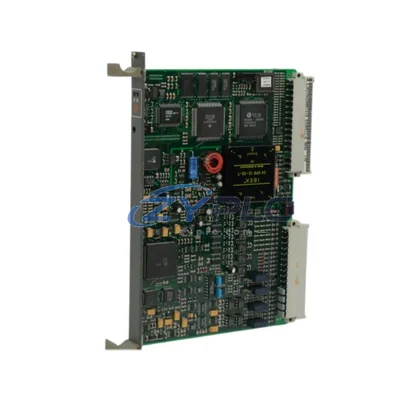
ABB BGAD-13C 3AUA0000112492 Digital Output for ACS880
In modern industrial automation, the reliability of a control system is determined not by any single component, but by the coherence of every layer working in unison. The ABB BGAD-13C (part number 3AUA0000112492) is a digital output module engineered to serve as a precision signal interface within the ACS880 drive architecture — a platform widely deployed across manufacturing, energy, process control, and heavy industry. Rather than functioning as a standalone accessory, the BGAD-13C is designed to integrate seamlessly into the layered control hierarchy, bridging the gap between the drive’s internal logic and the physical execution layer of the automation system.
The ACS880 series from ABB represents a benchmark in industrial drive technology, offering a flexible, modular framework that supports a wide range of control topologies. Within this framework, the BGAD-13C occupies a critical position: it receives digital command signals from the drive’s control board and translates them into discrete output signals that actuate relays, contactors, solenoid valves, indicator lamps, and other field devices. This function is foundational to any system where the drive must communicate its operational state — running, fault, ready, or inhibited — to the broader control infrastructure.
From a system architecture perspective, the BGAD-13C supports the drive’s role as both a power conversion device and an intelligent control node. When paired with the ACS880’s primary control unit (such as the ZCU-12 or ZCU-14 control boards), the digital output module extends the drive’s I/O capacity without requiring external relay modules or additional wiring complexity. This reduces panel footprint, simplifies commissioning, and improves long-term maintainability — all critical considerations in large-scale automation projects.
Product Specification Table
| Parameter |
Specification |
| Model |
BGAD-13C |
| Part Number |
3AUA0000112492 |
| Brand |
ABB |
| Compatible Platform |
ACS880 Drive Series |
| Module Type |
Digital Output Module |
| System Role |
Drive-to-Field Signal Interface |
| Output Type |
Discrete Digital Outputs |
| Electrical Rating |
24 VDC nominal, compatible with ACS880 I/O bus |
| Communication Interface |
Internal drive option slot (D-series slot) |
| Installation Method |
Direct slot mounting on ACS880 drive unit |
| Operating Temperature |
-10°C to +55°C (standard industrial environment) |
| Country of Origin |
Germany |
| Warranty |
warranty terms confirmed during quotation (ZYPLC) |
| system integration |
Fully compatible with ACS880 control architecture |
System Compatibility Notes
The BGAD-13C does not operate in isolation — its value is realized within a coordinated system where every module contributes to a unified control strategy. In a typical ACS880-based drive system, the architecture begins at the control layer with the ZCU-12 or ZCU-14 control unit, which manages the drive’s core logic, speed references, and protection functions. The BGAD-13C connects directly to this control unit via the drive’s internal option slot, ensuring zero-latency signal transmission between the drive’s logic and the output field devices.
At the I/O layer, the BGAD-13C works in coordination with analog input modules such as the RAIO-01 and digital input modules like the RDIO-01, forming a complete I/O expansion framework that allows the ACS880 to interface with a wide range of field instruments and actuators. This modular I/O architecture is particularly valuable in applications where the drive must respond to multiple process variables simultaneously — such as in pump control systems where flow, pressure, and temperature signals must all be processed and acted upon in real time.
At the network and communication layer, the ACS880 platform supports fieldbus adapters including the FPBA-01 (PROFIBUS-DP), FENA-21 (EtherNet/IP and PROFINET), and FDNA-01 (DeviceNet). The BGAD-13C’s output signals can be mapped to fieldbus status words, allowing supervisory systems such as Siemens S7-300/S7-400 PLCs or Rockwell ControlLogix controllers to monitor drive status in real time. This cross-platform compatibility is essential in hybrid automation environments where multiple control vendors coexist.
At the power layer, the ACS880 drive is typically supplied through an ACH580 or ACS580 input section, with the BGAD-13C drawing its operating power directly from the drive’s internal bus — eliminating the need for a separate 24 VDC power supply for the output module. This simplifies the panel design and reduces the number of potential failure points in the power distribution chain.
At the human-machine interface layer, the drive’s status outputs from the BGAD-13C can be wired to panel-mounted indicator lights, alarm annunciators, or fed into an ABB CP600 HMI panel for graphical status display. This allows operators to monitor drive health, fault conditions, and operational state without accessing the drive’s keypad directly — a significant advantage in large installations where drives may be located in remote or restricted areas.
At the execution layer, the BGAD-13C’s outputs directly control contactors, motor starters, solenoid valves, and safety relays. In redundant drive configurations — such as those using the ACS880-07 cabinet drive with redundant cooling fans — the digital output module plays a key role in signaling fan status, enabling automatic switchover logic to be implemented at the PLC level without additional relay hardware.
Industrial Application Notes
The ABB BGAD-13C finds application across a broad spectrum of industrial sectors where the ACS880 drive platform is deployed. In manufacturing and assembly lines, the module’s digital outputs are used to signal conveyor drive status to line PLCs, enabling coordinated start/stop sequences across multiple drive zones. In power generation and utilities, the BGAD-13C provides fault and ready signals to SCADA systems, supporting remote monitoring and alarm management for unattended substations.
In petrochemical and refinery applications, where process continuity is paramount, the BGAD-13C supports the implementation of safe-state output logic — ensuring that downstream equipment receives a defined signal state in the event of a drive fault or emergency stop. This is critical for compliance with IEC 61511 functional safety requirements in process industries.
In water and wastewater treatment facilities, the module enables pump drive status to be communicated to distributed control systems (DCS) such as the ABB System 800xA or Honeywell Experion PKS, supporting automated pump sequencing and predictive maintenance workflows. In mining and mineral processing, where drives operate in harsh environments with high vibration and dust exposure, the BGAD-13C’s robust construction and direct slot mounting ensure reliable signal integrity even under demanding conditions.
In metallurgical and steel mill applications, the module supports the coordination of multiple ACS880 drives in rolling mill and crane hoist systems, where precise status signaling between drives is essential for synchronized motion control. In packaging and material handling lines, the BGAD-13C enables drive status to be integrated into line control logic, supporting automatic fault recovery and production line restart sequences.
Product Compatibility FAQ
Q1: Is the BGAD-13C compatible with all variants of the ACS880 drive series, and can it be used in multi-drive cabinet configurations?
The BGAD-13C is designed for use with the ACS880 single drive and cabinet drive variants, including the ACS880-01, ACS880-07, and ACS880-11 configurations. It installs into the drive’s D-series option slot and is recognized automatically by the ZCU control unit during power-up. In multi-drive cabinet systems, each drive unit requires its own BGAD-13C module; the outputs can then be wired to a common terminal block or marshalling panel for integration with the site PLC or DCS. Compatibility should always be verified against the specific drive firmware version and hardware revision using ABB’s Drive Composer commissioning tool.
Q2: What are the long-term maintenance considerations for the BGAD-13C in continuous-duty industrial applications, and how does the warranty terms confirmed during quotation support lifecycle management?
The BGAD-13C is a solid-state digital output module with no moving parts, making it inherently low-maintenance in normal operating conditions. For long-term reliability, it is recommended to inspect the module’s slot connector for contamination or corrosion during scheduled drive maintenance intervals, typically every 12 to 24 months depending on the installation environment. ZYPLC’s warranty terms confirmed during quotation covers manufacturing defects and functional failures under normal operating conditions, providing a cost-effective safety net for maintenance budgets. Stocking a spare BGAD-13C module is advisable for critical applications where drive downtime carries significant production cost implications.
Q3: How does the BGAD-13C support system commissioning and fault diagnostics in complex multi-drive architectures?
During commissioning, the BGAD-13C’s output assignments are configured through the ACS880’s parameter set using ABB Drive Composer or the drive’s control panel. Each output can be mapped to a specific drive status signal — such as running, fault, ready, or at-speed — allowing the commissioning engineer to tailor the output behavior to the specific requirements of the control system. For fault diagnostics, the drive’s event log records any output-related faults, and the BGAD-13C’s status can be monitored in real time via the fieldbus interface. This integration with the drive’s diagnostic framework significantly reduces troubleshooting time in complex multi-drive installations, supporting faster return to production after a fault event.