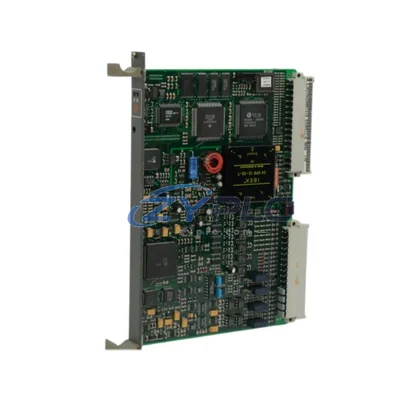
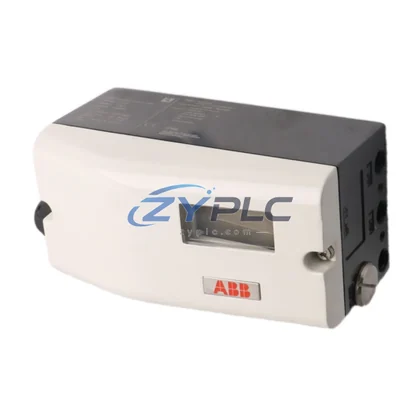
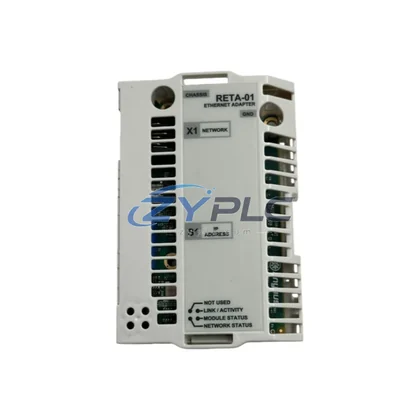
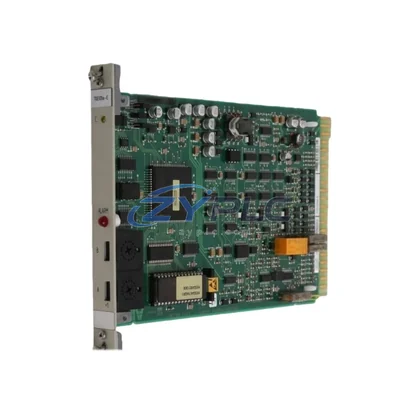
The ABB CBI22 Binary Input Module is a precision-engineered field I/O component designed for seamless integration within the ABB Freelance distributed control system (DCS) architecture. Rather than functioning as a standalone device, the CBI22 occupies a critical position in the I/O layer of a multi-tier automation hierarchy — collecting discrete binary signals from field instruments, limit switches, motor status contacts, and safety interlocks, then transmitting structured data upward to the Freelance AC800F controller for real-time process decision-making. Understanding the CBI22’s role within the full control stack is essential for engineers designing scalable, redundant, and maintainable industrial automation systems.
In a layered automation architecture, the CBI22 sits between the field device layer and the control execution layer. Its binary inputs are mapped directly into the AC800F controller’s process image, enabling deterministic scan-cycle processing. This tight coupling between the I/O layer and the control layer ensures that signal latency is minimized and that process events — such as valve open/close confirmation, pump run feedback, or emergency stop activation — are captured and acted upon within the controller’s defined cycle time. The CBI22 supports the Freelance fieldbus communication protocol, ensuring that all binary status data is transmitted with high integrity across the I/O bus to the controller backplane.
System architects integrating the CBI22 into a Freelance DCS project will typically deploy it alongside complementary modules such as the CBO22 Binary Output Module, which handles discrete command outputs to actuators and relays, and the CAI22 Analog Input Module, which processes 4–20 mA and voltage signals from transmitters and sensors. Together, these modules populate the Freelance I/O station, which is mounted on a dedicated I/O rail and connected to the AC800F controller via the internal fieldbus. For applications requiring analog output capability — such as control valve positioning or variable speed drive setpoint transmission — the CAO22 Analog Output Module is deployed in the same I/O station, sharing the same backplane power and communication infrastructure as the CBI22.
Power distribution within the Freelance I/O station is managed by the Freelance Power Supply Module (PS), which provides regulated 24 VDC to all I/O modules including the CBI22. Redundant power supply configurations are supported in high-availability applications, ensuring that a single power supply failure does not interrupt binary input acquisition. This is particularly important in safety-critical environments such as power generation, chemical processing, and oil and gas facilities, where loss of binary input monitoring could trigger unplanned shutdowns or safety system activations.
At the control layer, the ABB AC800F Controller serves as the central processing unit for all I/O data collected by the CBI22 and its companion modules. The AC800F executes control logic programmed in IEC 61131-3 compliant languages — including Function Block Diagram (FBD), Structured Text (ST), and Sequential Function Chart (SFC) — and communicates with the engineering workstation via Ethernet. For large-scale DCS projects, multiple AC800F controllers can be networked together using the ABB Industrial Ethernet infrastructure, enabling coordinated control across multiple process units while maintaining independent I/O station management.
Human-machine interface (HMI) integration is achieved through the ABB Freelance Engineering Tool (Freelance Builder) and compatible SCADA platforms such as ABB Ability System 800xA, which can interface with the Freelance DCS to provide operators with real-time binary status visualization, alarm management, and historical trending. The binary input data collected by the CBI22 — including equipment run/stop status, valve position feedback, and interlock conditions — is displayed on operator workstations, enabling informed process decisions and rapid fault response.
For applications requiring communication with third-party systems or field devices using standard industrial protocols, the Freelance architecture supports integration via PROFIBUS DP and HART communication gateways. The CBI22, as part of the native Freelance I/O family, operates on the internal I/O bus rather than PROFIBUS, but coexists within the same controller framework as PROFIBUS remote I/O stations, enabling hybrid architectures that combine native Freelance I/O with distributed remote I/O nodes across large plant areas.
From a maintenance and lifecycle perspective, the CBI22 is designed for hot-swap replacement in systems that support module-level redundancy, minimizing mean time to repair (MTTR) and reducing planned maintenance windows. Spare module inventory management is simplified by the CBI22’s standardized form factor and compatibility across multiple generations of the Freelance I/O platform. ZYPLC maintains RFQ-based sourcing support of the CBI22 and related Freelance I/O modules, ensuring rapid delivery to support both planned maintenance schedules and emergency replacement requirements.
Product Specification Table
| Parameter |
Specification |
| System Role |
Binary Input Module — Freelance DCS I/O Layer |
| Compatible Controller |
ABB AC800F Freelance DCS Controller |
| Communication Interface |
Freelance Internal I/O Bus |
| Input Type |
Discrete Binary (Digital) Inputs |
| Signal Voltage |
24 VDC (nominal) |
| Isolation |
Galvanic isolation between field and system bus |
| Mounting |
Freelance I/O Rail / Backplane |
| Operating Temperature |
0°C to +60°C |
| Country of Origin |
Germany (DE) |
| Certifications |
CE, UL (ABB standard industrial certifications) |
| Warranty |
Warranty and support terms confirmed before quote (ZYPLC) |
| Availability |
Confirmed via RFQ before quotation |
System Compatibility Notes
A complete Freelance DCS control cabinet integrating the CBI22 typically includes the following coordinated components working in concert:
- ABB AC800F Controller — Central control execution unit processing all I/O data from the CBI22 and companion modules.
- CBO22 Binary Output Module — Paired with the CBI22 to complete the discrete I/O loop, commanding actuators, solenoids, and motor starters.
- CAI22 Analog Input Module — Processes 4–20 mA transmitter signals in the same I/O station, providing process variable data to the AC800F.
- CAO22 Analog Output Module — Delivers analog setpoints to control valves and variable frequency drives within the same backplane architecture.
- Freelance Power Supply Module (PS) — Provides regulated 24 VDC to all I/O modules; redundant configurations available for high-availability systems.
- ABB Freelance I/O Backplane / Rail — Mechanical and electrical backbone connecting all I/O modules to the controller bus.
- ABB Industrial Ethernet Switch — Connects AC800F controllers across process units for coordinated multi-controller DCS architectures.
- ABB Ability System 800xA SCADA Interface — Provides operator visualization of binary input status data collected by the CBI22.
- PROFIBUS DP Gateway Module — Enables integration of third-party field devices alongside native Freelance I/O in hybrid architectures.
- Terminal Block / Marshalling Panel — Field wiring termination point connecting field instruments and switches to the CBI22 input channels.
Industrial Application Notes
The ABB CBI22 Binary Input Module is deployed across a wide range of industrial sectors where reliable discrete signal acquisition is fundamental to process safety and operational continuity:
- Power Generation: Monitoring turbine trip signals, breaker status, and auxiliary equipment run/stop feedback within Freelance DCS-controlled power plant control systems.
- Oil & Gas and Petrochemical: Capturing valve position feedback, emergency shutdown (ESD) interlock status, and pump seal failure signals in hazardous area process control architectures.
- Water and Wastewater Treatment: Monitoring pump run status, level switch activations, and flow switch signals across distributed pump stations managed by Freelance DCS controllers.
- Chemical Processing: Integrating binary interlock signals from safety instrumented systems (SIS) into the Freelance DCS process control layer for coordinated safe-state management.
- Mining and Metallurgy: Collecting conveyor belt run/stop status, crusher overload signals, and hopper level switch inputs within Freelance-based plant-wide automation systems.
- Packaging and Discrete Manufacturing: Monitoring machine cycle complete signals, guard door interlocks, and product presence sensors in high-speed production line control architectures.
Product Compatibility FAQ
Q1: Is the ABB CBI22 compatible with all versions of the ABB Freelance DCS platform, and can it be mixed with other Freelance I/O modules in the same station?
A: The CBI22 is designed for the ABB Freelance DCS I/O platform and is compatible with the AC800F controller family. It can be freely mixed with other Freelance I/O modules — including the CBO22, CAI22, and CAO22 — within the same I/O station and backplane, provided the total power budget of the station’s power supply module is not exceeded. Always verify firmware and hardware revision compatibility with your specific AC800F controller version during system design.
Q2: How does the CBI22 support system redundancy and what happens if the module fails during operation?
A: In standard Freelance DCS architectures, I/O module redundancy is achieved at the controller and communication level rather than at the individual module level. If a CBI22 module fails, the AC800F controller will generate a diagnostic alarm visible on the operator HMI, and the affected binary input channels will report a fault state. For critical applications requiring continuous binary input monitoring, system architects should consider deploying redundant I/O stations or implementing SIL-rated safety systems in parallel. ZYPLC’s Warranty and support terms confirmed before quote and RFQ-based sourcing support availability ensure rapid module replacement to minimize system downtime.
Q3: What are the installation and commissioning requirements for the CBI22, and how is it configured within the Freelance engineering environment?
A: The CBI22 is configured using the ABB Freelance Builder engineering tool, where each binary input channel is assigned a process tag, signal type, and alarm limit within the controller’s I/O configuration database. Physical installation requires mounting the module onto the Freelance I/O rail and connecting field wiring to the associated terminal block or marshalling panel. During commissioning, each binary input channel should be individually tested by simulating field signal states and verifying correct status representation in the Freelance Builder online monitor and the operator HMI. ZYPLC provides pre-sales technical support to assist engineers with I/O configuration planning and post-delivery commissioning guidance.