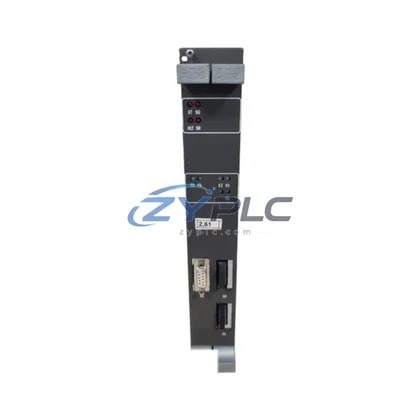
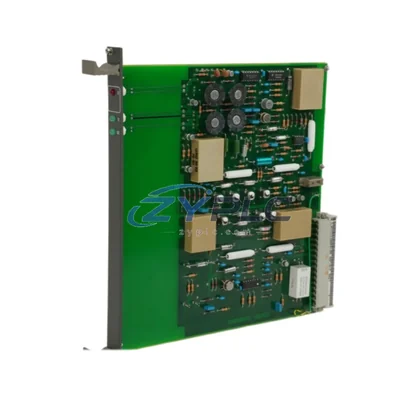
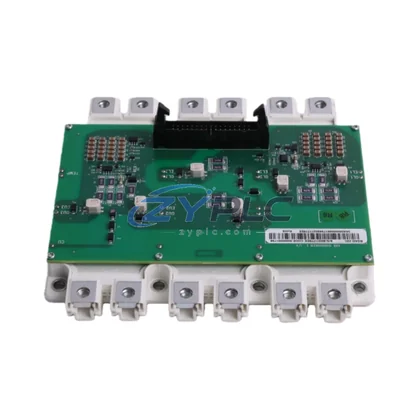
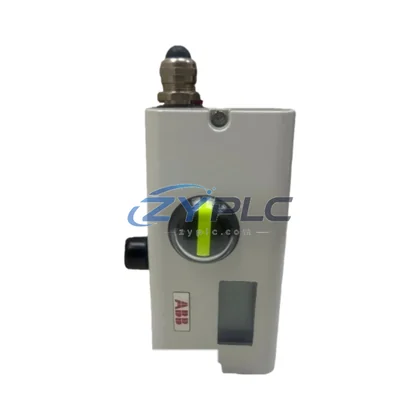
ABB CINT-01C Interface Module for CINT Series
The ABB CINT-01C is a dedicated interface board engineered to operate within the layered architecture of ABB’s CINT series industrial control platforms. Rather than functioning as a standalone component, the CINT-01C is designed from the ground up to serve as a structural bridge between the control layer and the I/O layer, ensuring signal integrity, communication stability, and seamless module coordination across the entire automation system. In environments where uptime is non-negotiable — from continuous process manufacturing to high-availability power distribution — the CINT-01C delivers the architectural consistency that modern control engineers demand.
Within a fully integrated ABB control cabinet, the CINT-01C occupies a critical position in the signal flow chain. It interfaces directly with the CPU module and backplane bus, enabling deterministic data exchange between the processor and downstream I/O modules. Its compact form factor and standardized connector layout allow it to be installed within existing CINT series racks without mechanical modification, reducing commissioning time and minimizing the risk of wiring errors during system expansion or maintenance cycles.
The board’s electrical design supports the voltage and signal tolerances defined by ABB’s CINT platform specification, making it fully compatible with the broader ecosystem of ABB drive and control hardware. Engineers integrating the CINT-01C into a new or retrofit installation benefit from its plug-and-play compatibility with ABB’s established firmware environment, eliminating the need for custom driver development or parameter remapping during initial setup.
Product Specification Table
| Parameter |
Specification |
| Model |
CINT-01C |
| Brand |
ABB |
| Series |
CINT |
| Product Type |
Interface Board / Communication Module |
| System Role |
Control-to-I/O Interface, Backplane Communication Bridge |
| Compatible Platform |
ABB CINT Series Drive and Control Systems |
| Electrical Interface |
Backplane bus, standardized CINT connector |
| Communication Capability |
Internal fieldbus, drive-to-controller data exchange |
| Installation Environment |
Industrial control cabinet, DIN rail or rack-mount enclosure |
| Origin |
Finland (FI) |
| Operating Temperature |
0°C to +55°C (typical industrial range) |
| Humidity |
5–95% RH, non-condensing |
| Warranty |
warranty terms confirmed during quotation — covers manufacturing defects and functional failure under normal operating conditions |
| Condition |
New / Tested Surplus |
System Compatibility Notes
The CINT-01C achieves its full value when deployed as part of a coordinated ABB control architecture. In a typical system configuration, the interface board works in concert with the ABB ACS800 or ACS880 drive series, where it serves as the communication backbone between the drive’s internal control card and the external automation network. The CINT-01C’s signal routing capability ensures that command signals from the ABB AC500 PLC CPU module are transmitted to the drive layer with minimal latency, supporting real-time closed-loop control in demanding process applications.
On the I/O side, the CINT-01C coordinates with ABB AI810 analog input modules and DI810 digital input modules, aggregating field-level signals and presenting them to the control processor in a structured, bus-compatible format. This eliminates the need for intermediate signal conditioning hardware and reduces the overall component count within the control cabinet, improving both reliability and thermal management.
For network-layer integration, the CINT-01C is designed to operate alongside ABB FPBA-01 PROFIBUS adapter modules and FENA-21 Ethernet/IP adapter boards, enabling the drive system to participate in plant-wide SCADA and DCS architectures. This multi-protocol compatibility is essential in hybrid automation environments where legacy fieldbus networks coexist with modern Ethernet-based control infrastructure.
Power layer stability is maintained through coordination with ABB CP-E series 24VDC power supply units, which provide the regulated voltage required by the CINT-01C and associated I/O modules. In redundant power configurations, the interface board’s low power consumption profile allows it to be supported by dual power supply arrangements without exceeding cabinet power budgets.
At the human-machine interface layer, the CINT-01C supports integration with ABB CP600 series HMI panels, which communicate with the control system through the same backplane and fieldbus infrastructure that the interface board manages. This end-to-end architectural coherence — from the HMI panel down through the PLC, interface board, drive, and field actuator — is what distinguishes a well-engineered ABB system from a collection of loosely coupled components.
For terminal and wiring infrastructure, the CINT-01C is typically installed alongside ABB XTIO I/O terminal modules and standard DIN rail terminal blocks, ensuring that field wiring is organized, labeled, and maintainable over the system’s operational lifetime. In applications requiring relay output isolation, ABB CR-M series relay modules are commonly integrated into the same cabinet, providing the electrical separation needed for safe control of high-voltage actuators and solenoid valves.
Industrial Application Notes
The ABB CINT-01C finds application across a broad spectrum of industrial sectors where layered automation architecture is the engineering standard. In manufacturing and assembly line automation, the interface board enables precise coordination between variable-speed drives and the PLC control layer, supporting synchronized multi-axis motion profiles and production rate control. Its deterministic communication behavior is particularly valued in high-throughput packaging lines where timing accuracy directly affects product quality and line efficiency.
In electrical power distribution and substation automation, the CINT-01C supports integration of ABB drive systems into protection and control schemes managed by IEC 61850-compliant SCADA platforms. The board’s ability to bridge proprietary ABB drive communication protocols with standard fieldbus networks makes it an essential component in modernization projects where legacy drive hardware must be retained while the supervisory control layer is upgraded.
Within the oil, gas, and petrochemical sector, the CINT-01C is deployed in pump and compressor control systems where continuous operation and fault tolerance are mandatory. Its compatibility with redundant control architectures — where a standby CPU module can assume control without interrupting the drive system — makes it a preferred choice for critical process applications where unplanned downtime carries significant financial and safety consequences.
In water and wastewater treatment facilities, the interface board supports the integration of variable-frequency drives controlling pumps, blowers, and mixers into centralized SCADA systems. The CINT-01C’s stable communication performance under the electrically noisy conditions typical of water treatment environments ensures reliable data exchange between field devices and the control room, supporting both manual operator intervention and fully automated process control.
For mining, metallurgy, and heavy industry applications, the CINT-01C’s robust design and ABB’s proven track record in harsh-environment control systems make it a reliable choice for conveyor drives, crusher motor controls, and smelting process automation. The board’s long-term availability through authorized distribution channels ensures that maintenance engineers can source replacement units without extended lead times, supporting the planned maintenance schedules that minimize unplanned production interruptions.
Product Compatibility FAQ
Q1: Is the ABB CINT-01C compatible with both ACS800 and ACS880 drive platforms, and does it require firmware updates when migrating between series?
The CINT-01C is designed for the CINT series interface architecture used across multiple ABB drive generations. When migrating from ACS800 to ACS880 platforms, engineers should verify the firmware version of the target drive’s control board against ABB’s compatibility matrix. In most cases, the CINT-01C can be reused without hardware modification, though a parameter reset and recommissioning procedure is recommended to ensure optimal communication performance in the new drive environment.
Q2: Can the CINT-01C support hot-swap replacement in a running control system, and what precautions are required during installation?
Hot-swap capability depends on the specific drive and control system configuration. In systems where the drive is in a stopped or safe-torque-off state, the CINT-01C can typically be replaced without powering down the entire control cabinet, provided that the backplane bus is isolated from the affected slot. Engineers should follow ABB’s standard lockout/tagout procedures and verify that the replacement board’s hardware revision matches the system’s existing configuration before restoring communication. Post-installation, a communication diagnostic routine should be executed to confirm signal integrity across all connected I/O channels.
Q3: What does the warranty terms confirmed during quotation cover, and how does ZYPLC support long-term architectural maintenance for systems using the CINT-01C?
The warranty terms confirmed during quotation covers manufacturing defects and functional failures occurring under normal operating conditions as defined by ABB’s published environmental and electrical specifications. ZYPLC supports long-term architectural maintenance by maintaining stock of CINT-01C units and compatible ABB interface components, enabling rapid replacement without extended procurement lead times. For customers managing multi-site installations or planned maintenance programs, ZYPLC offers pre-shipment functional testing and documentation support to ensure that replacement units integrate seamlessly into existing system architectures. Contact our technical team at plc.sales@zyplc.com or +86 19859288691 for system-specific compatibility consultation.