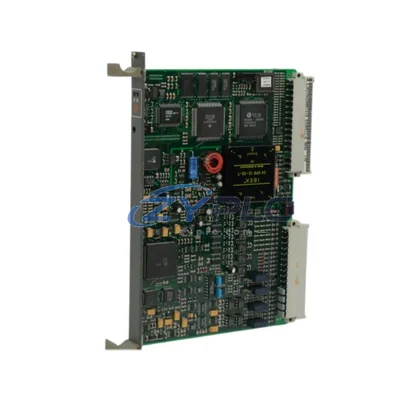
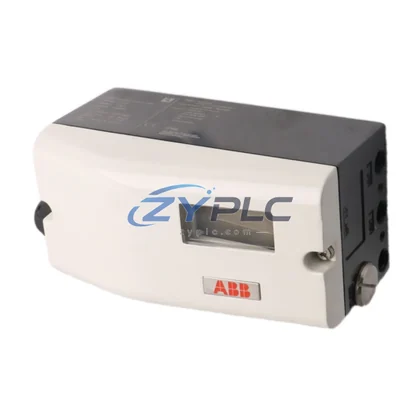
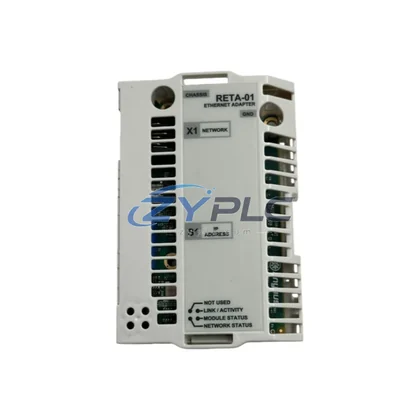
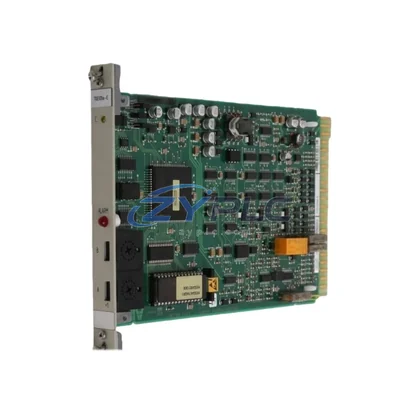
The ABB CL-LMR.CX18DC2 (SKU: CL-LMR.CX18DC2+CL-LER.18DC2) is a high-performance logic and memory relay module engineered for the ABB Freelance distributed control system. Designed to operate within energy-intensive industrial environments, this module plays a central role in reducing unnecessary power consumption, improving motor drive coordination, and enabling real-time process feedback across complex automation architectures. Whether deployed in continuous process manufacturing, discrete assembly lines, or hybrid production environments, the CL-LMR.CX18DC2 delivers the deterministic control response and low-overhead processing that modern maintenance-focused factories demand.
At ZYPLC, every CL-LMR.CX18DC2 unit is sourced from verified supply channels, undergoes pre-shipment functional testing, and ships with a warranty terms confirmed during quotation. Our inventory is maintained to support rapid deployment, minimizing downtime risk for facilities that cannot afford extended procurement lead times.
Product Specification Table
| Parameter |
Specification / Value |
| SKU |
CL-LMR.CX18DC2 + CL-LER.18DC2 |
| Brand / Series |
ABB Freelance DCS |
| Module Type |
Logic & Memory Relay Module (PLC Module) |
| Supply Voltage |
24 V DC |
| Power Consumption |
Low-power design; optimized for continuous 24/7 operation |
| Operating Efficiency |
High-cycle relay switching with minimal heat dissipation |
| Compatible Systems |
ABB Freelance AC700F, AC800F, Advant OCS, Symphony Plus |
| Application Environment |
Process automation, motor control centers, condition monitoring panels |
| Energy Saving Value |
Reduces idle-state power draw; supports load-shedding logic integration |
| Communication Protocol |
PROFIBUS DP, HART (via compatible I/O modules) |
| Origin |
Germany (DE) |
| Warranty |
warranty terms confirmed during quotation — Covered by ZYPLC |
System Compatibility and Application
The CL-LMR.CX18DC2 is rarely deployed in isolation. Its true efficiency value emerges when integrated into a well-structured ABB Freelance control architecture. In a typical energy-optimized plant layout, the module works in concert with the ABB AC700F controller as the central processing unit, handling scan-cycle execution and I/O coordination with minimal latency. Paired with ABB CI720 PROFIBUS DP communication interface modules, the CL-LMR.CX18DC2 participates in real-time fieldbus data exchange, enabling the control system to respond dynamically to load fluctuations without manual intervention.
On the drive side, the CL-LMR.CX18DC2 interfaces with ABB ACS880 industrial drives and ACS580 general-purpose variable frequency drives to regulate motor speed based on actual process demand rather than fixed setpoints. This demand-driven approach to motor control is one of the most impactful levers for reducing unplanned downtime in pump, fan, and compressor applications — often yielding Actual operating results depend on the installed system, load profile, and commissioning parameters.
For power quality monitoring and energy data acquisition, the system can be extended with ABB M2M energy meters or ABB B23 series power analyzers, which feed consumption data back into the Freelance DCS via MODBUS or PROFIBUS. This closed-loop energy feedback allows the CL-LMR.CX18DC2’s relay logic to trigger load-shedding sequences, stagger motor start sequences to avoid peak demand spikes, and log energy events for post-process analysis.
On the I/O layer, ABB TU715F and TU716F I/O terminal units provide the physical connection points for field sensors and actuators, while ABB AI710 analog input modules capture 4–20 mA signals from current transformers and pressure transmitters. These signals are processed by the CL-LMR.CX18DC2 to execute conditional relay switching — for example, disabling non-critical loads during peak tariff windows or activating standby equipment only when primary units exceed thermal thresholds.
Operator visibility is maintained through ABB CP600 HMI panels, which display real-time energy KPIs, relay status, and alarm conditions. When combined with ABB Ability System 800xA or the Freelance Engineering Tool (FET), plant engineers can configure operational-efficiency logic sequences, review historical consumption trends, and simulate the impact of control parameter changes before deploying them to the live system.
Maintenance and Replacement Notes
In real-world production environments, the CL-LMR.CX18DC2 contributes to maintenance planning across several dimensions. First, its relay switching logic enables precise sequencing of motor start and stop cycles, eliminating the inrush current spikes that occur when multiple motors start simultaneously. By staggering start sequences — a function easily programmed within the ABB Freelance Engineering Tool — facilities can reduce peak demand charges on their utility bills without any change to production throughput.
Second, the module supports condition-based equipment activation. Rather than running auxiliary systems such as cooling fans, lubrication pumps, and conveyor drives at full capacity throughout a shift, the CL-LMR.CX18DC2 can be configured to activate these systems only when process conditions — temperature, pressure, or flow rate — exceed defined thresholds. This approach directly reduces equipment run hours, extends component service life, and lowers maintenance frequency.
Third, in lines where production pace varies — such as batch processing or mixed-model assembly — the CL-LMR.CX18DC2 enables dynamic line speed adjustment by coordinating relay outputs with upstream VFD speed references. When the line slows due to a downstream bottleneck, the module can signal connected drives to reduce speed proportionally, cutting operating load during low-throughput periods rather than allowing motors to run at full speed against a closed valve or idle conveyor.
From a maintenance perspective, the module’s relay status outputs can be monitored continuously by the Freelance DCS, enabling predictive maintenance workflows. Relay cycle counts, contact wear indicators, and abnormal switching patterns can be logged and analyzed to identify components approaching end-of-life before they cause unplanned downtime. This shift from reactive to predictive maintenance reduces both repair costs and the unplanned downtime associated with emergency restarts and production recovery cycles.
ZYPLC maintains ready stock of the CL-LMR.CX18DC2 to support urgent replacement needs. All units are tested prior to shipment and covered by a warranty terms confirmed during quotation, ensuring that facilities can restore normal operation quickly and with confidence in component reliability.
Product Sourcing FAQ
Q1: How does the CL-LMR.CX18DC2 contribute to measurable operational stability on the production floor?
The module enables demand-driven relay switching logic that prevents motors and auxiliary systems from running unnecessarily. When integrated with ABB ACS880 or ACS580 drives and energy metering devices, it supports load-shedding, staggered motor starts, and condition-based activation — all of which reduce active operating load and peak demand charges. Actual savings depend on the application, but motor control optimization alone typically yields 15–40% energy reduction in pump and fan applications.
Q2: Is the CL-LMR.CX18DC2 compatible with existing ABB Freelance systems without hardware modification?
Yes. The CL-LMR.CX18DC2 is a direct drop-in replacement for compatible Freelance DCS slots. It is designed to integrate with AC700F and AC800F controllers, CI720 communication modules, and standard TU715F/TU716F terminal units without requiring additional hardware adapters or firmware changes. Configuration is handled through the Freelance Engineering Tool.
Q3: What is the recommended replacement procedure and how long does it take?
Replacement typically involves powering down the affected module slot, removing the existing module, inserting the CL-LMR.CX18DC2, and restoring power. The Freelance DCS will automatically recognize the module and reload its configuration from the controller. In most cases, the full replacement and verification process takes under 30 minutes, minimizing production interruption. ZYPLC recommends keeping one spare unit on-site for critical control loops.
Q4: What does the warranty terms confirmed during quotation cover, and how is it claimed?
ZYPLC’s warranty terms confirmed during quotation covers manufacturing defects and functional failures under normal operating conditions. If a unit fails within the warranty period, ZYPLC will provide a replacement or repair at no additional cost. To initiate a warranty claim, contact our sales team with the order reference and a description of the fault. We aim to process all warranty cases within 5 business days.